Waking Up Tired Every Morning? Your Mouth Might Be the Problem
Still exhausted every morning? Mouth breathing can wreck sleep. See how mouth tape helps nasal breathing so you wake up clear-headed.

The tired feeling that doesn’t match your sleep
- The tired feeling that doesn’t match your sleep
- Mouth breathing at night is not “normal”
- Signs your mouth is messing with your sleep
- The jaw, the tongue, and the airway. It’s all connected
- “But I don’t have sleep apnea”
- Why your dentist might notice before your doctor does
- The “blocked nose” trap
- What you can try first (simple stuff, but it matters)
- Mouth taping. Useful for some people, risky for others
- When it’s time to get checked for real
- If you fix your breathing, a bunch of other things can improve
- A quick way to think about it
- Let’s wrap up
You know that feeling when you wake up and you’re already exhausted? It’s like your energy has been drained overnight, leaving you in need of something revitalizing—maybe a session with Tapeher to help reset your body and mind.
Not the “I stayed up too late scrolling” kind of tired. The deeper kind. The one where you technically slept 7 or 8 hours, the clock says you should be fine, but your body clearly didn’t get the memo.
You drag yourself into the kitchen. Coffee. Maybe two coffees. And then you spend the entire day slightly foggy, slightly irritable, wondering why your sleep never seems to actually work.
Here’s a strange thought that turns out to be true for a lot of people.
Your mouth might be the problem.
Not your mattress. Not your supplement routine. Not even your bedtime schedule.
Your mouth.
More specifically, how you breathe while you sleep, what your jaw is doing, and whether your airway stays open throughout the night.
This might sound like a small detail. Almost trivial. But once you start looking into it, you realize it connects to a lot more than you’d expect.
The tired feeling that doesn’t match your sleep
Sometimes the signs are obvious. Other times they’re subtle enough that people ignore them for years.
Common clues include:
- Waking up with dry mouth
- A sore throat in the morning
- Persistent bad breath despite good oral hygiene
- Drooling on the pillow
- Snoring, even mild snoring
- Morning headaches
- Feeling unrefreshed after enough sleep
- Brain fog early in the day
- Jaw clenching or teeth grinding
- Tight or sore jaw muscles
- Dark circles or puffiness around the eyes
- Waking up anxious or restless
- Your partner noticing gasping or irregular breathing
One subtle sign many people overlook is this:
You wake up and your first breath feels unusually deep, almost like you’ve been holding it.
That sudden “whoosh” inhale can be a hint that your body spent the night struggling to maintain airflow.
Mouth breathing at night is not “normal”
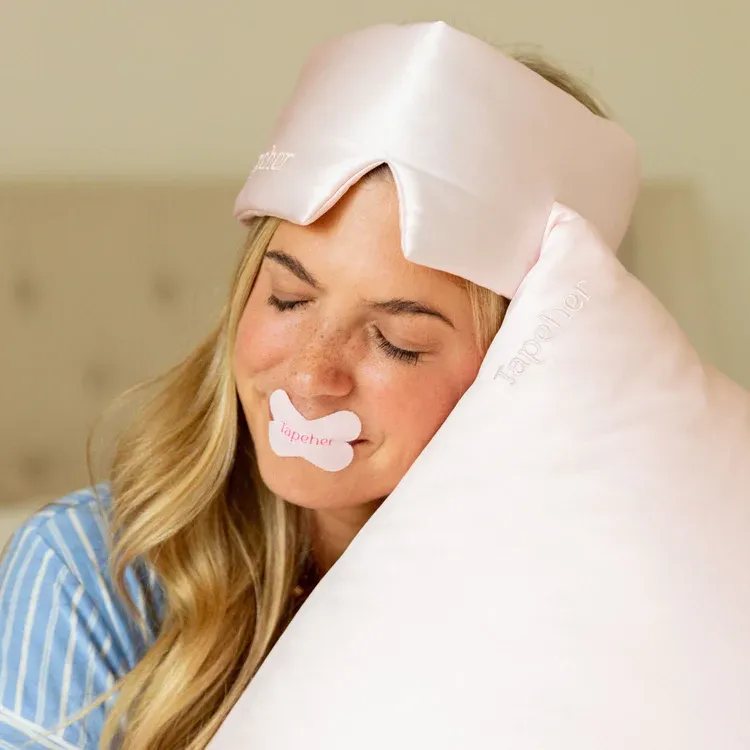
Because of these issues, more people have started experimenting with mouth taping — a simple technique designed to encourage nasal breathing during sleep.
The idea is straightforward: a small, skin-safe strip gently keeps the lips closed so the body naturally breathes through the nose overnight.
When done properly, many people report benefits such as:
- Less snoring
- Fewer dry-mouth mornings
- Deeper sleep
- Waking up feeling more refreshed
This is where products like TapeHer come in. Instead of using regular tape, which can irritate the skin or feel uncomfortable, TapeHer mouth tape is designed specifically for overnight use — with gentle adhesive and a shape that allows comfortable breathing while encouraging nasal airflow.
For many people, it’s a surprisingly simple adjustment that helps support better breathing habits at night.
And sometimes, that small change can make mornings feel very different.
Signs your mouth is messing with your sleep
Sometimes you’ll know right away. Sometimes you’ll miss it for years because you’re not “sleepy,” you’re just tired and wired.
Here are common clues that point to mouth breathing or sleep disordered breathing patterns:
- Dry mouth when you wake up
- Sore throat in the morning
- Bad breath even with good oral hygiene
- Drooling on the pillow
- Waking up with a puffy face or dark circles
- Snoring (even “light” snoring)
- Waking up with headaches
- Needing to pee at night more than seems normal
- Feeling unrefreshed even after enough hours
- Brain fog that lifts a bit later in the day
- Clenching or grinding teeth (often spotted by a dentist)
- TMJ soreness or tight jaw muscles
- Your partner says you gasp, choke, or stop breathing
- You wake up anxious for no clear reason
And one big one that people ignore: you wake up and your first breath feels like you’ve been holding your breath.
That little “whoosh” inhale. That can be a hint your body was fighting for airflow.
The jaw, the tongue, and the airway. It’s all connected
This part is annoying because it’s not as simple as “just breathe through your nose.”
Your mouth posture and jaw position affect your airway.
If your tongue rests on the roof of your mouth (palate) and your lips are closed, you’re generally in a better airway position. If your tongue falls back, especially when you’re on your back, the airway can narrow.
Now add in modern life:
- soft diets
- allergies
- chronic nasal congestion
- stress induced clenching
- smaller jaws in some people due to development patterns
And you get a lot of adults who basically have a crowded mouth and a tight airway. Then at night, everything relaxes, gravity does its thing, and breathing gets harder.
Your body adapts by partially waking you up to restore tone and reopen the airway.
Over and over.
You don’t remember it. But your nervous system does.
That’s why people can wake up tired even if their “sleep tracker” says they slept through the night. Many trackers don’t truly detect subtle arousals.
“But I don’t have sleep apnea”
Maybe you don’t. Or maybe you do and it’s undiagnosed. Or maybe you have something in the middle.
There’s a spectrum:
- simple snoring
- upper airway resistance (UARS)
- obstructive sleep apnea (OSA)
UARS is a big one. People with UARS can be thin, athletic, and still wake up wrecked. They might not have obvious apnea events, but they do have increased breathing effort and frequent arousals.
And the symptom pattern can look like:
- fatigue
- insomnia
- anxiety
- light sleep
- morning headaches
- sensitivity to stress
- ADHD like focus issues
So if you’ve ever thought, “I’m tired but I’m not falling asleep at my desk,” that doesn’t rule this out. Many people with airway related sleep issues are more wired than sleepy.
Why your dentist might notice before your doctor does
This is one of the strangest parts of the whole issue.
A lot of the early warning signs actually show up inside your mouth.
Dentists often see things like:
- Tooth wear from grinding
- A scalloped tongue (the edges of the tongue pressed against the teeth)
- A narrow palate
- Crowded teeth
- Gum recession worsened by clenching
- Enlarged tonsils
- Signs of chronic dry mouth
Sometimes they’ll ask about snoring. Or morning jaw pain. Or headaches.
And if no one has ever connected those things to sleep before, it can feel random. Like, what does teeth grinding have to do with waking up exhausted?
Quite a lot, actually.
In some cases, grinding isn’t just stress. It can be the body’s attempt to stabilize the airway during sleep. When the jaw pushes slightly forward, it can create more space for air to pass through. Clenching activates muscles that help keep the airway from collapsing.
So your body may be trying to solve a breathing problem.
Not the best solution, but a solution.
This is one reason sleep experts have started paying more attention to nighttime breathing habits — including strategies that help encourage nasal breathing, such as mouth taping with products designed specifically for sleep like TapeHer.
The “blocked nose” trap
Here’s the frustrating part.
You might want to breathe through your nose at night… but the moment you lie down, your nose suddenly feels blocked. So you open your mouth.
Problem solved, right?
Not exactly.
This situation is incredibly common, and it can happen for several reasons:
- Allergies
- Chronic sinus inflammation
- A deviated septum
- Enlarged turbinates
- Nasal valve collapse
- Untreated reflux irritating the airway
- Very dry bedroom air
There’s also a feedback loop that many people don’t realize.
Mouth breathing dries out the tissues in your airway. That dryness can increase irritation and inflammation, which then makes nasal breathing even harder.
So if you constantly say, “I just can’t breathe through my nose at night,” it may not be a small inconvenience. It might be the core issue affecting your sleep quality.
And if nasal breathing isn’t happening, deep, restorative sleep becomes much harder to achieve.
What you can try first (simple stuff, but it matters)
Let’s keep this practical. Not medical advice, but a decent starting point.
1) Do a quick self check in the morning
When you wake up, ask:
- Are my lips dry or my mouth dry?
- Is my tongue dry?
- Did I wake up with my mouth open?
- Any headache?
- Any sore throat?
Write it down for a week. Patterns show up fast.
2) Side sleeping helps more than people want to admit
Back sleeping makes airway collapse more likely for many people. Side sleeping often reduces snoring and breathing resistance.
If you’re a back sleeper and constantly tired, this is one of the easiest experiments to run.
3) Deal with basic nasal stuff like it matters
Some people get a lot of mileage from:
- saline rinse before bed
- allergy management (with professional guidance)
- a humidifier if your air is dry
- avoiding alcohol close to bedtime (it worsens airway collapse)
And if you suspect a structural issue like a deviated septum, don’t just tolerate it forever. At least get it evaluated.
4) Watch the late night mouth drying habits
A few sneaky ones:
- alcohol
- cannabis
- certain sleep meds
- antihistamines
- mouth breathing with a fan blasting your face
Dry mouth isn’t just uncomfortable. It’s a clue you’re probably spending hours breathing wrong.
It’s often a clue that you may be breathing through your mouth for hours during sleep.
That’s one reason many people experiment with techniques that gently encourage nasal breathing, such as mouth taping. Products designed specifically for this purpose — like TapeHer mouth tape — are made to be skin-safe and comfortable while helping keep the lips closed overnight.
For some people, this small adjustment can reduce dry mouth and support healthier breathing habits during sleep.
Mouth taping. Useful for some people, risky for others

You’ve probably heard of mouth taping by now. People swear it changed their sleep. Other people think it’s insane. Both reactions make sense.
Here’s the honest take.
Mouth taping can help if:
- you can breathe comfortably through your nose
- your congestion is mild and manageable
- you’re using it as a gentle reminder to keep lips closed
- you don’t have significant sleep apnea or severe obstruction
It can be risky or a bad idea if:
- you have nasal blockage you can’t control
- you might have moderate to severe sleep apnea
- you wake up panicky or short of breath
- you are sick, congested, or prone to vomiting or reflux events at night
- you’re using sedatives that blunt your ability to wake up
If you want to experiment, do it cautiously. Use a small vertical strip that allows airflow if needed, not a full seal. And if you feel any air hunger, stop.
Also, mouth taping is not a substitute for actual evaluation. It’s a tool. Not a diagnosis.
When it’s time to get checked for real
If you have any of these, it’s worth taking seriously and getting assessed:
- loud chronic snoring
- witnessed pauses in breathing
- choking or gasping at night
- high blood pressure (especially new or unexplained)
- morning headaches frequently
- severe daytime fatigue
- falling asleep while driving
- waking up with racing heart
- significant teeth grinding plus fatigue
- reflux symptoms at night
Talk to a sleep physician if you can. Ask about a sleep study. Home sleep tests can catch many cases of apnea, but they sometimes miss UARS. An in lab study can be more sensitive.
And if your dentist is airway aware, ask them directly: “Do you see signs of clenching or airway issues? Should I be screened for sleep apnea or UARS?”
You’re allowed to be that direct. It’s your life. Your energy. Your brain.
If you fix your breathing, a bunch of other things can improve
This is the part that surprises people. Better sleep breathing can affect:
- mood stability
- anxiety levels
- morning appetite and cravings
- exercise recovery
- blood pressure
- focus and memory
- headache frequency
- jaw pain
- even skin and under eye puffiness in some cases
Not because it’s magic. Because when you stop waking up 30 times a night, your body finally does what sleep is supposed to do.
Deep sleep. REM cycles. Nervous system downshifting. Hormone regulation. All that boring but essential stuff.
A quick way to think about it
If you wake up tired every morning, you don’t need more hacks.
You need to ask a different question:
Am I actually sleeping. Or am I just unconscious while my body fights to breathe?
That sounds dramatic, but it’s often the simplest explanation.
Start with the clues. Dry mouth. Snoring. Grinding. Morning headaches. Congestion. Mouth open on the pillow.
And if those clues line up, take your mouth seriously. It’s not just teeth. It’s not just breath. It’s the entrance to your airway. And your sleep depends on that airway staying open, quietly, all night long.
Let’s wrap up
Waking up tired every morning can come from a lot of places, sure. Stress, screens, caffeine, depression, all real.
But if you keep ignoring the mouth breathing and the jaw and the snoring stuff, you might be skipping the most fixable piece of the puzzle.
So tonight, or tomorrow morning, do the small check.
Dry mouth? Sore throat? Headache? Puffy face? Jaw tightness?
Those aren’t random. They’re signs.
And sometimes the path to better energy is not another supplement or another sleep podcast. It’s simply learning how to breathe like you were designed to. Nose. Lips closed. Airway open. Actual rest.
If this hit a little too close to home, consider getting screened. At minimum, bring it up at your next dentist appointment and your next doctor visit. You don’t need to suffer through “sleep” that doesn’t restore you.
See details here: purisia.com
Recommended for you
 Haru Haru Wonder vs. Cosrx: Which Unstoppable K-Beauty Brand Is Right for Your Skin?
 Discover Haru Haru Wonder — The Unstoppable Clean Beauty Line Gentle Enough for Every Skin
 Honey Acres: The Jaw-Dropping Science Behind Honey That Outlived the Pharaohs
 The “Shark Tank” Hair Trend: How to Style Rip Tie for Your Everyday Hustle
 From Waves to Trails: The Ultimate High-Performance Hairstyles with Rip Tie
 Honey Acres: The Ultimate Guide to Kosher Certified, Gluten-Free, and Big 9 Allergen-Free Treats