Mouth Tape Side Effects: What to Know Before You Try
Mouth tape side effects include skin irritation, anxiety, and — in the wrong person — dangerous breathing disruption. Here's what the evidence says before you try it.

What is mouth taping?
Mouth tape side effects are more varied than most social media posts let on — and for some people, they can be genuinely serious. At Purisia, we dig into the evidence so you can decide with clear eyes.
Mouth taping is low-risk for healthy nasal breathers — but it carries real hazards for anyone with nasal obstruction, sleep apnea, anxiety, or acid reflux.
If your nose is fully clear and you have no diagnosed sleep disorder, the risks are mainly cosmetic — mild redness or adhesive sensitivity. If you have any nasal obstruction, OSA, heart condition, anxiety disorder, or are pregnant, skip it until you've spoken to a clinician.
What you'll learn
- The full list of known mouth tape side effects, from mild to serious
- Why adhesive chemistry matters — and what "hypoallergenic" actually means (legally, nothing)
- The complete contraindication list, including pregnancy and children
- What Cleveland Clinic, the ADA, and a 2024 PLOS ONE scoping review say
- Practical steps to reduce your risk if you decide to try it
What is mouth taping?
Mouth taping means placing a strip of adhesive tape over your lips at night to keep your mouth closed while you sleep. The idea is to encourage breathing through the nose rather than the mouth. Nasal breathing filters, humidifies, and warms incoming air; it also produces nitric oxide, which can support vascular health. Mouth breathing, by contrast, is associated with dry mouth, increased snoring, and poorer sleep quality in some people.
The practice is not new — it has roots in myofunctional therapy — but it gained widespread attention through social media. That rapid, unsupervised spread is exactly what prompted medical organisations to weigh in with formal cautions. Understanding the side effects is important before you tape up for the first time.
Mouth tape is not a medical device in most markets. It is sold as a general wellness product, which means there is no regulatory pre-market safety review for most brands. This places the due-diligence burden squarely on the consumer.
Common Mouth Tape Side Effects
The side effects that come up most often in clinical commentary and user reports fall into three categories: skin reactions, psychological discomfort, and breathing disruption. Most people who experience side effects encounter them in the first or second category; the third is rarer but more serious.
Skin reactions
Skin irritation is the most frequently reported issue. It shows up as redness, rash, dryness, or flaking around the lips and the skin bordering the mouth — the result of repeated contact between an adhesive and a relatively sensitive area of the face. In some cases this progresses to contact dermatitis, an inflammatory skin reaction that can be itchy, painful, and slow to resolve if you continue using the product.
- Redness and rash — usually appear within the first week of use; often improves with a different tape type
- Dryness and peeling — common with stronger adhesives; skin around the mouth lacks sebaceous glands on the lip surface, making it more vulnerable
- Contact dermatitis — an immune-mediated reaction; once sensitisation occurs, even trace exposure can trigger symptoms
- Residue and difficulty removing — some tapes leave adhesive residue that pulls on skin during removal, causing micro-damage over time

Psychological effects
A subset of users — particularly those with underlying anxiety — find the sensation of a covered mouth distressing. This is not a trivial concern. The feeling of restriction can trigger claustrophobia-like responses, heightened heart rate, and an instinctive urge to remove the tape. In people with anxiety disorders, this can disrupt sleep rather than improve it. Clinicians at the Cleveland Clinic note that anxiety is among the recognised side effects of mouth taping and is a reason some people cannot tolerate the practice at all.
Sleep disruption
Counterintuitively, mouth taping can worsen sleep for some people. The physical sensation of the tape, especially with a stronger adhesive, can cause repeated micro-arousals throughout the night. If nasal congestion develops mid-sleep — common in warmer months or in people with mild seasonal allergies — the taped mouth creates a breathing bottleneck that fragments sleep significantly.
Skin and adhesive risks: why the tape type matters
Not all mouth tapes are equally gentle on skin. The adhesive formulation determines much of the irritation risk — and the label claims mean less than you'd expect.
Acrylate sensitisation
Acrylate-based adhesives are the most common type used in mouth tapes. They are also the leading cause of allergic contact dermatitis from adhesive products. According to PubMed data cited in our research, sensitisation rates in patch-tested populations have been rising: from 1.6% in 2019 to 2.7% in 2023. The primary allergens — 2-hydroxyethyl methacrylate (HEMA) and 2-hydroxypropyl methacrylate (HPMA) — show high cross-reactivity: 83.8% of sensitised patients react to multiple acrylate compounds. The American Contact Dermatitis Society named acrylates its Contact Allergen of the Year in 2012.
The critical point for daily users: sensitisation is cumulative. You can use an acrylate-adhesive tape for weeks without any reaction, and then develop a full allergic response seemingly out of nowhere. Once sensitised, even low-level exposure can trigger symptoms.
Silicone vs. acrylate vs. other adhesives
| Adhesive type | Sensitisation risk | Notes |
|---|---|---|
| Acrylate-based | 2–4% (rising) | Most common; ACDS Allergen of the Year 2012; high cross-reactivity |
| Silicone-based | Very low (rare case reports) | Lowest sensitisation risk profile; used by SomniFix and Dryft |
| Rubber-based | Moderate (occupational risk) | Less common in consumer tape; latex allergy crossover concern |
| Polyurethane | Rare case reports only | Limited data; generally considered low risk |
If you have a history of adhesive reactions — from bandages, wearable devices, or medical tape — silicone-adhesive options carry the lowest risk. If you've reacted to acrylates specifically (a patch test can confirm), avoid standard mouth tapes until you've identified the adhesive type.
PFAS in adhesives
Per- and polyfluoroalkyl substances (PFAS) — often called "forever chemicals" because they do not break down in the environment or the body — can be present in some adhesive formulations. The EPA strengthened regulation of PFAS via a Significant New Use Rule finalized in January 2024. Consumers concerned about PFAS exposure should look for brands that have independently tested their finished product. TapeHer, for example, has published SGS North America laboratory testing (completed January 2026) confirming no detectable PFAS across 40+ compounds including PFOS, PFOA, PFHxS, and C9–C14 perfluorocarboxylic acids.
The "hypoallergenic" problem
Many mouth tapes are marketed as "hypoallergenic" or "dermatologist-tested." Neither claim carries legal weight. The FDA has no legal definition of "hypoallergenic," following a 1975 court decision that prevented the agency from setting formal standards. A manufacturer can print "hypoallergenic" on any product without proving anything. Dermatologists widely acknowledge that the term has very little practical meaning without independent third-party certification — look for ISO 10993-1 biocompatibility testing or a recognised seal such as the National Eczema Association approval.
Similarly, "dermatologist-tested" means a product was applied to human skin at least once by a dermatologist — with no required protocol, no adverse event tracking, and no FDA verification. It is a data point, not an endorsement.
Serious Mouth Tape Side Effects and Safety Warnings
The side effects above are uncomfortable but manageable. The risks in this section are more serious and have prompted formal warnings from medical organisations.
Asphyxiation risk with nasal obstruction
The most serious safety concern identified in the clinical literature is asphyxiation risk in people who have any degree of nasal obstruction. A 2024 peer-reviewed scoping review published in PLOS ONE (indexed by PubMed/NIH) examined 10 studies covering 213 patients. Its findings were stark:
The review found that oral occlusion through taping could pose a serious risk of asphyxiation in the presence of nasal obstruction — a concern noted across four of the ten included studies. The conditions cited as creating this risk included allergic rhinitis, chronic rhinitis, septal deviation, sinonasal disease, and enlarged tonsils. Critically, the studies that showed any benefit specifically excluded participants with these forms of nasal obstruction, leaving those most likely to mouth-breathe due to nasal problems without evidence to guide them.
In practical terms: if your mouth-breathing habit is caused by a blocked nose — a deviated septum, swollen turbinates, chronic sinusitis, or nasal polyps — then sealing your mouth while you sleep removes your primary airway without providing a reliable alternative. The PLOS ONE review scored all 10 included studies as "poor quality" on the Newcastle-Ottawa Scale, underlining how thin the evidence base still is.
Oxygen drops and sleep apnea
The Cleveland Clinic and physician Dr. Brian Chen (a pediatric sleep specialist cited in their guidance) note directly:
"Mouth taping can cause skin irritation, anxiety, and difficulty breathing. Forcing reliance on nasal breathing alone potentially leads to severe respiratory distress and significant drops in oxygen levels when underlying conditions exist. There's not strong enough evidence to support that mouth tape is beneficial, and it's not part of our current practice to treat any sleep disorder."
People with undiagnosed or moderate-to-severe obstructive sleep apnea (OSA) face particular risk. OSA already causes breathing pauses during sleep; adding a physical barrier to mouth breathing can worsen apneic events and further reduce blood oxygen saturation. Mouth taping is explicitly not recommended for moderate-to-severe OSA by the PLOS ONE 2024 review. A limited benefit for mild OSA has been observed in some studies, but this should be supervised by a clinician, not self-managed.
ADA warning on social media use
The American Dental Association (ADA) has cautioned that the practice is contraindicated in patients with undiagnosed upper airway obstructions — including structural abnormalities, inflammatory conditions, and sinonasal disease — and that a large proportion of people who practice mouth taping may experience a decrease in inspiratory airflow. The ADA has also called for evidence-based protocols to ensure patient safety, noting that the current literature supporting or disproving the benefits of mouth taping remains sparse. The concern is compounded by the viral nature of the social media trend: those most likely to try it without guidance may be precisely those who lack the nasal airway clearance needed to do so safely.
Who should not use mouth tape
Based on Cleveland Clinic guidance, the PLOS ONE 2024 review, and safety data compiled from multiple clinical sources, the following groups should avoid mouth taping or consult a clinician before trying it:
- Moderate-to-severe obstructive sleep apnea (OSA) — mouth tape is explicitly contraindicated; risk of worsened apnea and oxygen drops
- Deviated septum — partial or full nasal obstruction means the nose cannot reliably serve as the sole airway
- Enlarged tonsils or adenoids — narrows the upper airway further during sleep
- Active sinus infection or sinusitis — nasal passages may be blocked; even mild congestion elevates risk
- Chronic nasal allergies (allergic rhinitis) — intermittent nasal obstruction makes safety unpredictable
- Heart or respiratory conditions — any condition that reduces physiological reserve makes breathing disruption more dangerous
- Anxiety disorders — the sensation of mouth restriction can trigger acute anxiety episodes or panic
- Acid reflux (GERD) or history of vomiting during sleep — aspiration risk if vomiting occurs while the mouth is taped
- First trimester of pregnancy — elevated nasal congestion ("pregnancy rhinitis"), nausea, acid reflux, and altered breathing patterns all interact negatively with mouth taping
- Children — not recommended; clinical data is absent and airway anatomy differs significantly from adults
- Anyone with an adhesive allergy — especially to acrylates; patch-test first if your history is uncertain
This is not an exhaustive medical list, and individual circumstances vary. If any of the conditions above apply to you, speak to your doctor or a sleep specialist before trying mouth tape.
How to reduce your risk
If you have confirmed that none of the contraindications above apply to you, there are practical steps that can lower your risk of the common side effects.
Choose the right tape type
Adhesive choice is the single most controllable risk factor for skin reactions. Silicone-adhesive tapes carry the lowest sensitisation risk and are the recommended starting point for anyone with sensitive skin or a history of adhesive reactions. Avoid tapes with latex-based rubber adhesives if you have any latex sensitivity. If you're concerned about long-term chemical exposure, look for brands with published third-party PFAS testing.
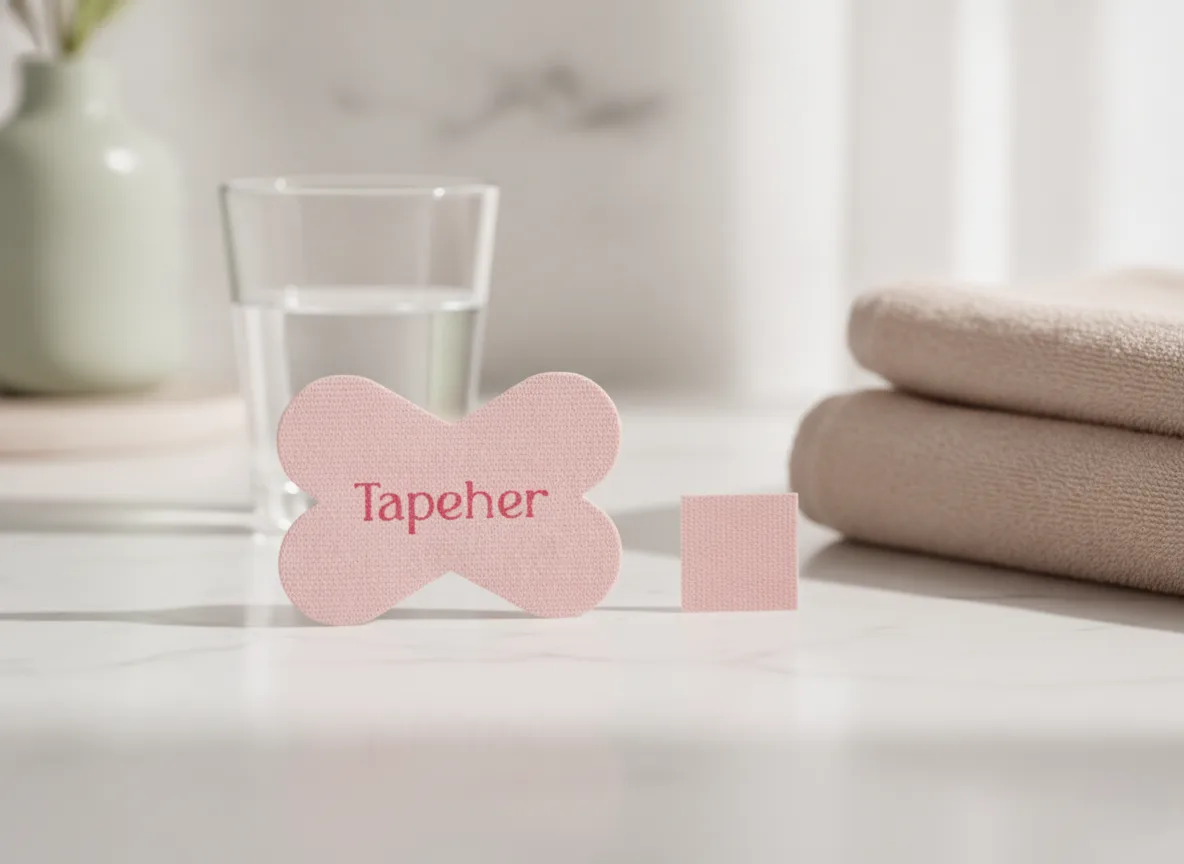
For those with sensitive skin, a smaller, X-shaped or lip-only design reduces the surface area of adhesive contact — which also reduces the cumulative exposure that drives sensitisation over time. You can explore options designed specifically for sensitive skin in our guide to non-toxic mouth tape.
Patch-test first
Apply a small piece of your chosen tape to the skin inside your wrist for 24 hours before using it on your face. If redness, itching, or swelling appears, the adhesive is incompatible with your skin and you should try a different formulation before using it overnight.
Start gradually
Begin with short daytime sessions — 20 to 30 minutes while relaxed — before committing to a full night. This helps you assess whether the psychological sensation is tolerable and allows your skin to signal any immediate reaction before you're eight hours into sleep.
Confirm nasal clearance
Before taping, fully confirm that your nasal passages are clear. Breathe in and out through your nose with your mouth closed for a full minute without straining. If you cannot do this comfortably, do not tape. This simple check rules out the most serious risk scenario.
Remove gently
Peel the tape slowly in the direction of hair growth, not perpendicular to the skin. Moistening the tape edge slightly can help loosen the adhesive and reduce the micro-trauma that accumulates with daily removal. After removal, apply a gentle, fragrance-free moisturiser to the perioral skin to support barrier recovery.
What the evidence actually says
It is worth stepping back to look at what the research base for mouth taping actually demonstrates — because the confidence with which it is promoted on social media is not matched by the clinical literature.
The most rigorous recent synthesis is the 2024 scoping review published in PLOS ONE, which examined 10 studies covering 213 patients. Key findings:
- Only 2 of 6 studies measuring AHI (apnea-hypopnea index) showed statistically significant improvements
- All 10 included studies scored "poor quality" on the Newcastle-Ottawa Scale
- The review identified a "potentially serious risk of harm" for individuals with nasal obstruction
- Overall literature is "markedly heterogeneous with little consensus" on mouth taping benefits across broader populations
- Mouth taping lacks sufficient evidence to be recommended as a general treatment for sleep-disordered breathing or OSA
A separate review of heterogeneous evidence found that while some studies show modest benefits for mild OSA and snoring, results across populations are inconsistent. The studies that showed benefit explicitly excluded participants with nasal obstruction — the very group most likely to try mouth taping because they are mouth breathers.
None of this means mouth taping is useless. For a healthy adult with genuinely clear nasal passages who wants to experiment with nasal breathing during sleep, the short-term risk profile is relatively modest — mainly skin irritation. But the evidence gap means it is an experiment, not a medically validated treatment. Be honest about that distinction when weighing whether to try it.
If you want to read a fuller breakdown of how mouth tape works and what the benefits research shows, see our guide to mouth tape for snoring for the evidence on the snoring-specific research.
How We Chose Our Sources
This article draws on peer-reviewed literature (PubMed-indexed studies and systematic reviews), institutional safety guidance from the Cleveland Clinic and the American Dental Association, FDA regulatory documents on the term "hypoallergenic," and EPA PFAS regulatory filings. We do not present personal testing results or invented clinical authority — only sourced, attributable claims.
A gentle option if you decide to try it
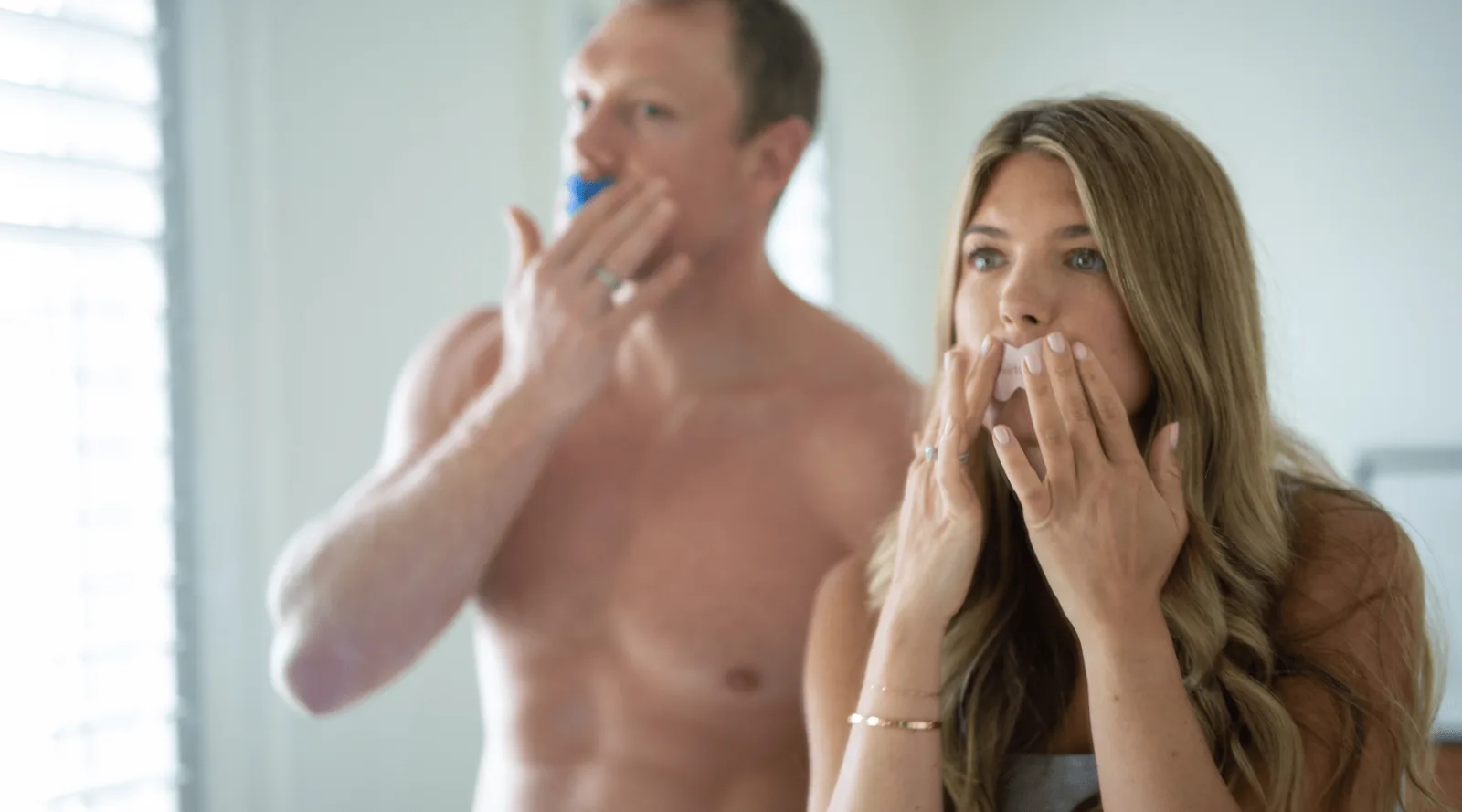
If you've read through the contraindications, confirmed nasal clearance, and decided you want to try mouth taping, starting with a tape designed for sensitive skin is a reasonable first step. TapeHer uses a 95% cotton/5% spandex fabric with third-party PFAS testing from SGS North America (January 2026) and an X-shape design that minimises adhesive surface contact.
TapeHer Mouth Tape
X-shape design, PFAS-tested (SGS, Jan 2026), 95% cotton — lower adhesive contact area than full-strip designs.
View product detailsFor deeper comparisons of specific products — including full ingredient disclosures and who each tape is best suited for — see our full guide to the best mouth tape and our best mouth tape for sleeping breakdown.
Where to go next
Mouth tape side effects range from mild skin irritation to serious breathing risk — the determining factor is your individual health profile. If you have clear nasal passages and no contraindications, the common side effects are manageable with the right tape type and a careful introduction. If any of the contraindications listed above apply, speak to a clinician before trying it. The evidence base is weaker than social media implies, and the stakes for the wrong candidate are real.
Sources
- Cleveland Clinic. Mouth Taping: Is It Safe? Commentary including Dr. Brian Chen, pediatric sleep specialist.
- PLOS ONE (2024). Scoping review of mouth taping for sleep-disordered breathing — 10 studies, 213 patients. PubMed Central indexed.
- American Dental Association (ADA). ADA News: caution on unsupervised mouth taping trend.
- FDA. Hypoallergenic Cosmetics Q&A — no legal definition of "hypoallergenic."
- EPA. PFAS Significant New Use Rule (SNUR), finalized January 2024.
- PubMed — Allergic contact dermatitis from acrylate adhesives; acrylate sensitisation rates 2019–2023 (1.6%→2.7%). ACDS Contact Allergen of the Year 2012: acrylates.
- Sleep and Sinus Centers (ENT specialist). Mouth taping and pregnancy contraindications.
- Evident Health (2026). Silicone-based adhesive sensitisation risk profile analysis.
- SGS North America. TapeHer PFAS laboratory test report, January 2026.
Medical disclaimer: This article is for general informational purposes only and does not constitute medical advice. Mouth taping carries real risks for certain individuals. Consult a qualified healthcare professional — including a physician or sleep specialist — before using mouth tape, especially if you have any pre-existing health condition, sleep disorder, nasal obstruction, or are pregnant. Nothing in this article should be used to diagnose, treat, or manage any medical condition.
Recommended for you
 Best Mouth Tape for Sleeping 2026: Top Picks & Buying Guide
 TapeHer Mouth Tape Review: X-Shaped Fit Compared
 Hostage Tape Review 2026: Honest Look + Best Alternatives
 The Best Mouth Tape: 7 Features That Matter for Comfort
 Non-Toxic Mouth Tape: What to Look For in Gentle Sleep Tape
 Mouth Tape for Snoring: Does It Work and Which One to Use