Non-Toxic Mouth Tape: What to Look For in Gentle Sleep Tape
Not all "non-toxic" mouth tape claims are equal. This guide breaks down what PFAS-free, hypoallergenic, and dermatologist-tested actually mean — with evidence-backed picks for sensitive skin and safety-conscious buyers.
What "Non-Toxic" Actually Means for Mouth Tape
Non-toxic mouth tape is the fastest-growing question in the sleep tape category — and for good reason. The adhesive sits on your lips and face for 7–8 hours every night, so what it's made of genuinely matters. This guide breaks down what the labels actually mean, which certifications hold up, and which products earn the "gentle" claim on evidence rather than marketing copy.
TapeHer is our top pick for safety-conscious buyers: SGS-verified PFAS-free, latex-free, 95% cotton base — the strongest documented credentials in this category.
If your priority is verified ingredient safety, TapeHer offers the most transparent paper trail of any product in this guide — SGS-confirmed PFAS-free status as of January 2026 and a 95% cotton/5% spandex base that aligns with best-practice material selection. Hostage Tape is a strong second for men with beards who need reliable adhesion, though it carries no published safety certifications at time of writing. Skip both if you have any nasal blockage, breathing condition, or are in your first trimester of pregnancy.
Check TapeHer — SGS PFAS-FreeKey Highlights
- The FDA has no legal definition of "hypoallergenic" — any brand can use the word without independent verification.
- Acrylate adhesives (the most common type in adhesive tapes) carry a 2.1–3.7% sensitization rate in patch-tested populations, per peer-reviewed research.
- PFAS-free claims are only credible when backed by a named third-party lab — SGS is the EPA-selected authority for PFAS testing.
- TapeHer has documented SGS PFAS testing (January 2026) using HPLC MS MS and GC MS methods — the only affiliate product in this guide with a publicly referenced lab report.
- Mouth tape is contraindicated for anyone with nasal obstruction, moderate-to-severe sleep apnea, or chronic allergies — see the safety note below before purchasing.
What "Non-Toxic" Actually Means for Mouth Tape
The phrase "non-toxic mouth tape" sounds reassuring, but it has no regulatory definition in the United States. Unlike a pharmaceutical, sleep tape sits in a regulatory grey zone — it's not a drug, not a medical device in most classifications, and not a cosmetic with FDA ingredient-disclosure requirements. That gap means almost any brand can print "non-toxic" on the packaging without proving it.
What you're actually evaluating when you search for non-toxic sleep tape is a combination of three things: the base material (the fabric part that contacts your skin), the adhesive (what holds the tape to your lips), and any additional ingredients like preservatives, dyes, or fragrances that could trigger reactions with repeated exposure. A tape can use a safe base material and an adhesive loaded with sensitizing chemicals — or the reverse. Both halves matter.
The safest base materials for daily sleep tape use are cotton (particularly 95%+ cotton blends) and silk. Cotton is a natural fiber with a well-established low-sensitization profile in medical and textile applications. It's breathable, allows skin moisture balance, and has minimal documented allergenicity. A 95% cotton / 5% spandex blend — like the one TapeHer uses — adds stretch for comfortable mouth movement while maintaining breathability. Synthetic films, latex, and low-quality plastic backings carry higher risk.
TapeHer Mouth Tape
95% cotton/5% spandex base. SGS-verified PFAS-free (January 2026). Latex-free. Hypoallergenic per vendor claims.
Ingredients and Adhesives to Avoid
The adhesive layer is where most of the risk lives. It's the component that bonds directly to the skin around your lips and perioral area — a zone that's more permeable than arm or leg skin. For a product used nightly, adhesive composition is the most important safety variable, and it's the one brands are least likely to disclose unprompted.
Acrylate-Based Adhesives
Acrylates are the most common adhesive type across tape products and wound dressings. They're effective and inexpensive, but they carry the highest sensitization risk of any adhesive class in common use. The American Contact Dermatitis Society named acrylates Contact Allergen of the Year in 2012. Clinical research shows that 2.1–3.7% of patch-tested populations are sensitized to acrylate compounds, with that rate rising from 1.6% in 2019 to 2.7% in 2023 — indicating an upward trend as more products introduce acrylate exposure. Cross-reactivity is high: research shows 83.8% of sensitized individuals react to multiple acrylate compounds, meaning once sensitized, switching to a different acrylate product may not help.
For occasional users, this risk may be acceptable. For daily mouth tape users with sensitive skin, the cumulative exposure to acrylate adhesives can trigger allergic reactions after weeks or months of symptom-free use — even if you tolerated the product initially. Silicone-based adhesives carry a significantly lower sensitization risk and are preferred for long-term daily use. Neither TapeHer nor Hostage Tape publicly discloses their adhesive type, which is worth noting when evaluating them against brands that do provide this information.
PFAS ("Forever Chemicals") in Adhesive Formulations
PFAS — per- and polyfluoroalkyl substances — are synthetic chemicals used in some adhesive formulations to reduce surface tension and improve spreading properties. They're called "forever chemicals" because the carbon-fluorine bond resists environmental and biological degradation: PFAS accumulate in the body and environment indefinitely. The EPA finalized new use rules in January 2024 to tighten PFAS regulation, and the European Commission is phasing out all PFAS. Potential health effects under EPA investigation include developmental and immune impacts.
A PFAS-free claim is only meaningful when backed by a named, accredited laboratory. SGS is the EPA-selected authority for PFAS testing and holds multiple accreditations including ISO-17025. TapeHer's January 2026 SGS North America report used HPLC MS MS and GC MS analytical methods to test the full finished product — base material plus adhesive — across 40+ PFAS compounds including PFOS, PFOA, PFHxS, and C9-C14 perfluorocarboxylic acids, finding levels below laboratory detection limits. This is the credible standard for a PFAS-free claim. A brand simply printing "PFAS-free" on packaging without a lab citation does not meet this bar.
Other Ingredients to Avoid
Beyond adhesives, check ingredient lists — when disclosed — for these known sensitizers: Azo dyes (used for color, established allergens for contact dermatitis); formaldehyde-releasing preservatives such as DMDM hydantoin, quaternium-15, and imidazolidinyl urea (found in approximately 1 in 5 personal care products per an FDA survey in 2022, and now banned in California, Maryland, Oregon, Washington, and Vermont due to contact dermatitis risk); synthetic fragrances (increasingly recognized as allergens); and colophony/rosin (a known sensitizer in some adhesive formulations). Brands that offer full ingredient transparency — rather than generic "hypoallergenic" claims — provide a meaningfully safer profile.
Certifications That Actually Matter
When evaluating non-toxic sleep tape, three types of third-party documentation hold real weight. Everything else is marketing language worth questioning.
Why "Hypoallergenic" Tells You Almost Nothing
The FDA has no legal definition of "hypoallergenic." A 1975 court decision prevented the FDA from setting formal standards, and that gap has never been closed. According to FDA guidance, manufacturers can use the term without proving anything to any regulatory body. Dermatologists widely acknowledge that "hypoallergenic" carries very little meaning in practice without independent verification. When you see a mouth tape marketed as "100% hypoallergenic," the claim may be genuinely aspirational — or it may be empty. Neither TapeHer nor Hostage Tape have published ISO 10993-1 sensitization testing that would give that claim objective backing, though TapeHer's SGS PFAS report is a meaningful and verified data point in the right direction.
PFAS Testing (SGS or Equivalent Accredited Lab)
A credible PFAS-free claim requires a named laboratory, a date, and a description of the methods used. SGS — the EPA-selected contractor for PFAS testing — uses HPLC MS MS and GC MS methods that detect PFAS compounds at parts-per-trillion sensitivity. TapeHer's January 2026 report meets this standard and covers the full finished product. If a brand claims PFAS-free status but cannot name a lab and provide a date, the claim is not independently verified.
ISO 10993-1 Biocompatibility Testing
ISO 10993-1:2025 is the international gold-standard protocol for medical devices with skin contact, newly recognized by the FDA in May 2026. For a daily-use skin-contact adhesive, the full test suite typically includes cytotoxicity testing (cell damage), skin irritation testing, sensitization testing using Human Repeat Insult Patch Test (HRIPT), and chemical characterization to identify leachable compounds. This is more rigorous than any other safety claim in common use. Neither TapeHer nor Hostage Tape publicly documents ISO 10993-1 certification. Some brands do publish ISO 10993-1 biocompatibility documentation — look specifically for that certification when evaluating options, as it provides a higher objective safety standard than PFAS testing alone.
Latex-Free Verification
Latex allergy affects a meaningful share of the population — particularly in healthcare and other occupational settings with frequent latex exposure. A latex-free claim should be paired with material composition disclosure. TapeHer confirms latex-free status in its product documentation. Hostage Tape describes the product as non-toxic and hypoallergenic per its vendor page, which implies latex-free — though the exact material composition is not publicly detailed.
Our Top Picks: Non-Toxic Mouth Tape
TapeHer Mouth Tape
What We Like
- Only pick with a published, named SGS lab report confirming PFAS-free status (January 2026, HPLC MS MS + GC MS methods)
- 95% cotton base aligns with best-practice material selection for skin-contact products
- Latex-free confirmed in product documentation
- Designed for sensitive skin — hypoallergenic per vendor claims
- Spandex component (5%) adds stretch for comfortable fit without rigid edges
What to Consider
- Adhesive composition (silicone vs. acrylate vs. other) not publicly stated
- No ISO 10993-1 biocompatibility documentation published
- PFAS-free testing, while meaningful, does not cover all sensitization pathways
TapeHer's strongest claim to the non-toxic label is its January 2026 SGS North America lab report — an independently verified document covering 40+ PFAS compounds across the full finished product (base material and adhesive combined). SGS is the EPA-selected authority for PFAS testing, lending this report more weight than a brand simply printing "PFAS-free" on packaging. The 95% cotton/5% spandex base material is a genuinely safe choice: cotton has one of the lowest sensitization profiles in textile and medical adhesive applications, and the spandex addition provides flexibility for sleep movement without compromising breathability. Where TapeHer's transparency falls short is adhesive composition — the specific adhesive class (silicone, acrylate, polyurethane, or other) is not disclosed in public materials, which limits a full safety assessment. For buyers who want the best available combination of documented safety credentials and skin-friendly materials among the products in this guide, TapeHer is the clear leader. For complete biocompatibility proof, ISO 10993-1-certified brands would set a higher bar.
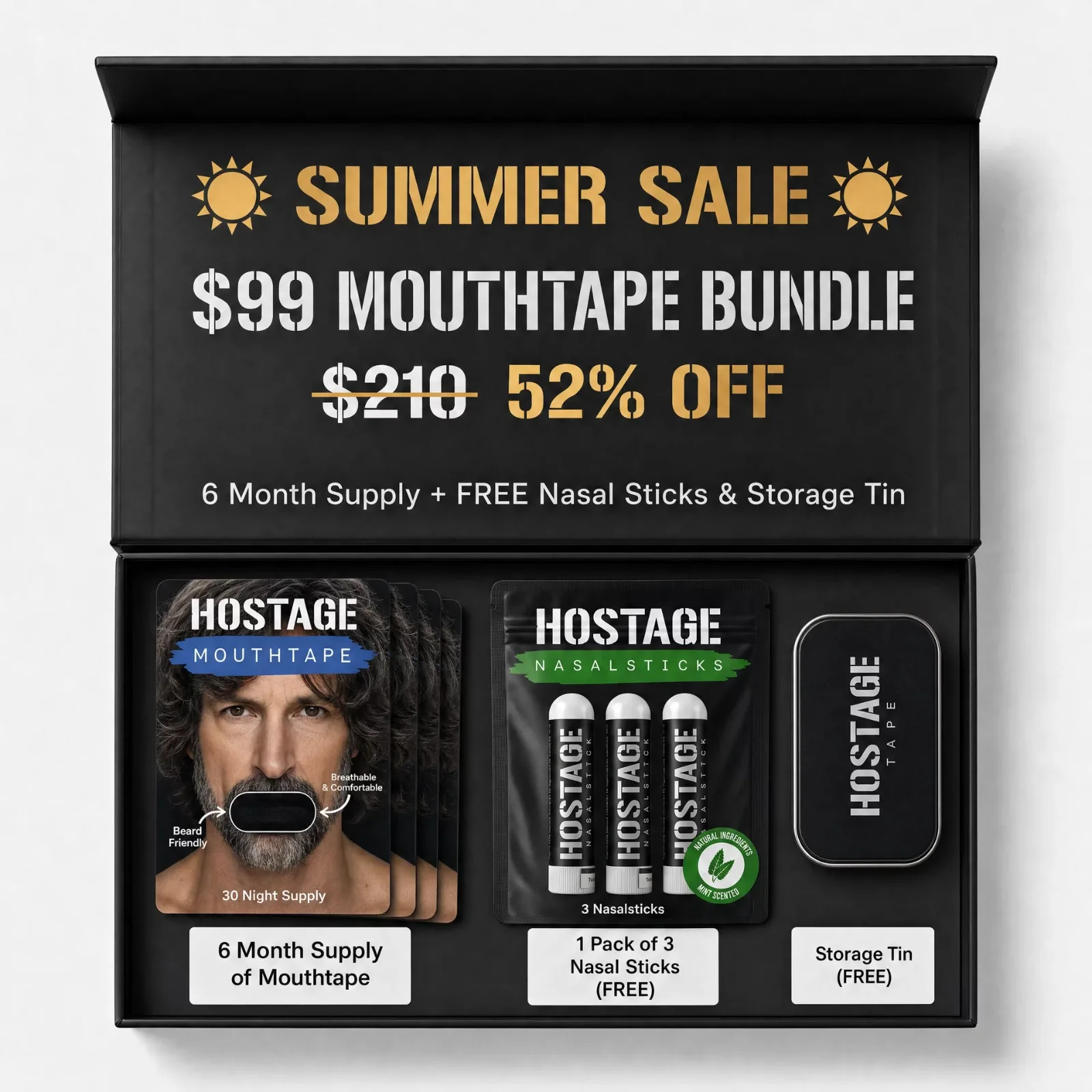
Hostage Tape
What We Like
- Proprietary BeardFlex technology engineered specifically for strong adhesion over facial hair
- Breathable mesh design for comfortable sleep wear
- Described as non-toxic and hypoallergenic per vendor page
- Available in BOGO format offering good per-unit value
What to Consider
- No published PFAS testing, ISO 10993-1 biocompatibility certification, or named third-party lab reports found
- Material composition not publicly disclosed
- "Hypoallergenic" per vendor claims only — unverified by any regulatory or independent body
- Safety claims rely on vendor language rather than documented third-party verification
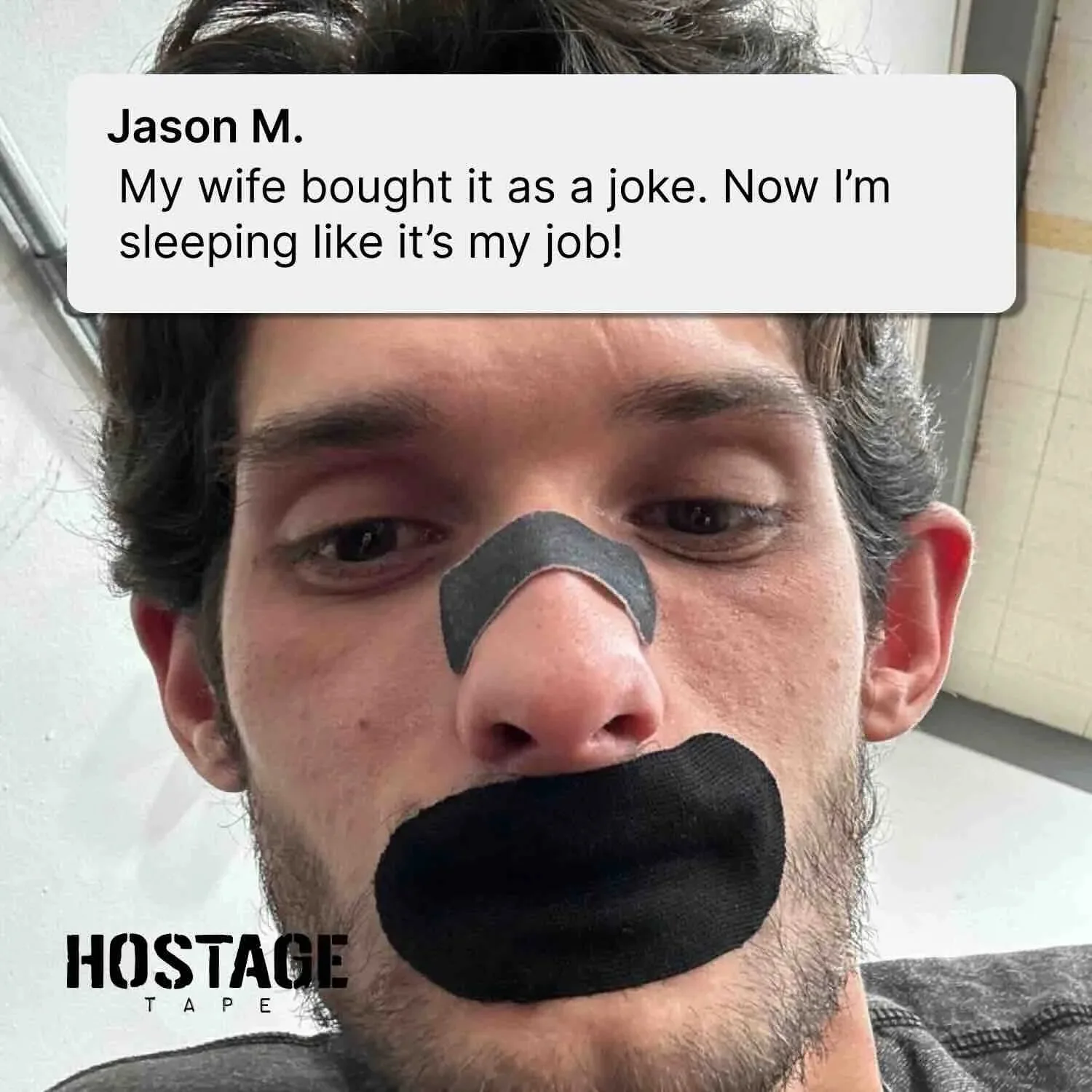
Hostage Tape solves a real problem: standard mouth tape loses adhesion over stubble and full beards, which is both ineffective and annoying. The BeardFlex technology is specifically engineered for this use case, and the breathable mesh design makes it more comfortable for prolonged sleep use than stiffer alternatives. For men who've struggled with tape peeling off overnight, this is a meaningful functional improvement over generic options. The safety picture is less clear. Per the brand's vendor page, Hostage Tape is described as non-toxic and hypoallergenic. However, no PFAS laboratory reports, ISO 10993-1 biocompatibility certifications, or published material composition data were publicly available at the time this article was reviewed. For buyers who prioritize documented safety credentials, this is a significant gap compared to TapeHer. Buyers who prioritize adhesive performance over certification documentation may find the trade-off acceptable, but should factor the transparency difference into their decision.
Side-by-Side Comparison
| Feature | TapeHer | Hostage Tape |
|---|---|---|
| Base material | 95% cotton / 5% spandex | Not publicly disclosed |
| Adhesive type | Not publicly disclosed | Not publicly disclosed |
| Latex-free | Yes (confirmed) | Implied per vendor claims |
| PFAS-free testing | Yes — SGS lab, January 2026 | No published report found |
| ISO 10993-1 biocompatibility | Not published | Not published |
| "Hypoallergenic" claim | Per vendor | Per vendor |
| Best for | Sensitive skin, safety-first buyers | Men with beards, strong hold |
| Key technology | Cotton/spandex blend, PFAS-free verified | BeardFlex adhesive system |
As of June 2026, TapeHer holds a clear lead on documented safety credentials. Hostage Tape leads on adhesive performance for bearded users. Neither product provides full ISO 10993-1 biocompatibility documentation — a gap shared with most consumer sleep tape brands on the market. See our best mouth tape for sleeping guide for a broader market comparison.
What to Look for When Buying Non-Toxic Mouth Tape
Ask About Adhesive Composition
The single most important question to ask a mouth tape brand is: what adhesive do you use? Silicone-based adhesives carry the lowest sensitization risk profile of any adhesive class — very few documented cases of silicone sensitization exist in the medical literature. Acrylate-based adhesives are far more common and cost-effective but carry a 2.1–3.7% sensitization rate that increases with daily exposure over time. Polyurethane adhesives fall in between. If a brand cannot or will not answer this question, that's a transparency gap worth noting. Brands like Somnifix and Dryft use silicone-based adhesives and disclose this; daily users with sensitive skin should strongly consider silicone-adhesive options.
Require a Named Lab for PFAS-Free Claims
A PFAS-free label on packaging is a marketing statement. A PFAS-free claim backed by an SGS (or equivalent ISO-17025-accredited) laboratory report with a date and methods cited is a verified finding. When evaluating any brand's non-toxic credentials, ask: what lab tested your product, when, and using what methods? If the answer is "we formulated it without PFAS" rather than "here is our lab report," the claim is unverified. You can read our TapeHer mouth tape review for a deeper look at what verified PFAS documentation looks like in practice.
Check the Ingredient List — Especially Preservatives
Formaldehyde-releasing preservatives (DMDM hydantoin, quaternium-15, imidazolidinyl urea) were found in approximately 1 in 5 personal care products in a 2022 FDA survey. These ingredients have been banned or restricted in California, Maryland, Oregon, Washington, and Vermont due to contact dermatitis risk. Synthetic fragrances are another common sensitizer. For a product used nightly on your face, full ingredient transparency is a reasonable expectation — not a luxury. Brands that provide complete ingredient lists with no formaldehyde-releasers or synthetic fragrances offer meaningfully safer profiles than those offering only vague marketing claims.
Evaluate "Dermatologist-Tested" vs. "Dermatologist-Approved"
These two claims are not equivalent. "Dermatologist-tested" requires only that a dermatologist applied the product to human skin at least once — no specific protocol, no adverse event tracking, no FDA verification required. "Dermatologist-approved" implies active endorsement following comprehensive evaluation, ingredient analysis, and often clinical trial data. For a daily-use sleep product, the difference is substantial. When a brand cites dermatologist credentials, ask which designation applies and whether documentation is available. Neither claim substitutes for ISO 10993-1 sensitization testing.
Patch Test Before First Use
Regardless of how credentialed a mouth tape product is, any new adhesive product on facial skin should be patch tested first. Apply a small piece to the inside of the wrist or behind the ear, leave it for 24 hours, and check for redness, itching, or rash before applying it to your face. This is especially important for daily users, where repeated exposure can trigger sensitization reactions even in people who showed no reaction initially. See our complete buying guide for step-by-step first-use guidance.
How We Chose
We evaluated mouth tape products against a framework built from peer-reviewed dermatology research, FDA and EPA regulatory guidance, and third-party testing standards. Selection criteria included base material safety profile (sensitization risk), adhesive class and documented testing, latex-free status, PFAS documentation (lab name, date, methods), ISO 10993-1 biocompatibility status, ingredient transparency, and known contraindications for key buyer populations. Products were assessed for marketing claim accuracy — distinguishing between verified certifications and unregulated label language. No products were physically tested by Purisia; all factual claims trace to the source pack documented below.
Why We Rate TapeHer
Safety Note Before You Start
Non-toxic formulation addresses skin-contact chemistry — it does not address breathing safety. Before using any mouth tape, this is the most important check: can you breathe easily and comfortably through your nose with your mouth completely closed? If the answer is anything other than a clear yes, mouth tape is not appropriate for you.
Mouth tape is contraindicated — and potentially dangerous — for people with the following conditions: nasal obstruction of any kind (including allergic rhinitis, chronic rhinitis, septal deviation, or enlarged tonsils); moderate to severe obstructive sleep apnea (a 2024 systematic review published in PLOS ONE confirmed that evidence for mouth taping in OSA is limited to mild cases, and that moderate-to-severe OSA patients should not use mouth tape without medical supervision); severe seasonal or chronic allergies; anxiety triggered by mouth covering; a history of vomiting during sleep or acid reflux; and children. Mouth tape is also not recommended during the first trimester of pregnancy, and requires OB/GYN consultation for second and third trimester use.
The American Dental Association has cautioned that many people adopt mouth taping based on social media content without any medical evaluation, which creates risk for those with undiagnosed nasal or airway issues. Consult a sleep specialist or ENT physician before starting mouth tape if you have any breathing, nasal, or sleep-related concerns. Read our Hostage Tape review for more on how product design intersects with safe use.
Get the best deals on non-toxic mouth tape
The Bottom Line
If documented safety credentials matter to you, TapeHer is the most transparent choice in this guide — SGS-verified PFAS-free, latex-free, and built on a cotton base. Hostage Tape is the better option for men with beards who need reliable adhesion and can accept the trade-off in published certifications. Both require clear nasal breathing to use safely.
See Our #1 Pick — TapeHerReferences
- PLOS ONE — Systematic Review of Mouth Taping Safety and Efficacy (2024)
- PubMed — Allergic Contact Dermatitis from Acrylates (2018)
- FDA — Hypoallergenic Cosmetics: Regulatory Status
- EPA — PFAS Risk Management
- SGS Environmental — PFAS Testing Services
- Campaign for Safe Cosmetics — Formaldehyde-Releasing Preservatives
- American Dental Association — Safety of Social Media Mouth Taping Trend
- RAAN — Dermatologist Tested vs. Approved: Know the Difference
- Pulmonology Advisor — Nocturnal Mouth Taping and Mild OSA (2022 pilot study)
- TapeHer — PFAS Testing Documentation
Recommended for you
 Can You Use Mouth Tape With CPAP: Questions to Ask First | Purisia
 Mouth Tape for Sleep Apnea: 6 Safety Questions to Ask First (2026)
 Mouth Tape Korea: Complete Guide to the 2026 Sleep Wellness Trend
 How Does Mouth Tape Help Your Jawline? 5 Claims Examined (2026)
 Logan Paul Mouth Tape Trend: Best 5 Safety Facts to Know in 2026
 Sleep Shield Mouth Tape Review 2026: 3 Best Alternatives to Know