If you wake up every morning with a mouth that feels like sandpaper due to dry mouth, you are not alone.
It is one of those annoying little problems that seems harmless at first. You drink some water, you move on. But then it keeps happening. And suddenly you are buying bedside water bottles in bulk, chewing gum before breakfast, and wondering why your throat feels weirdly scratchy by 10 a.m.
Dry mouth in the morning can come from a bunch of things. Some are totally simple. Some are worth taking seriously. But there is one night habit that fixes a shocking number of cases.
And it is not some expensive mouth spray or a special pillow.
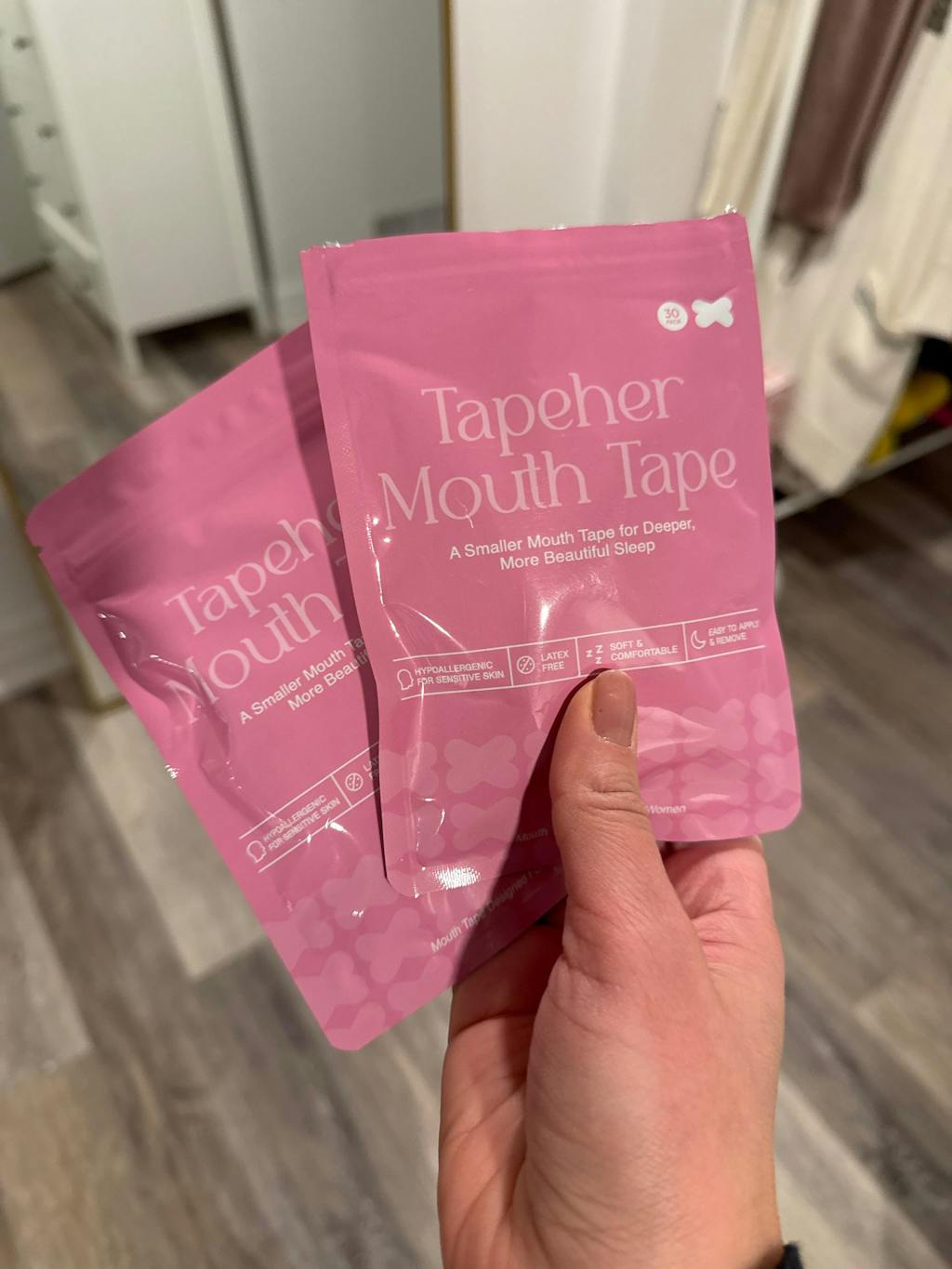
It is Tapeher.
The simple night habit: clear your nose before you sleep
Not “use mouthwash.” Not “stop eating salt.” Not “sleep with your mouth taped” right away.
The habit is: make nasal breathing possible before you fall asleep.
Meaning you do a short, boring little routine that makes your nose open and stay open enough that you naturally breathe through it at night.
Because for a lot of people, morning dry mouth is basically this:
you are sleeping with your mouth open
and you might not even know you are doing it.
Mouth breathing dries out your saliva. Saliva is your mouth’s built in protection system. It buffers acid, protects teeth, helps your gums, helps your breath, helps your throat feel normal. When your mouth is open for hours, saliva evaporates. You wake up dry, sticky, sometimes with bad breath that feels extra rude in the morning.
So the “habit” is really about one thing.
Stop the mouth breathing by making the nose work.
Let me walk you through it in a way you can actually use tonight.
First, a quick self check (so you are not guessing)
Dry mouth in the morning usually travels with a few other signs. Not always, but often.
You might notice:
- You wake up thirsty, and water disappears fast.
- Your lips feel dry or cracked.
- Your tongue feels coated or “fuzzy.”
- Morning breath is noticeably worse than usual.
- Your throat feels dry, like you slept in a desert.
- You drool sometimes, or your pillow shows it.
- You wake up with a slightly puffy face or congested nose.
And the big giveaway.
- You wake up and your mouth is open. Or you catch yourself doing it when you fall asleep.
If any of this sounds familiar, nasal breathing at night is the lever to pull first.
Why nasal breathing matters so much (and why mouth breathing dries you out)
Your nose is not just an air hole. It is a whole system.
When you breathe through your nose, it:
- warms the air
- humidifies the air
- filters the air
- helps regulate airflow and pressure in a way your mouth just does not
Your mouth, on the other hand, is basically a wide open vent. Air moves fast, it pulls moisture out, and it leaves tissues dry. Do that for 6 to 8 hours and yeah. Morning dry mouth.
And if you snore, it can be even worse. Snoring tends to come with mouth breathing or at least airflow turbulence. More drying. More irritation.
So if you fix the nose, you often fix the mouth.
Not always. But often enough that it is worth trying before you go down the rabbit hole of products.
The Night Nose Clearing Habit (5 minutes, no drama)
Here is the routine. You can do it in under 5 minutes. Try it for 7 nights straight. Not one night. A week.
1) Rinse your nose (optional, but very effective)
If you are even slightly congested at night, a saline rinse can be a game changer.
Use:
- a squeeze bottle (often easiest)
- or a neti pot
- with sterile or distilled water (or water boiled and cooled)
Use a premixed saline packet or make a proper isotonic saline mix. The point is not to burn your nose. The point is to gently flush out irritants, mucus, and whatever is making your nose swell.
Do this 30 to 60 minutes before bed if you can. Some people do it right before bed and it is still fine. Just see what feels comfortable.
If the idea freaks you out, skip it for night one. But honestly, it is one of those things that seems weird until you do it twice.
2) Use a warm shower or steam for 2 to 3 minutes
This is the lazy version. And it works for a lot of people.
Hot shower. Let the steam hit your face. Breathe through your nose. Slow. Calm. Not forced.
If you do not want a shower, you can do a simple steam bowl. Just be careful with hot water. You are not trying to cook your sinuses.
3) Do one minute of “unclogging” breathing (simple nasal breathing drill)
This is a simplified version of a common decongestion technique. If you have high blood pressure, are pregnant, or have any medical concerns, skip breath holds and just do gentle nasal breathing. Otherwise:
- Sit up straight.
- Take a normal breath in through your nose.
- Exhale through your nose.
- Pinch your nose gently and hold your breath for a few seconds.
- When you need to breathe, release and breathe through your nose calmly.
Repeat 2 to 3 times. Keep it gentle. The goal is not to suffer. The goal is to nudge the nose open.
If you hate breath holds, again, skip this and just do slow nasal breathing for a minute. Still helpful.
4) Use a nasal strip if your nose collapses a bit at night
Some people have a narrow nasal valve area or their nostrils collapse slightly when they inhale. You would never notice it in the daytime. But at night, lying down, it matters.
A basic nasal strip can mechanically open things up. It is not a cure for every kind of congestion, but for structural narrowing it can be ridiculously helpful.
5) Last step: set up your sleep position to make nasal breathing easier
Two things:
- Try sleeping on your side.
- Slightly elevate your head if you get stuffed up lying flat.
Back sleeping can make the jaw drop open more easily. It can also worsen snoring for some people. Side sleeping tends to support a closed mouth and better airflow.
Not for everyone, but it is a useful experiment.
That is the whole habit.
It is basically “prep the nose so you can keep your mouth closed without forcing it.”
What about mouth taping?
You have probably seen it online. A little strip of tape over the lips. People swear it changes their sleep.
Here is my honest take.
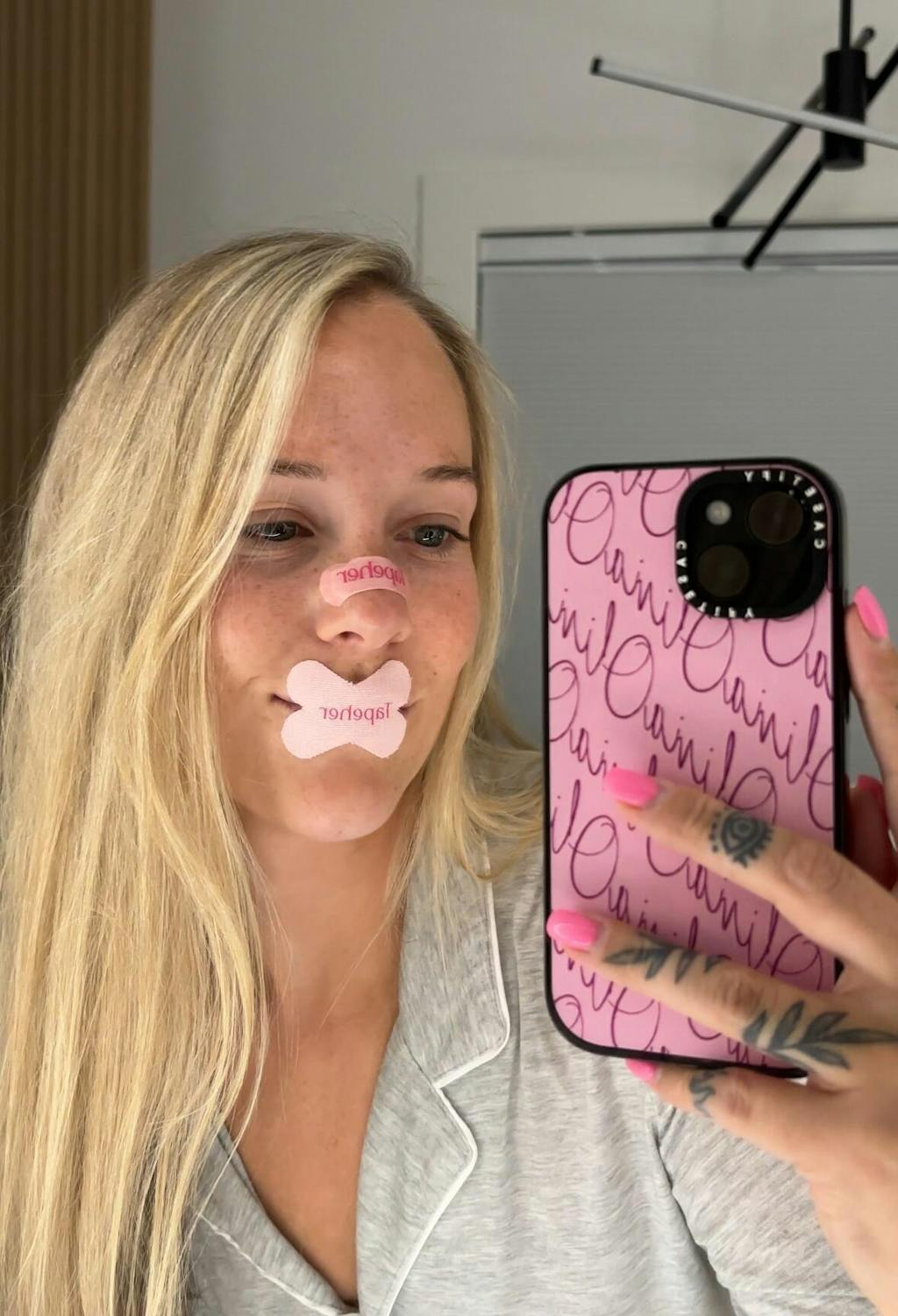
Mouth taping can help some people stop mouth breathing. But it should not be the first step if you are congested. If your nose is blocked and you tape your mouth, that is not “biohacking.” That is just making breathing harder.
If you want to try it, do it only when:
- your nose is clearly open
- you can breathe comfortably through your nose while lying down
- you use skin safe tape designed for this or at least something gentle
- you can remove it easily
And if you have sleep apnea or suspect it, talk to a clinician first. Mouth taping is not a treatment for sleep apnea. And sleep apnea is not something to casually ignore.
So yes, mouth taping can be a tool. But the habit that actually fixes the root problem for most people is still nasal breathing prep.
If you try this for a week, here is what you should notice
Not everyone gets instant results the first night. Sometimes yes. Sometimes it takes a few nights because inflammation calms down, or you stop waking and opening your mouth repeatedly.
But signs you are on the right track:
- You wake up with less “cotton mouth.”
- Your tongue feels more normal.
- You are less desperate for water first thing.
- Morning breath improves.
- Your throat feels less raw.
- You feel like you slept deeper. Not always, but it happens.
If nothing changes after a week, that does not mean you failed. It just means dry mouth is coming from a different direction, or multiple directions.
Let’s talk about the other common causes, quickly, so you can connect the dots.
Other common reasons you wake up with dry mouth (even if you are not mouth breathing)
1) Medications
This is huge. A lot of common medications reduce saliva.
Examples include many:
- antihistamines
- antidepressants
- anti anxiety meds
- blood pressure meds
- decongestants
- ADHD stimulants
- muscle relaxants
If your dry mouth started around the time you started a medication, that is worth discussing with your prescriber. Sometimes a dosage change, timing change, or alternative medication helps.
Do not stop meds on your own. Just connect the timing and ask.
2) Alcohol at night
Alcohol is dehydrating and it also messes with sleep quality. It can increase snoring and mouth breathing too. So it hits from two sides.
If you drink in the evening, try a simple test: 5 nights with no alcohol. See what happens.
3) Dehydration and salt intake
If you are going to bed under hydrated, your body will feel it.
This is not a “drink gallons of water” lecture. Overdoing it can just make you wake up to pee. But if your urine is consistently dark, or you barely drink during the day, dry mouth at night makes sense.
Also, salty dinners can make you thirstier overnight.
Simple fix. Drink enough earlier in the day. Have a glass of water with dinner. Keep bedside water, sure. But treat it as backup, not the whole plan.
4) Dry bedroom air
Heating in winter, AC in summer, low humidity, all of it can dry out your mouth and throat.
If your lips and skin are also dry in the morning, consider a humidifier. Even modest humidity can help.
5) Acid reflux or silent reflux
Some people wake up with dry mouth and a weird throat because reflux irritates tissues. Sometimes you also get a sour taste, frequent throat clearing, or a cough that is worse in the morning.
If that sounds like you, work on reflux basics: avoid heavy late meals, elevate head slightly, reduce trigger foods, and talk to a clinician if it persists.
6) Sleep apnea
This one matters.
If you have dry mouth plus loud snoring, choking or gasping at night, morning headaches, daytime sleepiness, or your partner says you stop breathing sometimes, get evaluated.
Sleep apnea often causes mouth breathing and dry mouth, but it is not just an annoying symptom. It is a health risk.
A quick note on dental health (because dry mouth is not harmless)
If you consistently have low saliva, your risk of:
- cavities
- gum irritation
- bad breath
- enamel issues
goes up. Saliva is protective. So if this is happening daily, do not just power through.
Even if you fix the morning dryness, it is still worth mentioning at your next dental visit. Dentists see the signs.
The easiest version of the habit (if you want the absolute minimum)
If the full routine feels like too much, do this tonight:
- Take a warm shower and breathe through your nose for 2 minutes.
- Put on a nasal strip.
- Sleep on your side.
That is it.
It is not perfect, but it is enough to test the idea. If you wake up noticeably less dry, you have your answer. Your mouth was drying out because your nose was not doing its job at night.
Then you can add the saline rinse later if you want stronger results.
When to talk to a doctor (just to be safe)
Try the nose clearing habit for a week. But if any of this is true, do not wait months:
- Dry mouth is severe and constant, not just mornings
- You have trouble swallowing dry foods
- You get frequent cavities suddenly
- You suspect sleep apnea
- You have new dry eyes, joint pain, or fatigue (yes, sometimes dryness is part of a bigger picture)
- You are on multiple medications that cause dry mouth and it is affecting daily life
There are medical causes of dry mouth that deserve real evaluation. Better to check than guess.
Wrap up, what I would do tonight
If I were waking up with dry mouth every day, I would stop trying random mouth products first.
I would do the boring fix.
- Make nasal breathing possible.
- Make it easy.
- Make it consistent for 7 nights.
A little saline rinse or steam. A nasal strip if needed. Side sleeping. Then see what changes.
Because when morning dry mouth disappears, it feels oddly emotional. Like, wait. This was optional?
And if it does not disappear, at least now you have ruled out the most common cause. Which is still progress. Real progress.
Try it tonight. Keep it simple. Then pay attention to how you wake up tomorrow.
Discover it now: purisia.com