Balmbare Revive Oil Review 2026: Ingredients, Evidence and Verdict
An evidence-first Balmbare Revive Oil review: what the aloe vera, rosemary, peppermint, collagen and pearl powder formula can and can't do, backed by the actual studies behind each ingredient.
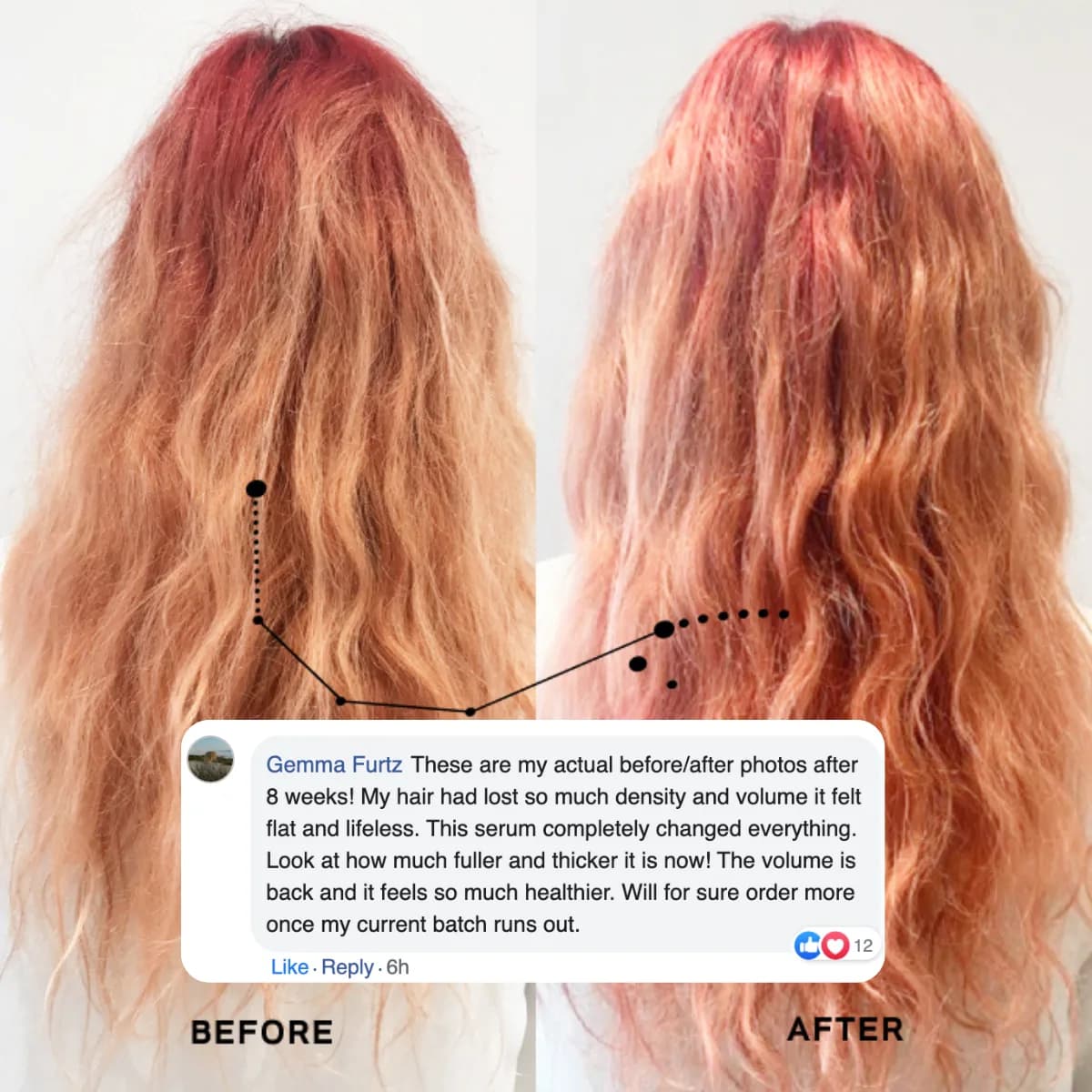
What is Balmbare Revive Oil
This Balmbare Revive Oil review exists because most hair-oil marketing borrows the word "clinical" without showing the actual study behind it. Balmbare is a supplement brand that built its Revive Oil around five named ingredients — aloe vera, rosemary, peppermint, collagen, and pearl powder — and we wanted to know what the independent research on each one actually says, not just what the brand claims.
Key highlights
- Formula combines aloe vera, rosemary, peppermint, collagen, and pearl powder in one scalp oil, sold in one, two, or three-pack sizes.
- Rosemary is the strongest-evidenced ingredient here for androgenetic (pattern) hair loss specifically, not all hair loss types.
- The peppermint result often cited for hair growth comes from a 2014 study done in mice, not people.
- Topical collagen cannot physically reach the hair follicle — it hydrates the hair shaft, it does not regrow hair.
- Balmbare holds a 4.6-star Trustpilot rating from 623 reviews, though third-party review profiles like Trustpilot can be manipulated, so treat this as a data point, not proof.
A scalp-support oil worth trying alongside — not instead of — proven treatments
Balmbare says it builds every formula from published research rather than trend ingredients. That is a good starting philosophy, but each ingredient still carries its own separate evidence — and separate limits — which is what the rest of this Balmbare Revive Oil review walks through.
Check Current Price at BalmbareWhat is Balmbare Revive Oil
Balmbare Revive Oil is a topical scalp and hair oil built around five named actives: aloe vera, rosemary, peppermint, collagen, and pearl powder. It is sold in One Pack, Two Pack, and Three Pack sizes, positioned by the brand as a hair-growth support product for people concerned about thinning or shedding. Balmbare's own account of its founding says the company started at a kitchen table after a family member's hair loss, with the founders stating a goal of assembling clinically-studied ingredients at meaningful doses rather than chasing trend actives. That is a brand narrative, worth noting as context — it is not, on its own, evidence that the finished oil performs as advertised.
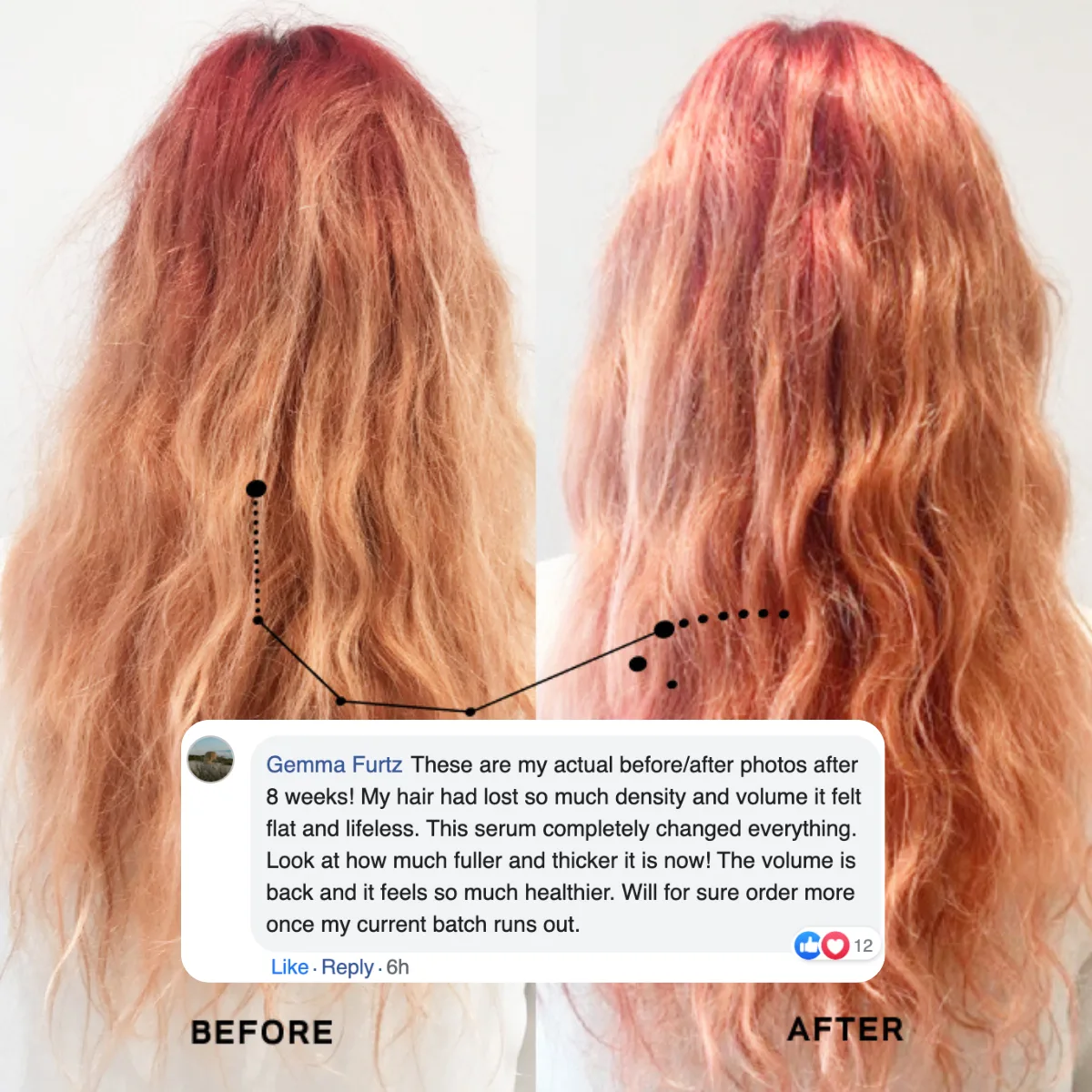
Hair-growth oils as a category generally work by combining moisturizing, nourishing, and stimulating ingredients that deliver fatty acids, vitamins and minerals to the scalp, aiming to create a healthier environment for follicles rather than acting as a single-molecule drug. That framing matters for expectations: oils in this category are generally positioned as scalp-condition support, not as a replacement for an FDA-approved treatment.
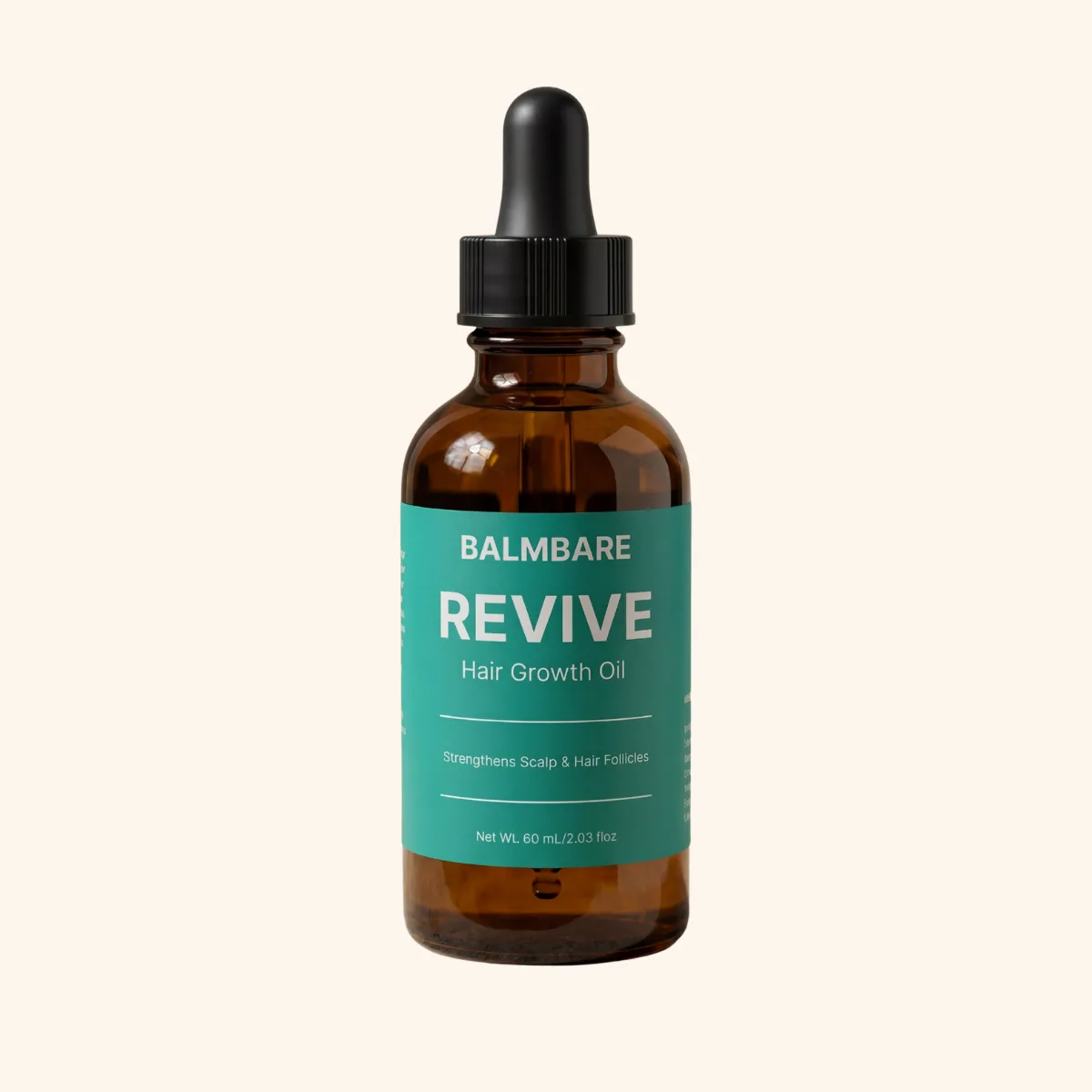
Balmbare Revive Oil
Aloe vera, rosemary, peppermint, collagen, and pearl powder in one scalp oil; available in 1, 2, or 3-pack sizes.
Check Current PriceWhat the ingredient evidence actually shows
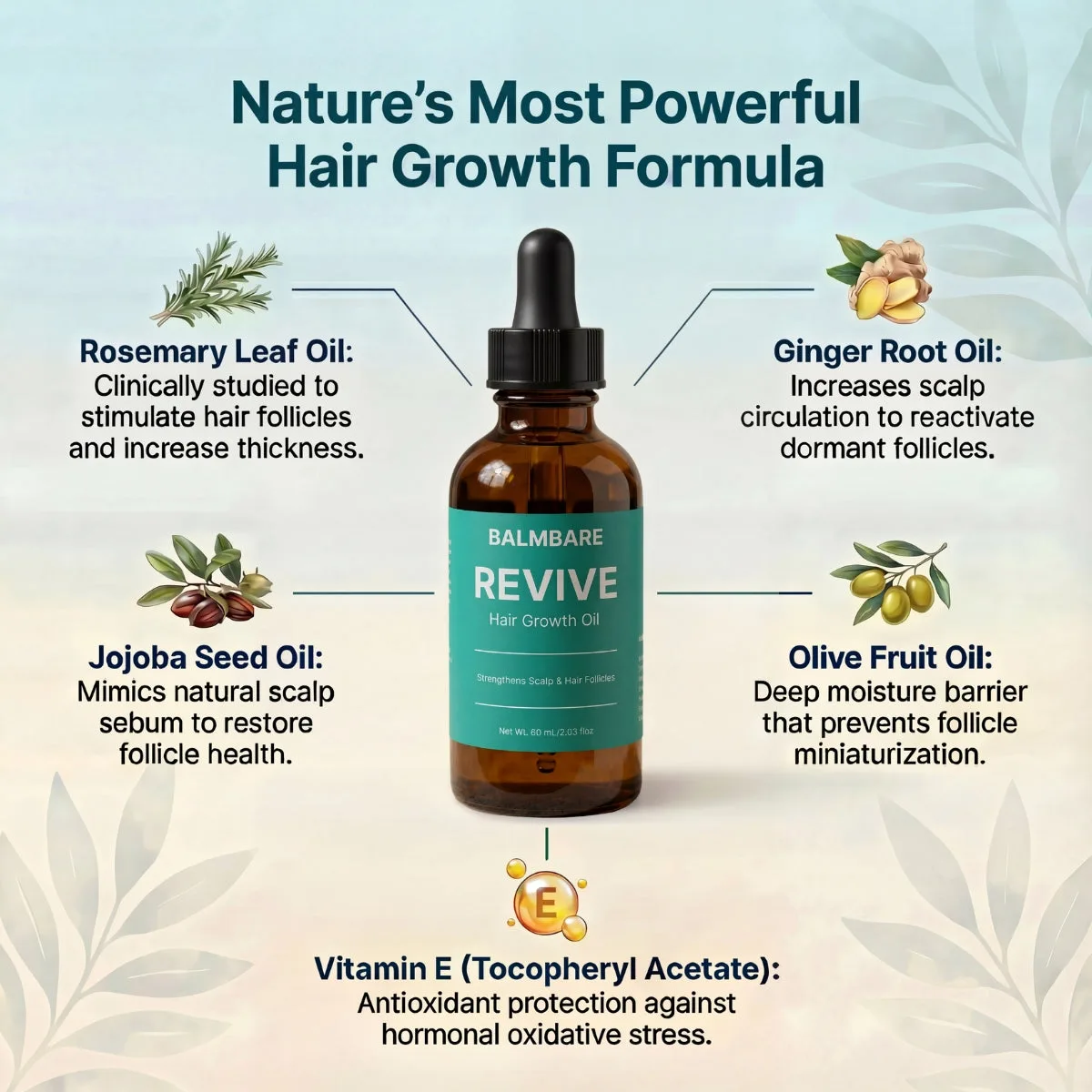
Rather than repeat brand copy, here is what independent, ingredient-level research says about each active in Balmbare Revive Oil — including where the evidence is strong and where it is thin. It is important to separate ingredient-level studies from a finished-product trial: none of the following research tested the Balmbare formula itself, only the individual compounds it contains.
Rosemary oil: the strongest single ingredient here
Rosemary is the best-supported ingredient in the formula. A 2022 study found rosemary oil had effects comparable to minoxidil, an FDA-approved hair-growth medication, after six weeks of use, with later 2023 and 2024 research pointing the same direction. Researchers believe rosemary improves scalp blood circulation, which may support follicle regeneration, and its bioactive compounds carry antioxidant and anti-inflammatory properties. The important caveat: this evidence applies mainly to androgenetic alopecia (pattern hair loss), and more research is still needed to confirm it works for other causes of shedding. A separate 2015 randomized trial comparing rosemary oil directly to 2% minoxidil over six months found comparable hair-count increases in both groups, with rosemary causing significantly less scalp irritation.
Peppermint oil: a promising signal, but it's a 2014 mouse study
Peppermint often gets cited in hair-oil marketing on the strength of a landmark 2014 study — but that study was conducted in mice, not humans. In that animal model, the peppermint oil group showed the most significant hair growth compared with saline, jojoba oil, and 3% minoxidil. The proposed mechanism is menthol increasing blood flow — a 4% menthol solution was shown to dilate blood vessels in separate research. But human clinical evidence for peppermint and hair growth remains limited, and consumer products rarely disclose exact menthol concentrations, which makes it hard to know if a given oil delivers an effective dose. Read the mouse-study result as an interesting early signal, not a stand-in for proof it beats minoxidil in people.
Aloe vera: strongest evidence is for scalp comfort, not growth
Aloe vera's best-documented benefit is scalp health rather than hair growth. Small placebo-controlled studies suggest aloe may help reduce seborrhoea and dandruff linked to seborrheic dermatitis, easing itching and scaling thanks to anti-inflammatory fatty acids. Aloe also contains vitamins A, C, E, B12, and folic acid, which theoretically support healthy cell growth. But direct evidence that aloe vera speeds hair growth is thin — anecdotal reports exist, clinical proof largely does not. If your scalp itself feels irritated or flaky, this is the ingredient doing the heaviest lifting in the formula.
Collagen: hydration, not regrowth — and that's worth saying plainly
Collagen supports hair strength and scalp elasticity by supplying amino acids used in keratin synthesis. But there is an honest limitation that most hair-oil marketing skips: collagen molecules are roughly 300,000 daltons, far too large to penetrate the epidermis and reach hair follicles in the deeper dermis. A topical collagen serum can attract water to hydrate hair and scalp — a real, useful effect — but it will not directly stimulate regrowth. Think of collagen here as a conditioning ingredient, not a growth ingredient.
Pearl powder: the one ingredient we could not verify
The fifth named ingredient in Revive Oil is pearl powder, and it is the one we have to be straight about: we found no independent, peer-reviewed research on pearl powder for scalp or hair outcomes to cross-check the brand listing against. That is not the same as saying it does nothing — it means there is nothing credible to weigh, so we reviewed the other four actives and left this one unscored. Treat any marketing built around it as a claim, not evidence.
Combined essential-oil formulas: why blending can outperform single actives
Separately from Balmbare's specific formula, research on combined essential-oil approaches is genuinely encouraging for the category. A 2025 double-blind randomized clinical trial found rosemary-based oil combinations improved hair growth rate by over 57%, increased hair thickness by nearly 70%, and reduced hair fall by more than 40% across 90 days of consistent use. Rosemary paired with lavender showed a 57.73% growth-rate increase, versus 47.59% for a rosemary-castor pairing, in that same trial. This is why multi-ingredient oils are a reasonable category to try — but note this specific trial tested rosemary-lavender and rosemary-castor blends, not the exact Balmbare Revive Oil formula.
How to use Revive Oil
General guidance for scalp oils in this category, combined with Balmbare's own product positioning:
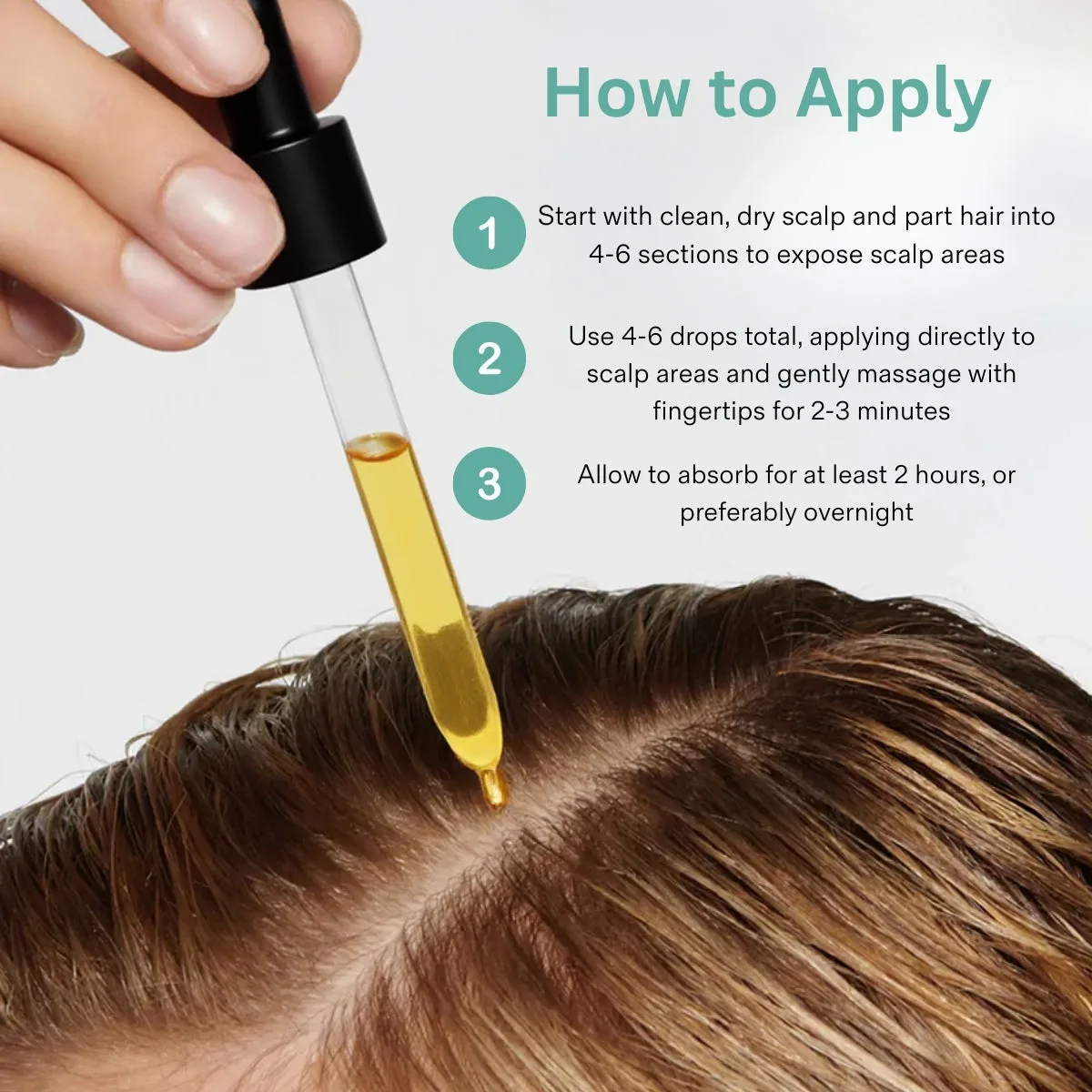
- Start with clean, dry or towel-dry hair so the oil can reach the scalp rather than sitting on strands.
- Section hair and apply a small amount directly along the scalp, focusing on areas of concern.
- Massage gently for one to two minutes to help distribute the oil and support circulation.
- Leave on per the product's label directions before rinsing or styling as normal.
- Patch-test on a small area first, especially if you have sensitive skin, given aloe vera and essential oils can trigger allergic reactions in some users.
- Use consistently — the underlying ingredient studies (rosemary especially) measured results over six weeks to six months, not days.
Common mistakes with scalp oils like this one
Expecting overnight results
The ingredient studies behind rosemary and peppermint measured outcomes over six weeks to six months, not days. Judging a hair oil after one week sets an unrealistic bar that no topical product — prescription or otherwise — could clear.
Treating it as a diagnosis-free fix
Hair loss has many causes — hormonal, nutritional, autoimmune, or genetic. A scalp oil, however well-formulated, cannot address causes it wasn't designed for. If shedding is sudden, patchy, or severe, that calls for a clinician, not just a new bottle.
Skipping the patch test
Essential oils like peppermint are only "generally recognized as safe" when properly diluted; undiluted or overly concentrated application should be avoided, and product labels rarely disclose exact concentrations. A patch test protects against unpleasant surprises on your whole scalp.
Reading third-party ratings as clean proof
Balmbare shows a 4.6-star Trustpilot rating from 623 reviews, with reviewers citing product results and responsive customer service. Trustpilot profiles are a useful signal, but they are also a platform where review manipulation has been documented industry-wide — treat any single rating as one input, not a verdict, and weigh it alongside the ingredient evidence above.
Balmbare Revive Oil: the full review
Balmbare Revive Oil
What We Like
- Built around rosemary, the ingredient with the strongest independent evidence in this formula.
- Aloe vera adds real, documented scalp-soothing benefit for irritation and flaking.
- Multiple pack sizes let you test before committing to a longer routine.
What to Consider
- No published clinical trial on the finished Revive Oil formula itself — only on its individual ingredients.
- Peppermint's headline result is from a 2014 mouse study, not confirmed human data.
- Collagen in this formula hydrates but cannot physically reach the follicle to regrow hair.
Balmbare's stated approach — building formulas from published research and small-batch, third-party-tested U.S. manufacturing — is a genuinely better starting point than most hair-oil marketing. The formula leans on rosemary, its best-evidenced ingredient, and pairs it with aloe for scalp comfort. Where it's easy to overstate results is peppermint (animal data only) and collagen (hydration, not regrowth) — this review treats both honestly rather than rounding up.
How it compares
| Approach | Best evidence for | Format |
|---|---|---|
| Balmbare Revive Oil | Scalp hydration; rosemary-driven support for pattern hair loss | Topical oil, daily massage-in |
| Topical minoxidil 5% | FDA-approved, clinically proven for male and female pattern hair loss | Topical solution/foam, twice-daily |
| Personalized medical plans (e.g. Dense Hair Experts) | Clinician-guided, prescription-eligible regimens for diagnosed hair loss | Consultation + prescribed topical/oral products |
Balmbare Revive Oil sits closest to a supporting scalp-care product rather than a medical-grade monotherapy. If you want an FDA-approved, heavily studied first-line option, minoxidil has the deepest evidence base. If you want a clinician involved, a personalized medical service is the more thorough route. Revive Oil's place is as a scalp-focused addition to a routine, not a replacement for either.
Alternatives worth knowing
If you're comparing approaches before you buy, our Dense Hair Experts review covers a clinician-supervised, prescription-eligible route for diagnosed pattern hair loss, which is a meaningfully different model from an over-the-counter oil. If your focus is more on daily hair styling and care rather than regrowth specifically, our Simpletics hair care guide looks at a natural-ingredient men's styling range that solves a different problem than Revive Oil does. And if the water hitting your scalp is part of the picture, our Helios Filter review looks at filtering the shower itself rather than adding another leave-in product.
What to look for before you buy a hair-growth oil
Check what's actually studied, not just what's listed
An ingredient list only tells you what's inside — it doesn't tell you whether that ingredient has good evidence for your specific concern. Rosemary has the strongest data for pattern hair loss in this formula; aloe's strongest data is for scalp comfort, not growth.
Understand the difference between ingredient studies and product trials
Almost every hair-oil brand, Balmbare included, cites ingredient-level research rather than a trial on their finished bottle. That's normal in this category, but it means results can vary from what the underlying study measured.
Weigh third-party ratings carefully
A 4.6-star Trustpilot score from 623 reviews looks reassuring at a glance, but independent analyses have flagged fake-review patterns on Trustpilot profiles industry-wide, so use it as one data point among several rather than a stand-alone reason to buy.
How We Chose
We cross-checked every ingredient claim in Balmbare's product listing against independent, peer-reviewed or medically-reviewed sources rather than relying on brand copy alone, and we flagged where evidence was animal-only, ingredient-only, or missing a finished-product trial.
Our verdict
Balmbare Revive Oil is a reasonably well-reasoned scalp oil: it leans on rosemary, its best-evidenced ingredient, and adds aloe for real scalp comfort. It's a sensible pick for people who want a supporting, low-risk addition to a hair-care routine and who have already patch-tested for sensitivity. It is not the right choice if you're expecting a substitute for a diagnosed medical treatment, and you should read the peppermint and collagen claims with the caveats above rather than at face value.
Check Current Price at BalmbareReferences
- Medical News Today — Rosemary oil and combined essential oils for hair growth
- Medical News Today — Peppermint oil and hair growth research (2014 mouse study)
- Healthline — Aloe vera for scalp and hair: evidence and benefits
- MDhair — Collagen in topical products: limitations for hair regrowth
- ISHRS — Effectiveness of 5% minoxidil for male pattern hair loss
This article is for informational purposes only and is not medical advice. Hair loss has many possible causes; talk to a dermatologist or physician before starting any new treatment, especially if shedding is sudden or severe. Individual results with any topical product vary and are not guaranteed.
Recommended for you
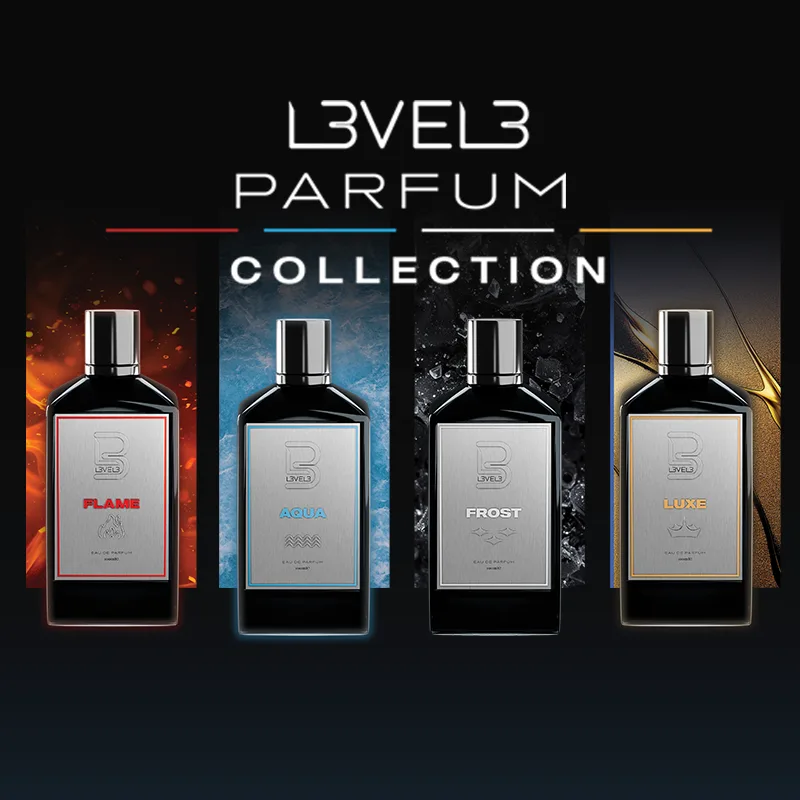 L3VEL3 Cologne Review 2026: Best 4-Pack for Barbershop Scents
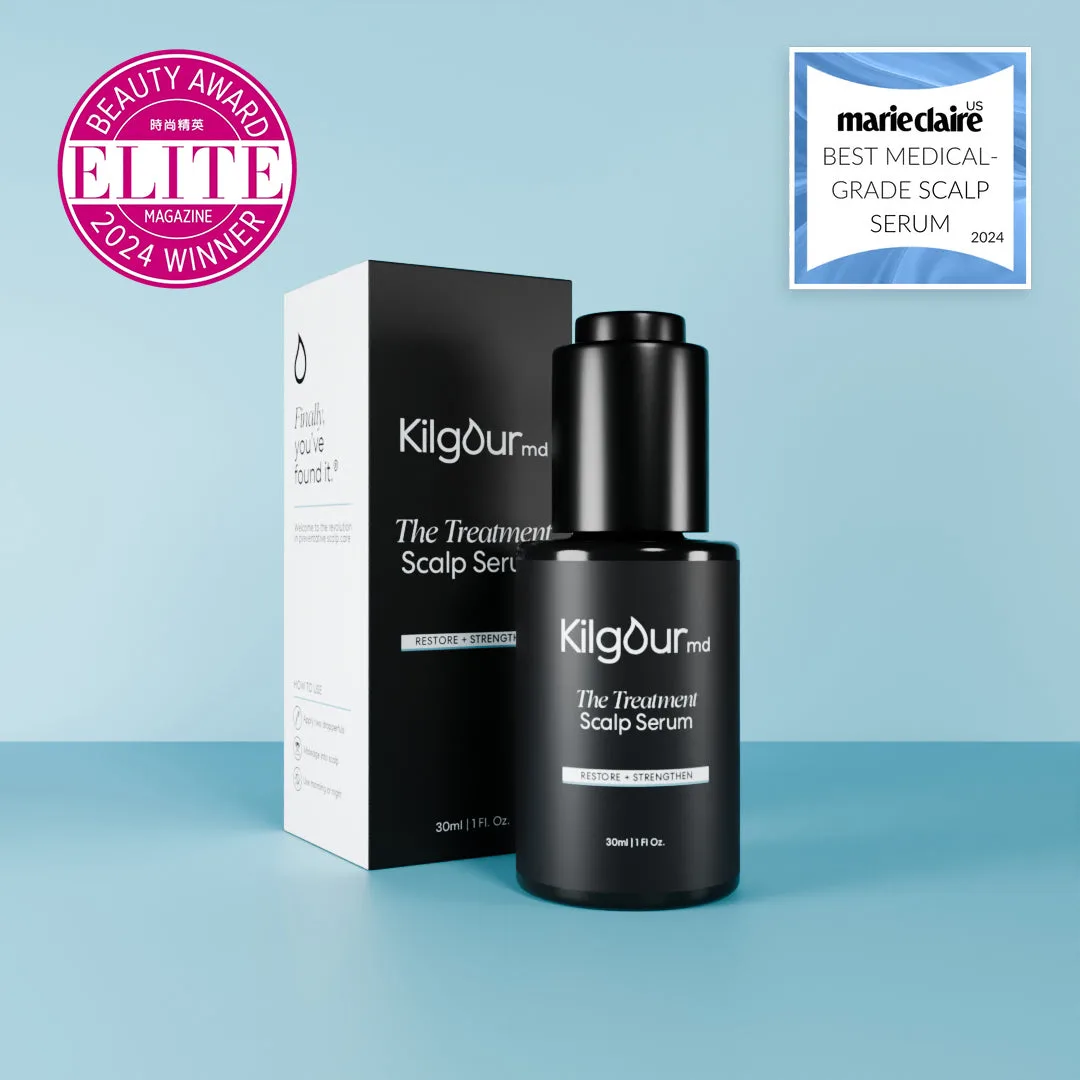 KilgourMD Scalp Serum Review: 8 Ingredients, Real Evidence (2026)
 Organic Jaguar Natural Conditioner Review 2026: Worth It?
 NOBS Herbal Mouthwash Review: Is It Worth It in 2026?
 Flowette Active Fit Review 2026: Safe for the Gym?
 Carerspk Review: Washable Incontinence Pants Guide (2026)