KilgourMD Scalp Serum Review: 8 Ingredients, Real Evidence (2026)
A source-backed look at KilgourMD's Treatment Scalp Serum: the dermatologist behind it, what each ingredient's real clinical evidence shows, and where the brand's marketing claims outrun the science.
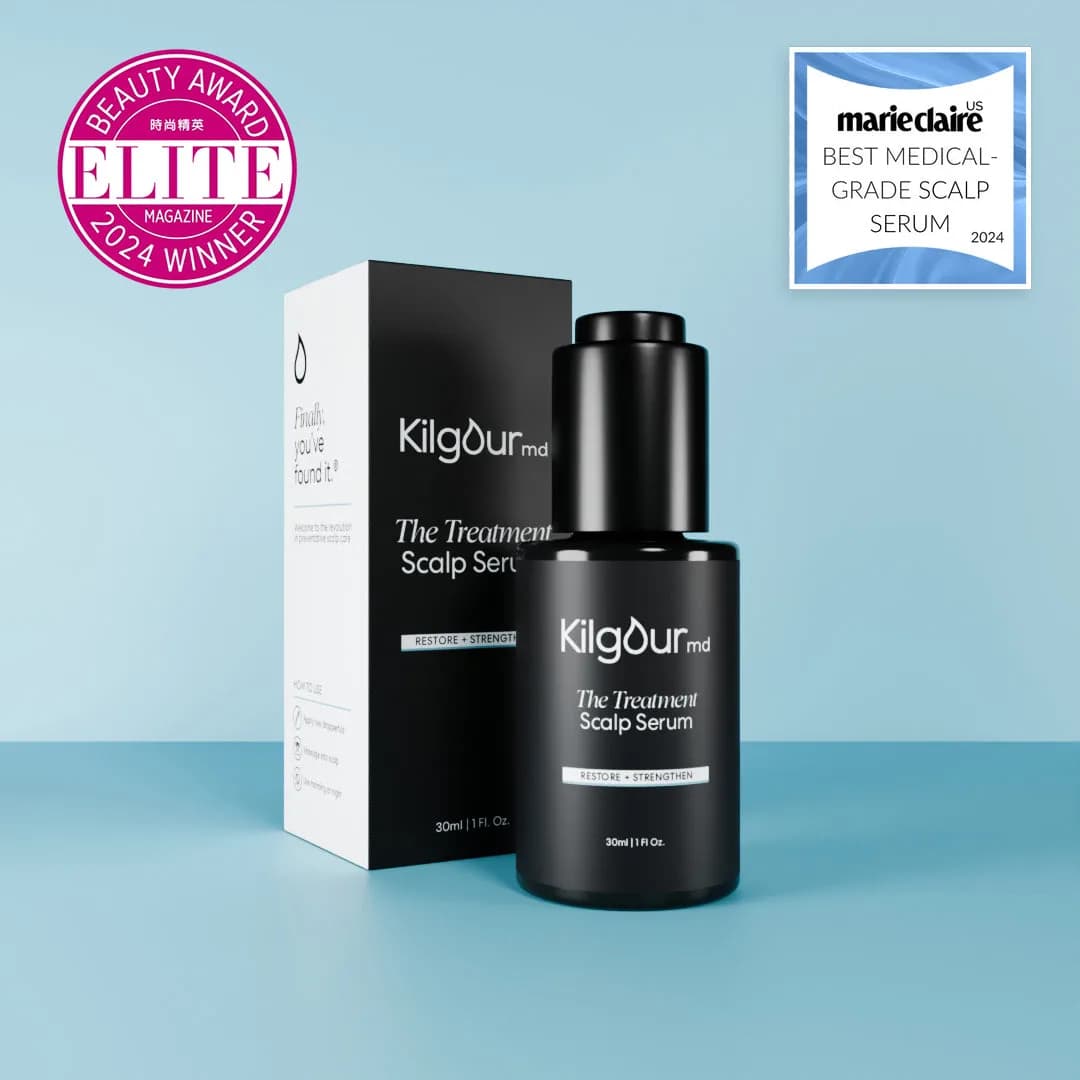
What is KilgourMD's Treatment Scalp Serum
The KilgourMD Scalp Serum Review below breaks down what's actually inside The Treatment, walks through the published evidence behind each active ingredient, and flags exactly where the brand's own marketing claims outrun the science. This is a cosmetic product, not a drug — and that distinction matters for anyone comparing it to prescription options.
- The Treatment Scalp Serum is a cosmetic product, formulated by a board-certified dermatologist, not a prescription drug — it is not intended to diagnose, treat, cure, or prevent any disease.
- Its four headline actives (Redensyl, saw palmetto, caffeine, rosemary) each have real published research behind the ingredient, but none of that research tested this specific finished serum.
- Evidence strength varies a lot by ingredient — from a landmark double-blind RCT (rosemary) to a caffeine literature review rated "very low" quality.
- Anyone with sudden, rapid, or patchy hair loss should see a dermatologist for a diagnosis before trying any topical product, cosmetic or otherwise.
A dermatologist-formulated cosmetic serum with genuinely researched ingredients, sold with marketing language that reaches further than the evidence does
KilgourMD's Treatment Scalp Serum combines four ingredients with published research behind them, formulated by a board-certified dermatologist. But "the ingredients are studied" is not the same claim as "this serum is clinically proven" — the brand's language sometimes blurs that line, so we've kept the two separate below.
Check current priceWhat is KilgourMD's Treatment Scalp Serum
KilgourMD is a scalp-health brand founded in 2023, and The Treatment Scalp Serum is its flagship product. The brand markets it to "decrease visible hair fall," "reverse lost fullness," and "prevent premature scalp aging" — but it's important to be precise about what that means. The product page itself states the serum is "not intended to diagnose, treat, cure, or prevent any disease or medical condition" — the standard disclosure for a cosmetic, not a drug. That's not a knock on the product; it's a regulatory fact that shapes how you should read every claim that follows.
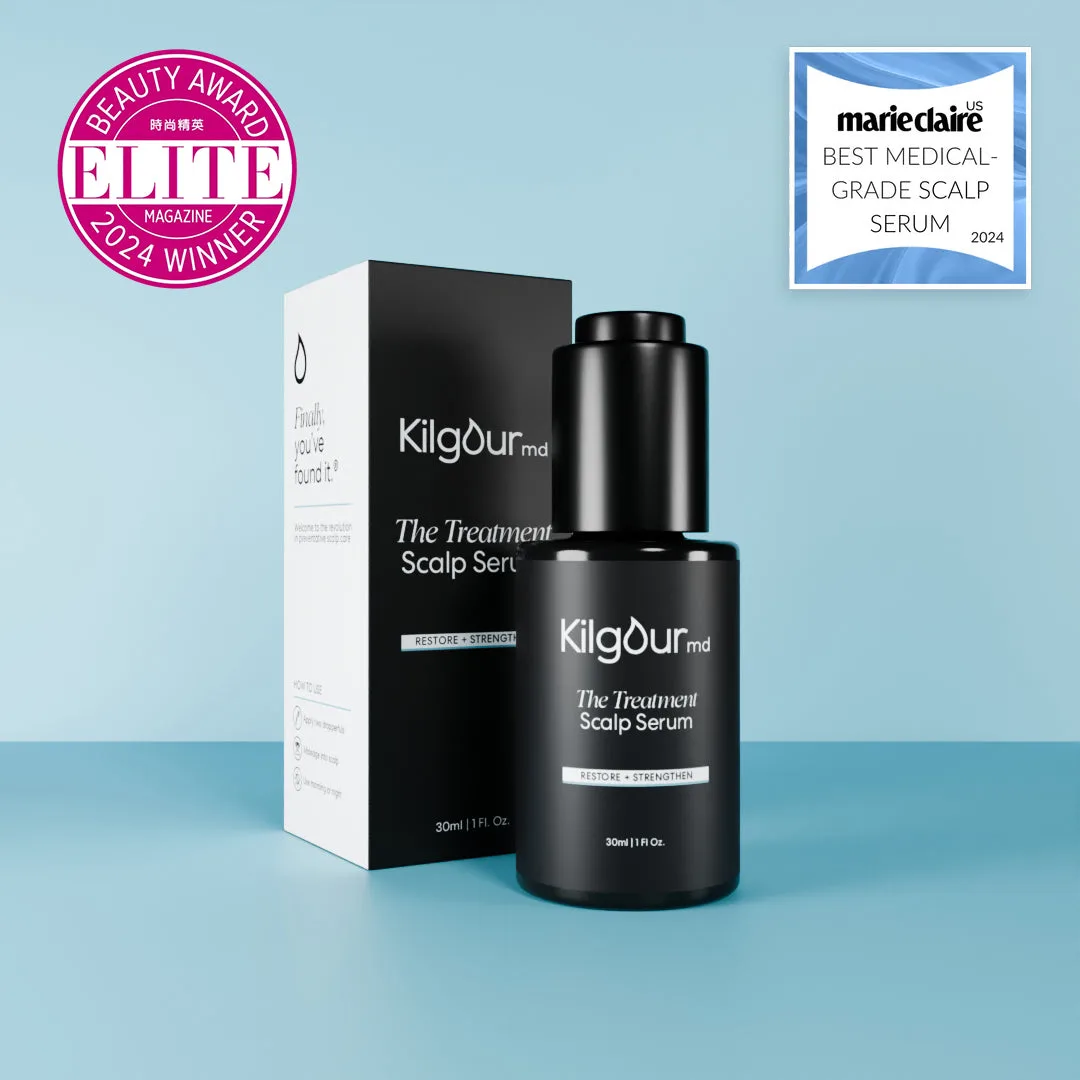
The serum comes in a dropper bottle and is meant to be applied directly to the scalp, not the hair shaft — a format shared with most leave-on scalp treatments in this category.
The dermatologist behind the brand
KilgourMD was founded by Dr. James Kilgour, a dermatologist trained at Stanford University, where he completed his dermatology residency and a precision-medicine fellowship focused on topical therapies. He is American Board of Dermatology certified and a Fellow of the American Academy of Dermatology (FAAD), and has been published in peer-reviewed journals including JAAD and JAMA Dermatology. He currently practices in Sacramento, California, with a focus on hair loss, medical dermatology, and skin cancer surgery.
That credential matters for E-E-A-T purposes: a board-certified dermatologist formulating a scalp serum is meaningfully different from an unregulated wellness brand doing the same. It does not, on its own, prove the finished product works as marketed — formulation expertise and clinical proof are two different things, and we treat them as such throughout this review.
What's in the formula, and what the science says
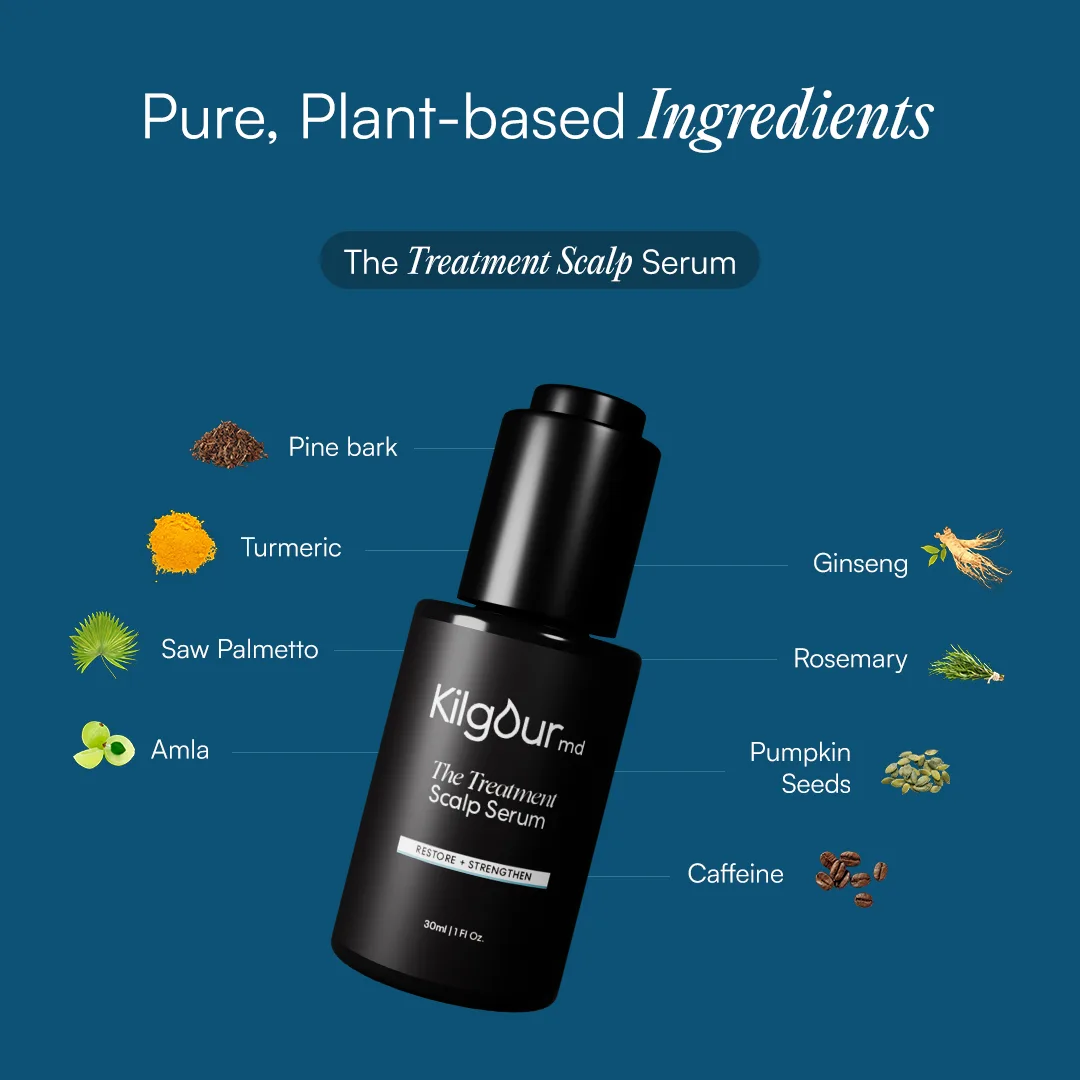
The Treatment Scalp Serum lists four headline actives — Redensyl, saw palmetto, caffeine, and rosemary — plus supporting ingredients including ginseng, amla, pumpkin seed, pine bark, and turmeric. Below is what the independent, peer-reviewed literature actually says about each headline active, separate from the brand's own copy.
Redensyl
Redensyl is marketed as a lab-tested ingredient for follicle thickness. A 2024 prospective study of a Redensyl-containing serum (combined with Capixyl and Procapil) followed 70 participants over 16 weeks and found hair density improved significantly from baseline (p = 0.002), with no adverse effects reported. The important caveat: Redensyl is almost always studied in combination with other actives, which makes isolating its individual contribution difficult, and it is not FDA-approved. Researchers frame it as a supporting player alongside — not a replacement for — proven prescription treatments like minoxidil or finasteride.
Saw palmetto
Saw palmetto (Serenoa repens) works by inhibiting roughly 30–40% of 5-alpha reductase activity, the enzyme that converts testosterone into DHT — more modest than prescription finasteride's roughly 70% inhibition, but a real, measurable mechanism. A 2020 systematic review of seven clinical studies found about 60% of users reported improved hair quality and over 80% showed improved hair density. A more recent 2026 systematic review confirmed saw palmetto as the strongest botanical DHT blocker studied to date, with a favorable side-effect profile versus prescription options.
Caffeine
Topical caffeine is thought to extend the anagen (growth) phase of the hair cycle by activating IGF-1 activity and boosting intracellular cAMP signaling. One clinical trial found a 0.2% caffeine solution performed similarly to 5% minoxidil on trichogram analysis of anagen hairs — a genuinely interesting result. But a 2025 systematic review of topical caffeine studies rated the overall evidence "very low" quality, citing short study durations that may not capture a full hair growth cycle. Read the caffeine data as supportive, not definitive.
Rosemary
Rosemary's benefits are attributed to carnosic acid and 1,8-cineole, compounds with antioxidant and anti-inflammatory activity that may protect follicles from oxidative stress. This is the ingredient with the strongest single study behind it: a double-blind, randomized, placebo-controlled trial found rosemary-based oils improved hair growth rate by 47–58% and thickness by 66–69%. A landmark 2015 RCT by Panahi et al. found rosemary essential oil comparable to 2% minoxidil for hair density over six months, with significantly less scalp itching. Note that these trials tested rosemary essential oil formulations directly, not KilgourMD's finished serum.
Ginseng and the supporting actives
Korean red ginseng has clinical support too, though mostly from oral rather than topical use: a trial using 3,000 mg/day of oral extract for 24 weeks significantly increased hair density and thickness in alopecia patients. Preclinical work shows ginseng extracts increase dermal papilla cell proliferation in lab models. Amla, pumpkin seed, pine bark, and turmeric round out the formula as supporting antioxidant and anti-inflammatory ingredients; we did not find independent hair-specific clinical trials on these at the doses used in a scalp serum, so we'd treat them as complementary rather than headline actives.
| Ingredient | What it targets | Evidence strength | Key caveat |
|---|---|---|---|
| Redensyl | Follicle thickness / density | Combination-formula RCT, 70 participants, 16 weeks | Not FDA-approved; rarely tested alone |
| Saw palmetto | Blocks 5-alpha reductase (DHT) | Systematic review of 7 studies | Milder effect than prescription finasteride |
| Caffeine | Extends anagen (growth) phase | 2025 systematic review | Rated "very low" quality evidence overall |
| Rosemary | Antioxidant, scalp health | Landmark double-blind RCT | Tested as essential oil, not this exact serum |
| Ginseng | Follicle proliferation support | Clinical + preclinical studies | Most trials used oral, not topical, ginseng |
How to use it
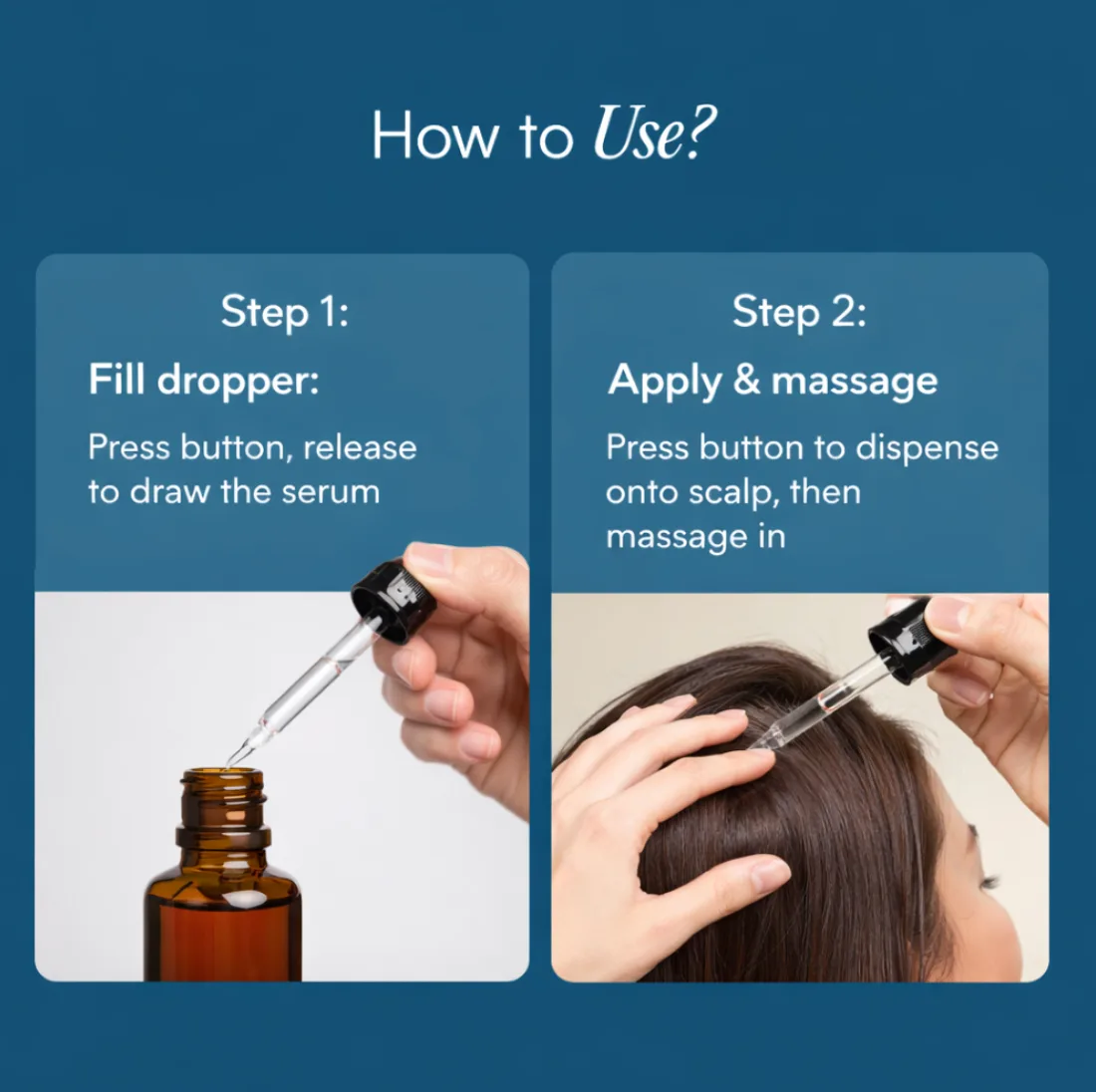
KilgourMD's own directions for The Treatment are straightforward:
- Apply to a clean, dry or lightly damp scalp.
- Use one full dropper (about 1 mL) daily.
- Apply directly to thinning areas and massage gently for 30–60 seconds.
- Do not rinse — let it absorb naturally into the scalp.
- Use consistently, every day, for the best chance of results.
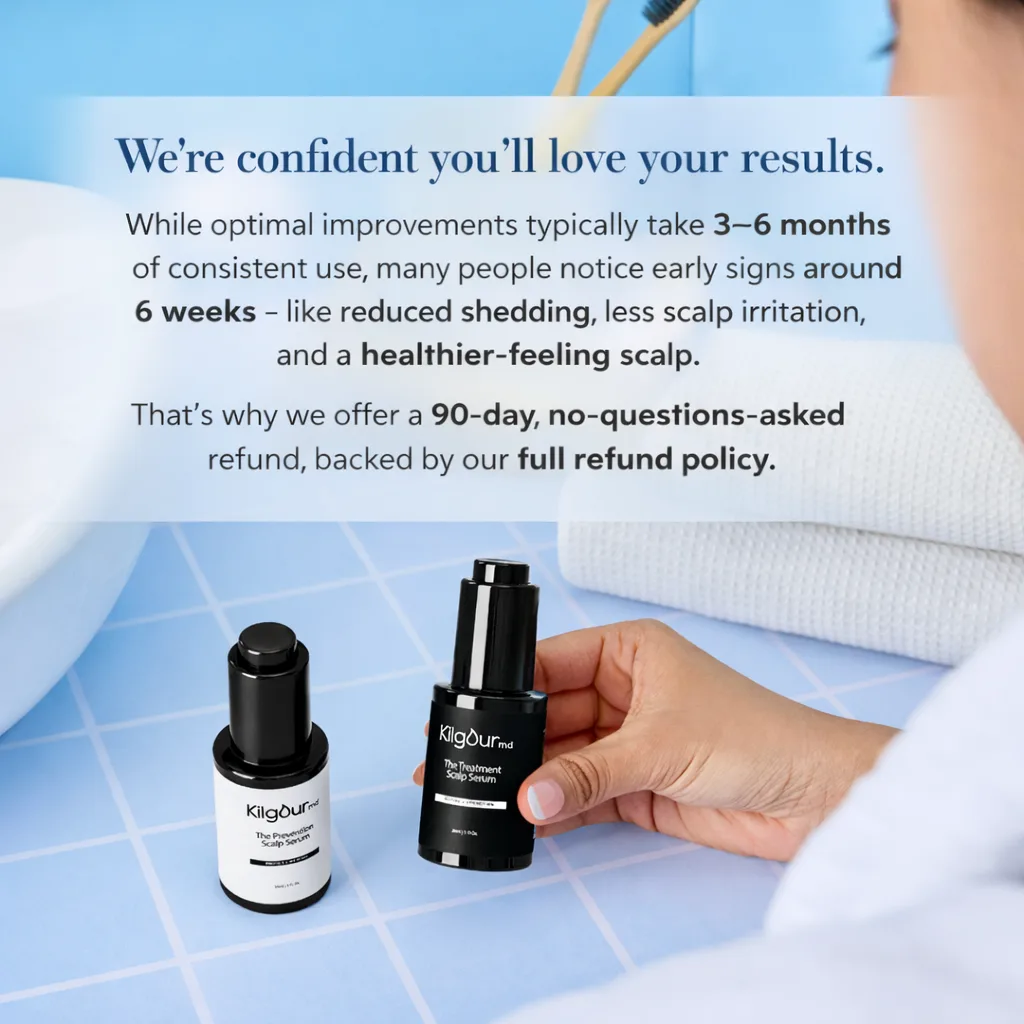
Consistency matters more than any single ingredient here — nearly every hair-growth study cited above ran for 16–24 weeks minimum before showing measurable change, which lines up with how the brand itself frames expectations.
KilgourMD The Treatment Scalp Serum
What We Like
- Formulated by a genuinely credentialed, board-certified dermatologist
- Every headline active has real published research behind the ingredient itself
- Brand reports no adverse effects in its own testing group of 43 women aged 30–65
- Clear, simple daily-use directions
What to Consider
- No independent clinical trial of the finished serum itself — only its individual ingredients
- Some marketing language ("reverse lost fullness") reads stronger than the cosmetic classification technically allows
- Caffeine evidence specifically is rated low quality by reviewers
Taken as a well-formulated cosmetic scalp serum built on ingredients with genuine (if uneven) research behind them, The Treatment is a reasonable evidence-informed pick for early thinning. Taken as a proven cure for hair loss, it isn't — and shouldn't be marketed or read as one.
Brand claims vs. ingredient evidence
It's worth separating two different things that get blurred in most scalp-serum marketing, KilgourMD included. First: individual ingredients like rosemary, saw palmetto, and caffeine have real peer-reviewed research showing measurable effects on hair density, thickness, or growth-phase duration. Second: none of that research was conducted on KilgourMD's finished, combined formula — it was conducted on the ingredients in isolation or in different combinations entirely. The brand's own marketing states the serum is designed to "combat the look of thinning hair and help replenish the appearance of sparse areas" — language that describes a cosmetic effect on appearance, which is consistent with its regulatory classification, but is a lower bar than a clinically proven regrowth treatment.
Nothing here is invented by KilgourMD — combining research-backed actives into a cosmetic formula is standard industry practice. The distinction we're drawing is simply: ingredient-level evidence is not the same as product-level proof, and a careful reader should hold the two claims apart.
Who should consider it (and who should see a dermatologist first)
This serum may suit someone noticing early, mild thinning who wants an evidence-aware cosmetic addition to their routine, is comfortable with a cosmetic (not prescription-strength) product, and can commit to daily use for several months. It is not the right starting point for anyone with sudden, patchy, or rapidly progressing hair loss, visible scalp inflammation, or a family history suggesting a specific diagnosable condition — those situations call for an in-person evaluation by a board-certified dermatologist, who can rule out conditions like alopecia areata, telogen effluvium, or scarring alopecia and discuss prescription-strength options like minoxidil or finasteride where appropriate. A cosmetic serum, however well formulated, is not a substitute for that diagnosis.
How We Reviewed This Product
We did not run our own clinical trial on this serum — no independent reviewer has. Instead, we cross-checked the brand's ingredient list and marketing claims against the peer-reviewed literature on each active ingredient, verified the founder's medical credentials through professional directories, and compared the brand's usage directions against how each ingredient was actually dosed and applied in its supporting studies.
Alternatives to consider
If your priority is a fully medically-supervised path rather than an over-the-counter cosmetic serum, it's worth reading our Dense Hair Experts review, which covers a personalized, medically-supervised hair-regrowth service built around individual consultations rather than a single retail formula. That model suits people who want a clinician actively managing dosage and follow-up, rather than a self-directed daily routine. For those interested in complementary styling routines to pair with scalp care, our Simpletics men's styling guide and California Born hair styling guide explore grooming-focused routines that work alongside targeted scalp treatments.
Our verdict
KilgourMD's Treatment Scalp Serum is a legitimately well-formulated cosmetic product, built by a credentialed dermatologist, using actives that genuinely have research behind them individually. It's a reasonable choice for someone with early, mild thinning who wants an evidence-informed cosmetic option and understands it is not a clinically proven cure. It is the wrong starting point for anyone with significant, sudden, or diagnosable hair loss — that reader should see a dermatologist first, and may be better served by a supervised program or a prescription-strength treatment.
Check current priceReferences
- International Journal of Dermatology (2026) — The OTC Finasteride Alternative: Saw Palmetto's Efficacy, Safety, and Regulatory Concerns
- MDPI Molecules (2025) — Caffeine as an Active Molecule in Cosmetic Products for Hair Loss: Mechanisms of Action
- NCBI/PMC — Rosmagain as a Natural Therapeutic for Hair Regrowth and Scalp Health (Double-Blind RCT)
- NCBI/PMC (2025) — Clinical Evaluation of a Rosemary-Redensyl Hair Growth Serum
- PubMed Central — Efficacy of Korean Red Ginseng in the Treatment of Alopecia Areata
Medical disclaimer: This article is for informational purposes only and is not medical advice. KilgourMD's Treatment Scalp Serum is a cosmetic product, not a drug, and is not intended to diagnose, treat, cure, or prevent any disease. The clinical studies cited above examined individual ingredients, not this finished formula. If you're experiencing hair loss, especially if it is sudden, patchy, or accompanied by scalp symptoms, consult a board-certified dermatologist for a proper diagnosis before starting any topical product. Purisia may earn a commission if you purchase through links in this article; this does not affect the accuracy of our reporting.
Recommended for you
 L3VEL3 Cologne Review 2026: Best 4-Pack for Barbershop Scents
 Balmbare Revive Oil Review 2026: Safe Hair Growth Guide?
 Organic Jaguar Natural Conditioner Review 2026: Worth It?
 NOBS Herbal Mouthwash Review: Is It Worth It in 2026?
 Flowette Active Fit Review 2026: Safe for the Gym?
 Carerspk Review: Washable Incontinence Pants Guide (2026)