Honey Acres: The Ultimate Guide to Kosher Certified, Gluten-Free, and Big 9 Allergen-Free Treats
Imagine finally finding a chocolate treat you can enjoy without scanning the label three times, calling the manufacturer, or worrying […]
Imagine finally finding a chocolate treat you can enjoy without scanning the label three times, calling the manufacturer, or worrying about whether “may contain” means you’re about to spend the evening in an ER. For the nearly 22 million Americans currently living with a diagnosed food allergy, that moment of carefree enjoyment is rare — and genuinely priceless.
Honey Acres has been quietly delivering exactly that kind of relief since 1852. Their Dark Chocolate Honey Patties™ aren’t just delicious — they’re certified free of all Big 9 allergens, Certified Gluten-Free, Certified Kosher, Non-GMO, and made with no added sugars. For anyone navigating the complex world of food allergies, dietary restrictions, or religious dietary laws, Honey Acres represents something genuinely hard to find: a treat you can trust completely.
This guide breaks down exactly what those certifications mean, why they matter, and why Honey Acres earns them the right way — making it one of the most thoughtfully certified food brands available today.
Why Food Allergen Certifications Matter More Than Ever

Food allergies are no longer a niche concern. According to the Asthma and Allergy Foundation of America, as of 2024, nearly 22 million people in the United States have food allergies — roughly 18 million adults and 4 million children. That’s not a rounding error; it’s a significant portion of the population for whom every meal, every snack, and every celebration involves a risk-assessment process most people never have to think about.
The stakes are serious. Food allergic reactions can range from uncomfortable — hives, nausea, digestive distress — to life-threatening anaphylaxis, a rapid immune response that can close the airway and requires emergency epinephrine. For individuals with severe allergies, even trace cross-contact on shared equipment can trigger a reaction.
This is precisely why third-party certifications exist. When a Honey Acres product carries a Certified Gluten-Free seal, a Kosher symbol, or a verified allergen-free claim, it means an independent organization has audited the ingredients, the facility, the equipment, and the production process — not just reviewed the recipe on paper.
For allergy families and individuals, these certifications aren’t marketing extras. They’re the difference between eating freely and eating fearfully.
Understanding the Big 9 Allergens: What They Are and Why They Matter
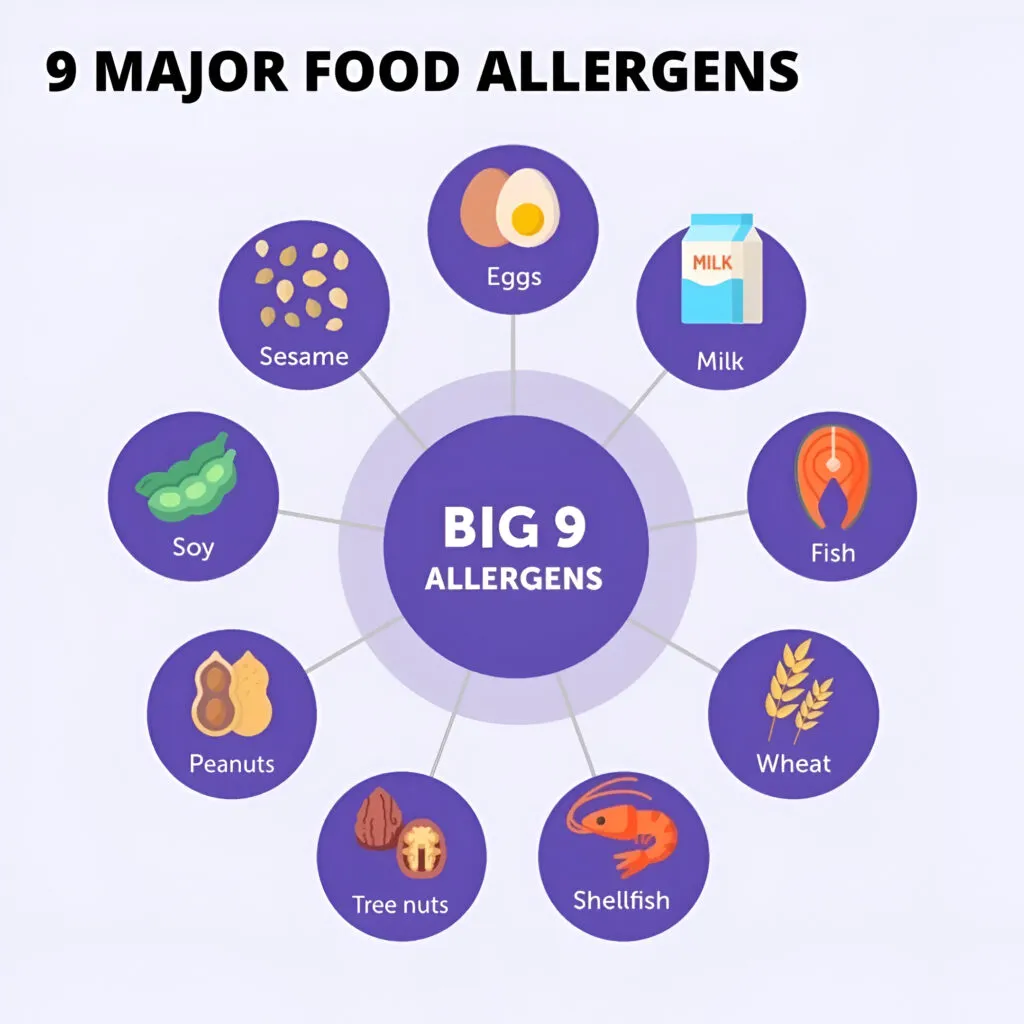
In the United States, the Food and Drug Administration identifies nine foods as major allergens, collectively known as the Big 9. Understanding this list is essential for appreciating why Honey Acres’ allergen-free certification is so meaningful. These nine ingredients account for approximately 90% of all food allergy reactions in the country. As of January 1, 2023 — following the passage of the FASTER Act — sesame officially joined the former “Big 8” to complete the current list:
The Big 9 Food Allergens:
- Milk — One of the most common allergies in infancy; found in dairy products, butter, cheese, and many processed foods as casein or whey.
- Eggs — Present in baked goods, pasta, sauces, and many packaged products under names like albumin or lecithin.
- Peanuts — A legume, not a tree nut; prevalence among adults has been rising and currently affects an estimated 3% of the US population.
- Tree Nuts — A broad category including almonds, walnuts, cashews, pecans, pistachios, and others; often found in unexpected products like pesto, cereals, and sauces.
- Wheat — The source of gluten; present in bread, pasta, crackers, flour, and many condiments and processed foods.
- Soy — Found in tofu, edamame, miso, and widely used in processed foods as soy lecithin or soy protein.
- Fish — Includes species like bass, flounder, and cod; can cause reactions even from vapors during cooking.
- Crustacean Shellfish — Includes shrimp, crab, and lobster; one of the most common triggers for adult-onset food allergy.
- Sesame — Added as the 9th major allergen effective January 2023; approximately 1.5 million Americans are allergic to sesame. Even a trace amount from seeds, tahini, or sesame oil can trigger anaphylaxis.
The significance of the Big 9 goes beyond the list itself. Under the Food Allergen Labeling and Consumer Protection Act (FALCPA) and the FASTER Act, manufacturers are legally required to disclose the presence of any Big 9 allergen on product labels. Yet for individuals with multiple allergies, even compliant labeling doesn’t eliminate the risk of cross-contact during manufacturing.
This is why Big 9 allergen-free certification — meaning the product contains none of these allergens AND is manufactured in a facility that prevents cross-contact — represents a much higher standard of safety than simple label compliance.
What Does Kosher Certified Actually Mean?
The term “kosher” comes from the Hebrew word meaning “fit” or “proper,” and its application to food goes back thousands of years. But when a modern food product carries a Kosher Certified symbol, it means something very specific and verifiable.
For a product to earn kosher certification, an independent kosher certification agency conducts a thorough review of three distinct areas:
1. Ingredients Every single ingredient, sub-ingredient, food additive, and processing aid used in the product must itself be kosher. This includes things that never appear on front-of-pack labels — the anti-foaming agent in a manufacturing line, the lubricant on conveyor equipment, the wax lining of a box. There are no shortcuts and no assumptions.
2. Facility and Equipment The production facility and all equipment used must maintain kosher status. Equipment cannot be shared between kosher and non-kosher production without a rigorous kosherization process — a hot purging procedure that effectively clears the equipment of any non-kosher residue. This is inspected, not self-reported.
3. Ongoing Supervision Kosher certification isn’t a one-time audit. Trained rabbinic field representatives conduct regular, unannounced visits to verify that nothing has changed in ingredients, suppliers, or production methods. If a supplier changes their formula, the product’s kosher status must be re-evaluated from scratch.
Why does this matter beyond the Jewish community?
More than 13 million Americans follow a kosher diet for religious reasons — but market research consistently shows that the majority of kosher food purchasers are not Jewish. People buy kosher-certified products because they trust the rigor of the certification process. For someone with a dairy allergy, a kosher “pareve” label on a Honey Acres product (meaning it contains no meat or dairy) provides an additional layer of independent verification. For anyone concerned about production quality and ingredient traceability, kosher certification signals that a product has been scrutinized at a level that goes far beyond standard food safety requirements.
What Does Certified Gluten-Free Mean?
Gluten is a protein found in wheat, barley, and rye. For individuals with celiac disease — an autoimmune condition affecting roughly 1% of the global population — consuming even trace amounts of gluten causes the immune system to attack the small intestine, leading to serious digestive damage and long-term health consequences. For individuals with non-celiac gluten sensitivity, exposure causes significant discomfort and inflammation without the same intestinal damage.
The FDA defines gluten-free as containing less than 20 parts per million (ppm) of gluten. The Certified Gluten-Free seal from the Gluten Intolerance Group (GIG) or similar bodies requires even stricter standards: independent testing, facility audits, and ongoing verification that the product meets gluten-free thresholds consistently across every production run — not just once during initial certification.
This matters because wheat is notoriously prone to cross-contact. It’s one of the most widely used ingredients in food manufacturing, present in unexpected products like soy sauce, licorice, communion wafers, and many flavored chips. A facility that also processes wheat products creates genuine cross-contact risk for sensitive individuals, even if a specific product’s recipe contains no wheat.
Certified Gluten-Free means the product has been independently verified — not just labeled as gluten-free by the manufacturer — to meet the safety threshold required by people with celiac disease. Honey Acres holds this certification actively on their Dark Chocolate Honey Patties.
How Honey Acres Earns Every One of These Certifications
This is where Honey Acres does something genuinely rare in the food industry: they don’t just meet the minimum bar for any one of these certifications. They earn all of them simultaneously, on every relevant product in their lineup.
The Dark Chocolate Honey Patties™ — the brand’s signature product — carry the following verified credentials:
✅ Free of All Top 9 Allergens No milk. No eggs. No peanuts. No tree nuts. No wheat. No soy. No fish. No shellfish. No sesame. The Honey Patties contain just two or three ingredients depending on the flavor: raw Wisconsin honey, 99% dark chocolate liquor, and a natural flavoring (peppermint extract, Valencia orange extract, natural raspberry flavoring, or coffee). That’s it. The simplicity of the ingredient list is the foundation of the allergen-free claim — it’s not a workaround or a substitution product. It was designed this way from the beginning.
✅ Certified Gluten-Free The product is independently certified gluten-free, meaning it meets the rigorous testing and facility standards required by certification bodies — not just a self-declared label claim.
✅ Certified Kosher Each batch is certified by a recognized kosher certification agency, covering ingredients, facility, equipment, and ongoing supervision. This is not a legacy certification that was granted once and forgotten — it’s actively maintained.
✅ Non-GMO Ingredients are sourced from non-genetically modified sources, providing an additional layer of confidence for consumers who prioritize ingredient provenance.
✅ No Added Sugars The only sweetener in the product is raw Wisconsin honey. There is no cane sugar, no corn syrup, no artificial sweeteners. For individuals managing blood sugar, following specific dietary plans, or simply trying to reduce refined sugar consumption, this is a significant distinction.
✅ Low Calorie Despite being a genuinely indulgent confection, the Honey Patties are formulated to be low in calories — making them a realistic part of a balanced approach to eating rather than an occasional guilty exception.
What makes Honey Acres’ certifications especially trustworthy is the context in which they operate. The brand manufactures everything in-house at their 40-acre Wisconsin facility — no co-manufacturers, no outsourced production, no opaque supply chains. Every jar of honey and every chocolate patty that leaves the facility has been made under the same roof, by the same team, under the same quality controls that five generations of the Diehnelt and Gabrielian families have built since 1852.
Who Benefits Most from Honey Acres’ Certifications?
The intersection of Kosher Certified, Certified Gluten-Free, and Big 9 Allergen-Free is genuinely uncommon in the snack and confectionery category. Most products satisfy one or two of these standards — rarely all three at once, with verified independent certification behind each claim.
People with celiac disease or gluten sensitivity For those who must maintain a strict gluten-free diet, finding a chocolate treat that’s independently certified — not just self-declared gluten-free — is a relief. Honey Acres Honey Patties can be enjoyed without the mental calculation that typically accompanies processed snack food.
Individuals managing multiple food allergies Roughly 40% of children with food allergies are allergic to more than one food. For a parent packing a school lunch, attending a birthday party, or simply trying to find a treat their child can eat safely alongside classmates, a Big 9 allergen-free certified product removes an enormous amount of stress.
Observant Jewish consumers The active Kosher certification means the product fits within the requirements of a kosher diet without requiring additional research or ingredient scrutiny. The pareve status (no meat, no dairy) makes Honey Patties appropriate after both meat and dairy meals.
Muslim consumers seeking halal-compatible options While kosher and halal are distinct certifications, kosher-certified products that are also free from pork derivatives and alcohol-based ingredients are widely accepted within halal dietary frameworks. Many Muslim consumers use kosher certification as a useful secondary indicator.
Health-conscious consumers and clean-label advocates The two-to-three-ingredient formula that enables the allergen-free certifications is also exactly what clean-label consumers have been asking the food industry to deliver for decades: fewer ingredients, each one recognizable, each one serving a purpose. Honey Acres has been doing this since before “clean label” was a marketing term.
Schools and institutions Many school districts and childcare facilities now require allergen-free policies for shared food. Honey Acres Honey Patties, with their verified Big 9 allergen-free and Certified Gluten-Free status, are one of the very few indulgent treats that can realistically comply with strict allergy policies while still tasting like an actual treat.
A Closer Look at Honey Acres Products: Every Option, Explained
Understanding the certifications is one thing. Knowing which specific products to reach for — and why — is the part that makes a real difference when you’re standing in front of a shopping cart or building a care package for someone with dietary restrictions. Here’s a full breakdown of the three core product lines that make Honey Acres the allergen-free brand of choice.
1. Dark Chocolate Honey Patties™ — The Allergen-Free Confection Redefining Clean Snacking
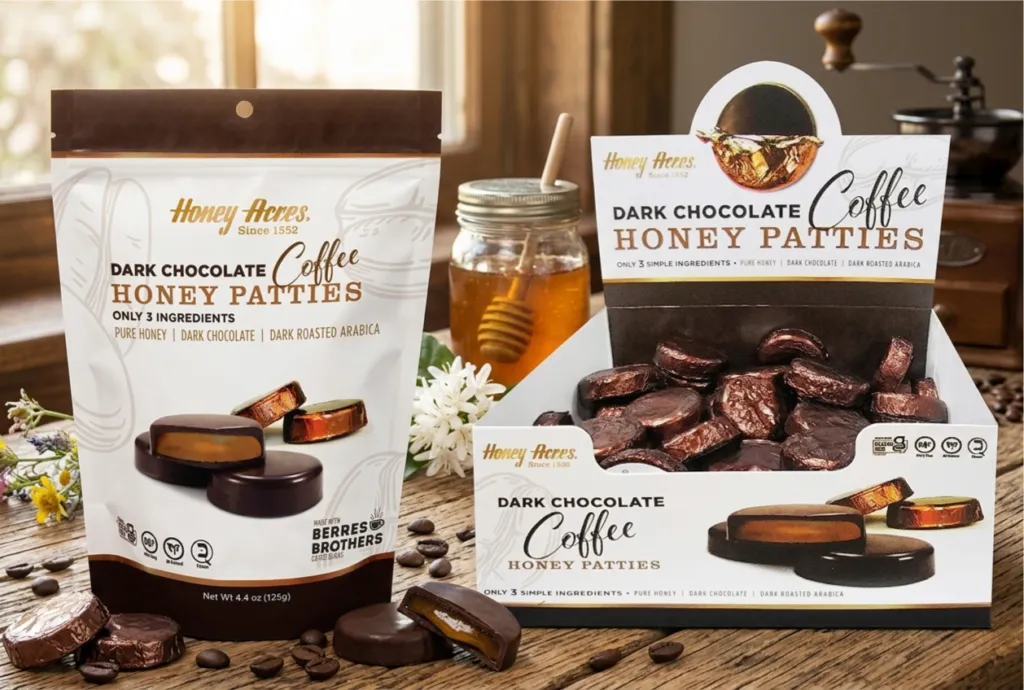
The Honey Patties are the product that built Honey Acres’ modern reputation, and for good reason. These aren’t “free-from” treats that taste like compromise. They’re genuinely delicious confections built on a radical idea: that two or three real ingredients, done right, are better than twenty mediocre ones.
Every variety is made with raw Wisconsin honey as the sweetener, encased in 99% pure unsweetened dark chocolate liquor — no dairy, no soy lecithin, no sugar, no coatings, no additives. The honey inside is thick, smoothly crystallized to a truffle-like consistency. It won’t drip when you bite into it. The dark chocolate shell is crisp and delivers a clean, pleasantly bitter contrast that makes the natural sweetness of the honey shine rather than overwhelm.
All five flavors carry the full certification stack: Big 9 Allergen-Free, Certified Gluten-Free, Certified Kosher, Non-GMO, no added sugars, low calorie, and 100% all-natural. The Mint flavor is the original — Honey Acres has been making it for over 90 years, at one point private-labeling it for a major national brand.
The Full Flavor Lineup:
Cocoa (2 ingredients: honey + unsweetened chocolate) The purest expression of the Honey Acres formula. Raw honey meets 99% dark chocolate — nothing else. For anyone who wants chocolate with zero flavor additions, this is the benchmark. Bold, deeply satisfying, and as clean as food gets.
Mint (3 ingredients: honey + unsweetened chocolate + oil of peppermint) The original. A cool, refreshing burst of natural peppermint meets rich dark chocolate and the floral sweetness of raw honey. Think of a grown-up, allergen-free version of a classic chocolate mint — without a single drop of dairy or artificial ingredient. Chilling or freezing before eating amplifies the mint and deepens the chocolate flavor noticeably.
Orange (3 ingredients: honey + unsweetened chocolate + orange oil) Bright, sophisticated, and surprisingly complex. The Valencia-style orange oil cuts through the bitterness of the dark chocolate and plays beautifully off the floral notes in the honey. A standout for anyone who enjoys citrus-chocolate pairings but has historically had to avoid them due to dairy in most commercial versions.
Raspberry (3 ingredients: honey + unsweetened chocolate + natural raspberry flavoring) A fruity-tart counterpoint to the dark chocolate base. The raspberry flavoring adds a lively brightness without tipping into artificial sweetness. A great choice for fruit-and-chocolate lovers who want something that feels a little lighter.
Coffee (3 ingredients: honey + unsweetened chocolate + natural coffee flavoring) Roasted coffee notes deepen the already-complex dark chocolate, creating a layered, almost mocha-like experience. For the coffee lover in any allergy-conscious household — or for anyone who wants something sophisticated enough to serve after dinner without the guilt.
Practical Notes:
- Shelf life: 2 years from production. Nothing in the formula spoils or expires at room temperature.
- Storage: No refrigeration required, though chilling or freezing enhances flavor.
- Seasonal shipping: May through September, chocolate orders ship only on Mondays and Tuesdays to prevent heat damage in transit.
- Packaging options: available in 8 oz bags (~21 pieces), 2 lb bags (~84 pieces), and 10 lb cases (~420 pieces) — making them practical for households, offices, or events.
2. Honey — Raw, Unfiltered, Wisconsin-Sourced Varietals Built for Allergy-Safe Cooking and Eating
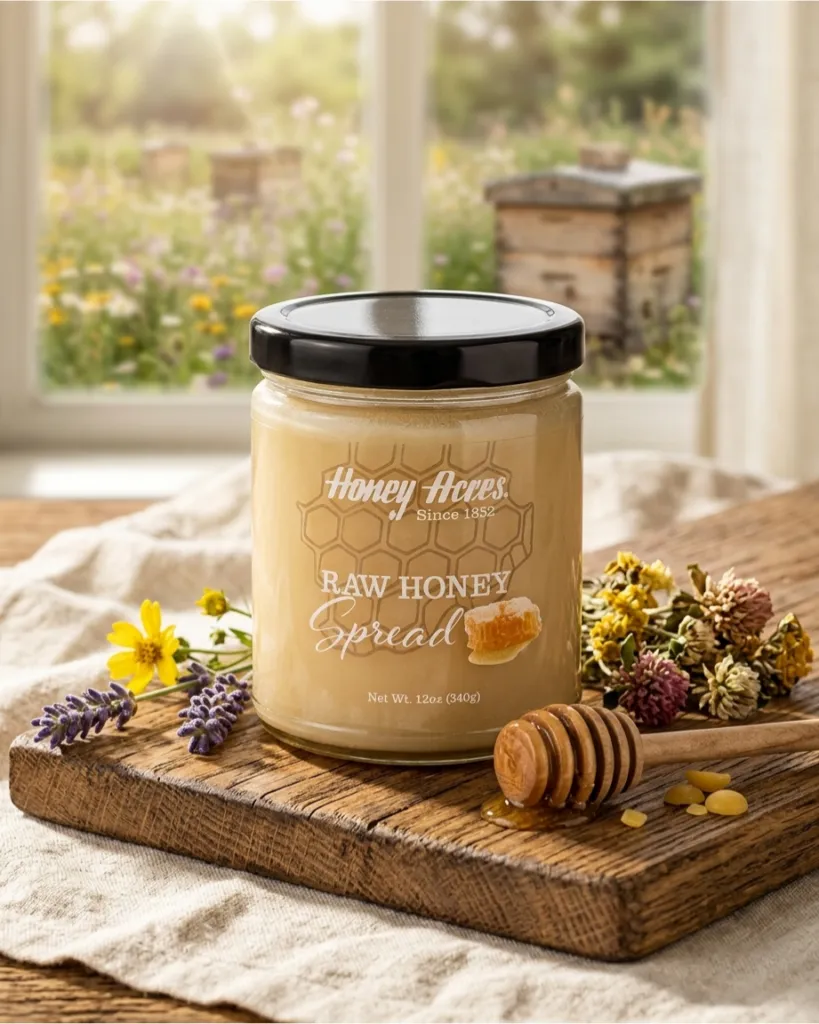
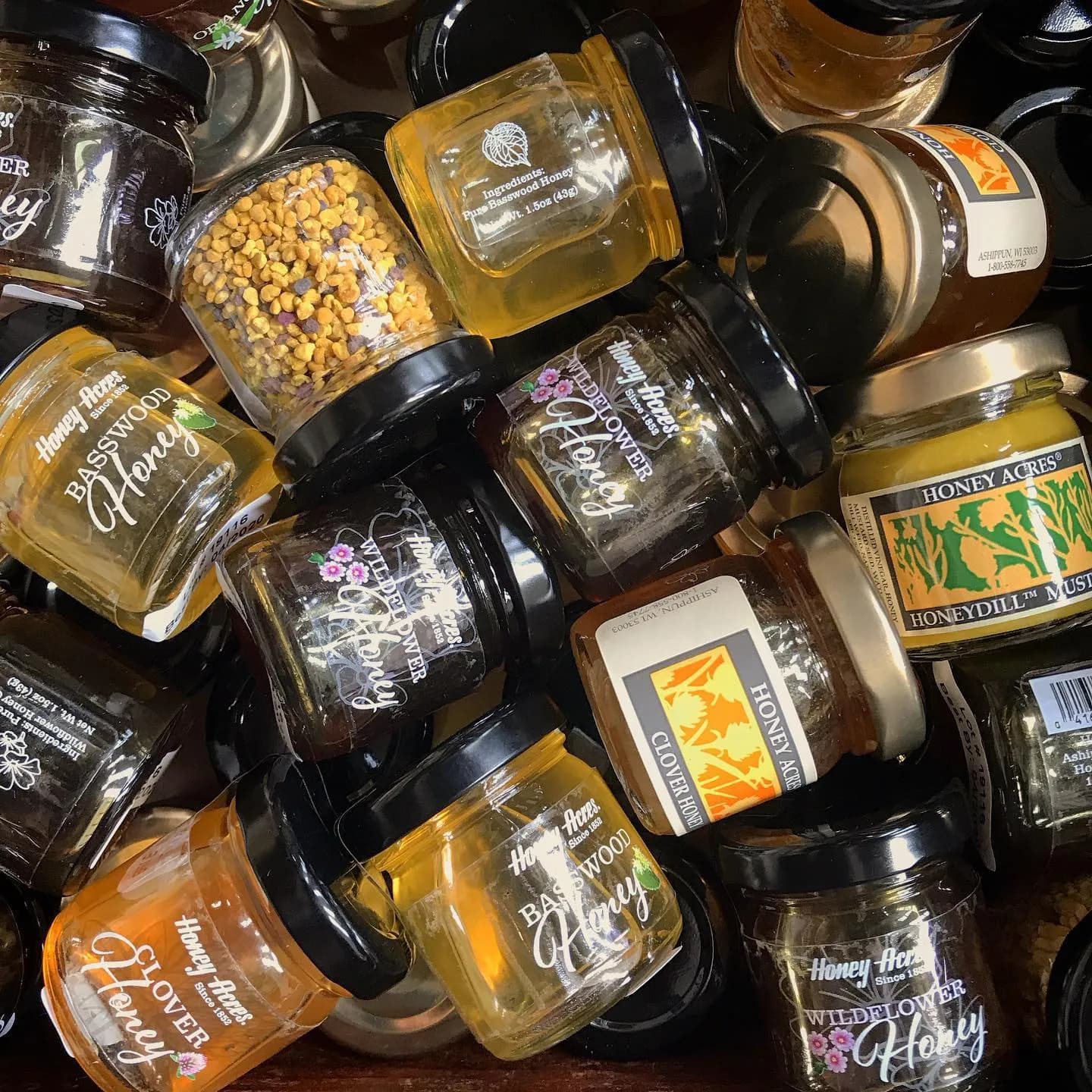
Every Honey Acres product begins and ends with honey — and their raw honey lineup is where the brand’s 170-year expertise in beekeeping and honey sourcing becomes most apparent. Unlike commercial honey products that are heated, ultra-filtered, and often blended from imported sources, Honey Acres honey is raw, unfiltered, US Grade A, Wisconsin-sourced, never pasteurized — and every jar carries Kosher Certified and Certified Gluten-Free status.
The entire production facility is allergen-free. That means Honey Acres honey is one of the very few raw honey products on the market where allergen cross-contact is verifiably controlled at the facility level — not just at the ingredient level.
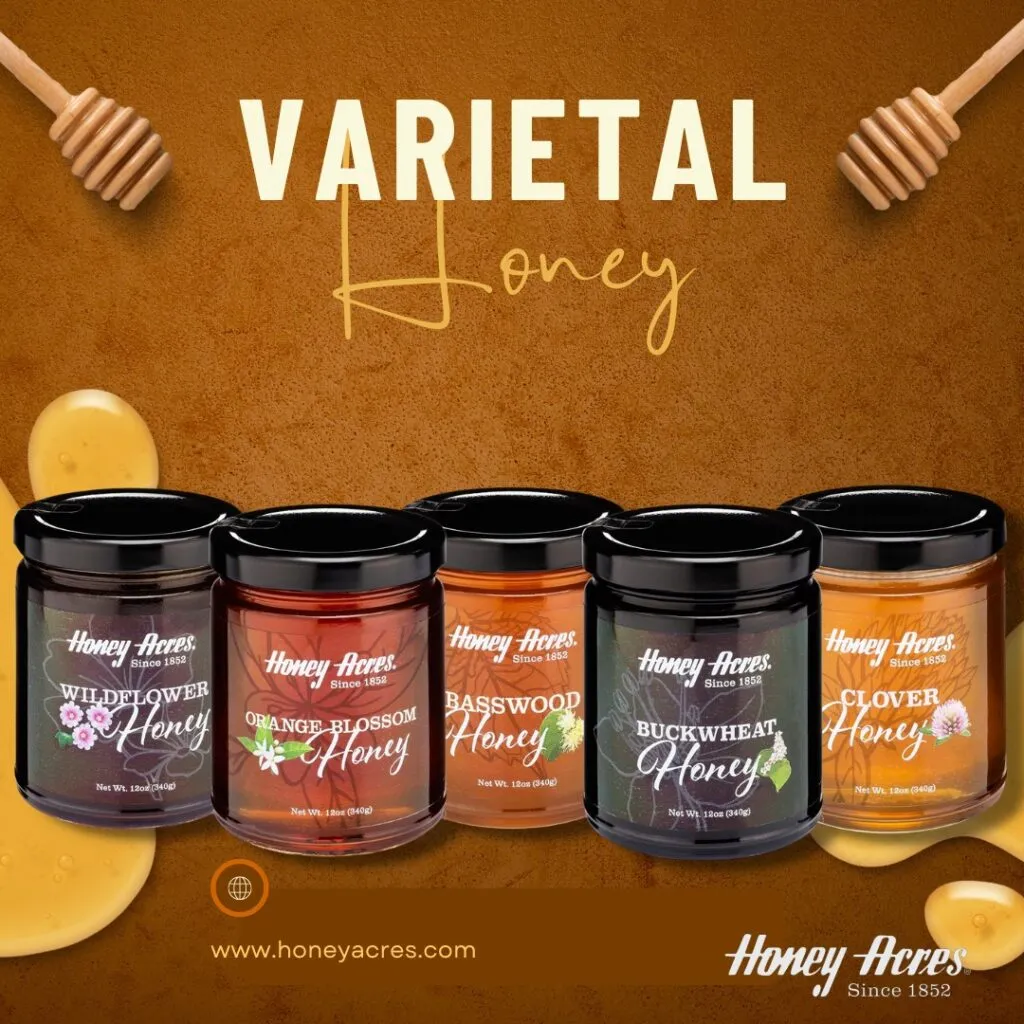
The Varietal Honey Collection:
Clover Honey (Top Seller) Clover is the most widely recognized honey variety in North America, and Honey Acres’ version is the benchmark. Sourced from Wisconsin’s abundant clover fields, it has a mild, clean sweetness with a delicate floral finish. Its versatility is unmatched — it works equally well for baking, cooking, sweetening tea, or eating straight. Available in multiple formats including squeeze bottles and the iconic bear bottle, making it accessible for households with children.
Basswood Honey (Rare & Distinctive) Basswood — also known as Linden — is a tree that grows abundantly throughout Wisconsin, and it was this honey that gave Honey Acres its original name: Linden Apiaries. Basswood honey is the lightest in color and thinnest in consistency of all the brand’s varietals. It carries a subtle, soft mintiness with a refreshingly bright finish that makes it an exceptional pairing for herbal teas, fresh fruit, and mild cheeses. For anyone interested in exploring single-origin honey beyond the familiar clover baseline, Basswood is an ideal starting point.
Buckwheat Honey (Bold & Complex) At the opposite end of the flavor spectrum from Clover, Buckwheat honey is dark, intensely flavored, and deeply complex. Sourced from buckwheat blossoms that commonly bloom into fall, this variety delivers bold notes of molasses, malt, and toasted grain — often compared to sorghum in its robust, rustic depth. It’s the honey for people who don’t want subtle; particularly well-suited for marinades, barbecue glazes, dark bread, and pairing with strong cheeses.
Why Allergen-Conscious Consumers Should Care About Varietal Honey
Most people with food allergies default to commercial honey without thinking twice — but commercial honey often passes through facilities that also handle allergen-containing products, and the blended, imported nature of many commercial honeys means traceability is limited. Honey Acres’ in-house, facility-wide allergen-free production means that every jar of varietal honey leaves their Wisconsin facility with a verifiable, independently supported allergen-free status. For someone who uses honey daily — in morning oatmeal, salad dressings, marinades, tea — this is meaningful peace of mind.
3. Honey Straws — Portable, Allergen-Free, Portion-Controlled Honey On the Go
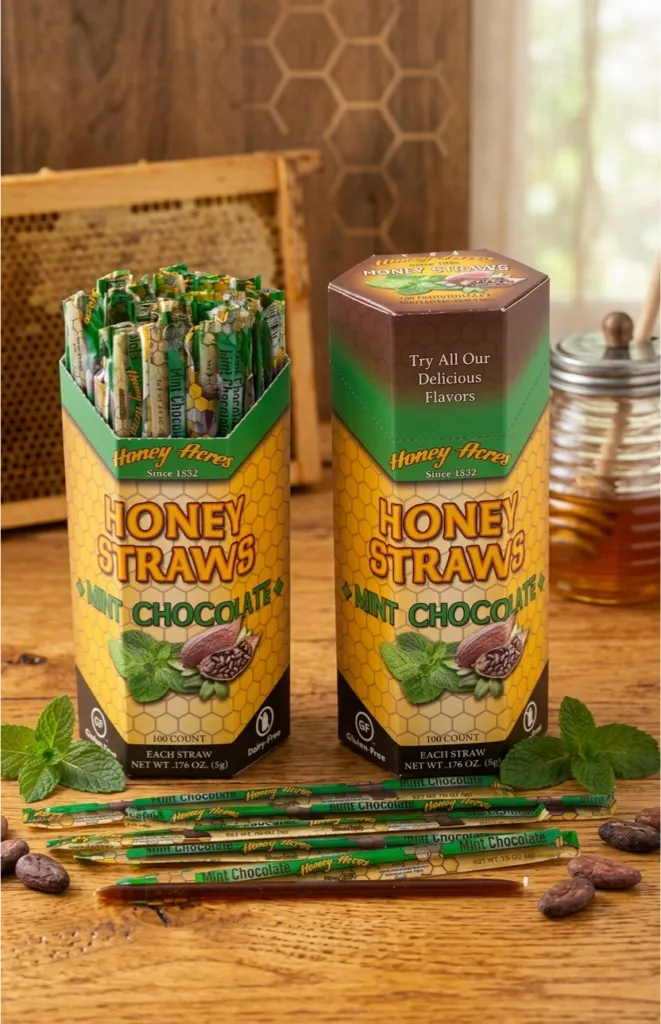
Honey Straws are one of the most practical and underrated products in the Honey Acres lineup — and for the allergy-aware consumer, they solve a specific problem beautifully: how do you bring honey with you without the mess, the weight, or the risk of a jar breaking in your bag?
Each Honey Acres Honey Straw is a 7-inch sealed plastic straw filled with exactly 5g of honey, individually wrapped and ready to tear open and consume directly or squeeze into any beverage or food. Made with USA-sourced, US Grade A, raw unfiltered honey, they carry the same allergen-free and clean-ingredient philosophy as every other product in the Honey Acres range.
Available Flavors:
Clover — Pure raw Wisconsin clover honey. Nothing else. Clean, mild sweetness — the everyday staple in straw form.
Lemon — Clover honey with natural lemon flavoring. Naturally refreshing; particularly popular squeezed into water, iced tea, or herbal lemonade.
Raspberry — Clover honey with natural raspberry flavoring. A fruity-sweet burst that works well as a standalone snack or stirred into yogurt.
Orange — Clover honey with orange oil. Bright and clean; excellent in herbal teas or as a flavored energy boost mid-hike.
Mint Chocolate — Honey with unsweetened chocolate and peppermint oil. The Honey Patties experience in straw form — an indulgent flavor combination with the same three-ingredient simplicity.
Cinnamon — Clover honey with ground cinnamon. A warm, spiced option perfect for oatmeal, coffee, fall baking prep, or stirring into warm milk.
Basswood — Pure raw Basswood honey in straw form. The rare varietal made portable — ideal for honey enthusiasts who want to try the lightest, most delicate honey in the Honey Acres range on the go.
Who Uses Honey Straws — and Why They’re Especially Valuable for Allergy Households:
Honey Straws are genuinely useful across a wide range of situations that allergy-conscious families and individuals regularly navigate:
For school-age children with food allergies, having a safe, portion-controlled sweet treat that passes nut-free, dairy-free, and gluten-free requirements is practical gold. A few Honey Straws in a lunch box is something both parents and children can feel good about.
For athletes and active adults, Honey Straws are a clean, portable source of fast carbohydrates — no gel packets with incomprehensible ingredient lists, no cross-contamination risk, just raw honey in a form that fits in a jersey pocket.
For travelers and frequent flyers, the individual portions are TSA-friendly and eliminate the “honey jar in checked luggage” problem entirely.
For event planners and caterers working with allergen-sensitive guests, Honey Straws available in bulk (100-count boxes and 500 or 2,000-count cases) provide a scalable, safe, crowd-pleasing option that works for baby showers, corporate events, and wedding favors alike.
Honey Acres even offers a custom honey straw service — businesses and resellers can contact the brand directly to have their own honey filled into straws, opening up private label and wholesale possibilities.
Honey Acres Certifications vs. Standard Chocolate Products
| Certification | Honey Acres Honey Patties | Typical Commercial Chocolate |
|---|---|---|
| Big 9 Allergen-Free | ✅ Verified | ❌ Usually contains dairy, soy, or nuts |
| Certified Gluten-Free | ✅ Independently certified | ❌ Rarely certified |
| Certified Kosher | ✅ Actively maintained | ⚠️ Varies by brand |
| No Added Sugar | ✅ Raw honey only | ❌ Typically contains cane sugar |
| Non-GMO | ✅ Yes | ❌ Not standard |
| Ingredient count | 2–3 ingredients | Typically 10–20+ |
| In-house production | ✅ Full control | ❌ Often co-manufactured |
| School/institution safe | ✅ Yes | ❌ Usually not |
The contrast is stark. Most premium chocolate products contain dairy, soy lecithin, and often shared-facility warnings for nuts — which rules them out for a significant portion of allergy-conscious consumers. Honey Acres was built differently from the ground up, and their certification stack reflects that intentional design.
Frequently Asked Questions
Are all Honey Acres products allergen-free and gluten-free? The Honey Acres Dark Chocolate Honey Patties™ are the certified allergen-free flagship product. The honey, honey spreads, and honey straws are made from simple, natural ingredients, but always check individual product pages for current certifications, as formulations and manufacturing standards can vary.
Does Honey Acres ship products that are safe for schools with nut-free policies? Yes. The Honey Patties are free of all tree nuts and peanuts, making them appropriate for nut-free environments. Their Big 9 allergen-free certification provides independent verification of this claim.
Is raw honey itself allergen-free? Honey is not one of the Big 9 allergens. The raw Wisconsin honey that Honey Acres uses as their primary ingredient is safe for most people with common food allergies. The exception is infants under 12 months, who should not consume raw honey due to the risk of botulism — a concern unrelated to allergies.
Can Honey Acres products be enjoyed during Passover? Standard kosher certification covers year-round use. For Passover-specific compliance (chametz restrictions), check with the certifying agency for current Passover status.
Where can I order Honey Acres products? The full product range — including all flavors of Dark Chocolate Honey Patties, raw honey, honey spreads, honey straws, and honey mustard — is available directly through Honey Acres’ official website, with free shipping on retail orders over $65.
Final Thoughts: Certifications That Mean Something
In a food industry where “free from” claims are increasingly used as marketing language rather than verified commitments, Honey Acres stands apart. Their certifications — Kosher, Gluten-Free, Big 9 Allergen-Free, Non-GMO — are independently verified, actively maintained, and backed by a production philosophy that the Honey Acres team has kept consistent for over 170 years.
For anyone who has ever had to explain to a well-meaning host why they can’t eat the dessert, or watched a child sit out a celebration because the birthday cake wasn’t safe, or spent twenty minutes reading ingredient lists in a grocery aisle — the work Honey Acres has put into their allergen-free commitments is more than just a product feature. It’s a genuine act of inclusion.
Disclaimer: This article is for informational purposes only. If you have a diagnosed food allergy, celiac disease, or follow a specific religious dietary law, always verify current product certifications directly with the manufacturer before consumption, as formulations and certifications can change.
Read More At: purisia.com
Recommended for you
 Haru Haru Wonder vs. Cosrx: Which Unstoppable K-Beauty Brand Is Right for Your Skin?
 Discover Haru Haru Wonder — The Unstoppable Clean Beauty Line Gentle Enough for Every Skin
 Honey Acres: The Jaw-Dropping Science Behind Honey That Outlived the Pharaohs
 The “Shark Tank” Hair Trend: How to Style Rip Tie for Your Everyday Hustle
 From Waves to Trails: The Ultimate High-Performance Hairstyles with Rip Tie
 I Tried Sun Powder for 30 Days: A Real Review of Ingestible Skincare