African Black Soap Benefits: Shea Terra's Authentic Bar & Wash
African black soap has been used for generations to cleanse, exfoliate, and calm troubled skin. Here is what the evidence says, how to choose a product, and how to use it safely.
What is African black soap and where does it come from?
- What is African black soap and where does it come from?
- Does African black soap actually work? The evidence
- How to choose the right African black soap product for your skin
- Comparing Shea Terra's African black soap products
- How to use African black soap safely for best results
- Common mistakes to avoid with African black soap
- Alternatives and pairing products
African black soap has cleansed and exfoliated skin across West Africa for generations, and it has become a staple in modern natural skincare routines for people dealing with acne, oiliness, or uneven tone. If you are wondering whether the dark, earthy bar actually works or is just another trend, this guide breaks down what African black soap is made of, what the evidence says about its benefits, and how to choose and use it safely with Shea Terra Organics products.
A source-backed, budget-friendly option for oily, acne-prone, or unevenly toned skin
Choose African black soap if you want a plant-derived cleanser with documented antibacterial and exfoliating properties. Skip it, or use it sparingly, if you already have very dry or reactive skin, since the ash content can be dehydrating without a moisturizer follow-up.
Shop African Black Soap at Shea Terra OrganicsKey Highlights
- Traditionally made from roasted plantain skin, cocoa pod, and palm ash combined with palm oil, palm kernel oil, and shea butter through saponification.
- A study in the Journal of Drugs in Dermatology found it removed bacteria more effectively than some medicated cleansers.
- A 2017 survey of 100 dermatology-clinic clients found 94% were "very satisfied" or "somewhat satisfied" with it for overall skin care.
- Available as a bar, powder, or blended into targeted washes like Shea Terra's Rose Hips Black Soap.
What is African black soap and where does it come from?
African black soap, known as Ose Dudu in Yoruba, originates from communities in Nigeria, Benin, and Togo. It is not a mass-manufactured detergent bar; it is a slow, traditional craft product built from roasted plant matter.
Traditional production involves sun-drying and roasting plantain skins, cocoa pods, palm tree leaves, and shea tree bark into ash. That ash is mixed with water and filtered to extract an alkaline lye solution, which is then slowly combined with palm oil, palm kernel oil, and shea butter while continuously stirred to trigger saponification, the chemical reaction that turns fats into soap.
Regional recipes vary slightly. Nigerian black soap typically leans on plantain-peel and palm-bunch ash, while Ghanaian versions often use cocoa-pod ash as the primary lye source. Across regions, the core formula stays the same: water, plant-matter ash, and traditional oils, with no synthetic detergents or fragrance added in an authentic bar.
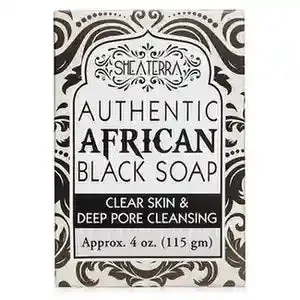
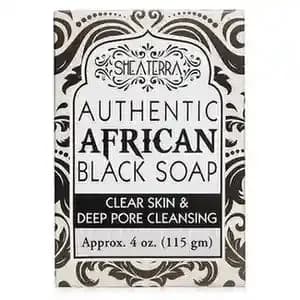
Authentic African Black Soap Bar
A traditionally made bar sourced and formulated with plantain, cocoa, and palm ash for face and body cleansing.
Check current priceDoes African black soap actually work? The evidence
Research published in the Journal of Drugs in Dermatology found that African black soap removed bacteria more effectively than some medicated cleansers, which supports its long-standing reputation as a cleanser that may help with acne-causing bacteria without harsh synthetic chemicals.
Beyond antibacterial action, the ash content acts as a gentle exfoliant that helps unclog pores and break down layers of dead skin cells. The plantain skins used in production are rich in vitamin A, which supports cell turnover and may help reveal more even-toned skin underneath. Shea butter in the formula helps repair the skin barrier so cleansing does not leave skin over-dried.
Combined, these properties may help with reducing the look of hyperpigmentation and dark spots, smoothing texture, and calming inflammation, though African black soap is not a medical treatment and should not replace a dermatologist's care for chronic or severe skin conditions.
In a 2017 survey of 100 clients at New York-area dermatology clinics, 94% reported being "very satisfied" or "somewhat satisfied" with African black soap for overall skin care, a strong real-world satisfaction signal alongside the lab findings.
How to choose the right African black soap product for your skin
African black soap is not one-size-fits-all. Shea Terra Organics sells it in a few formats, and matching the format to your goal makes a noticeable difference in results and comfort.
If you have acne-prone or oily skin
Start with the classic bar or a black-soap facial wash used as a short mask rather than a quick rinse, so the antibacterial and exfoliating properties have time to work on breakout-prone areas.
If you have dry, sensitive, or mature skin
Use African black soap 3 to 5 times per week instead of daily, and always follow with a moisturizer such as shea butter to offset the drying effect of the ash content.
If you want a multi-ingredient formula for dullness or dark spots
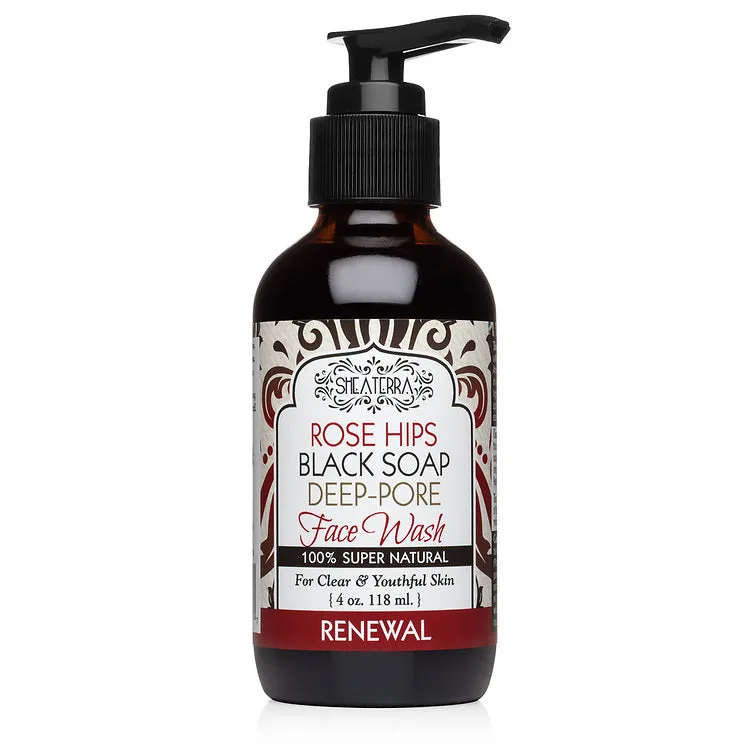
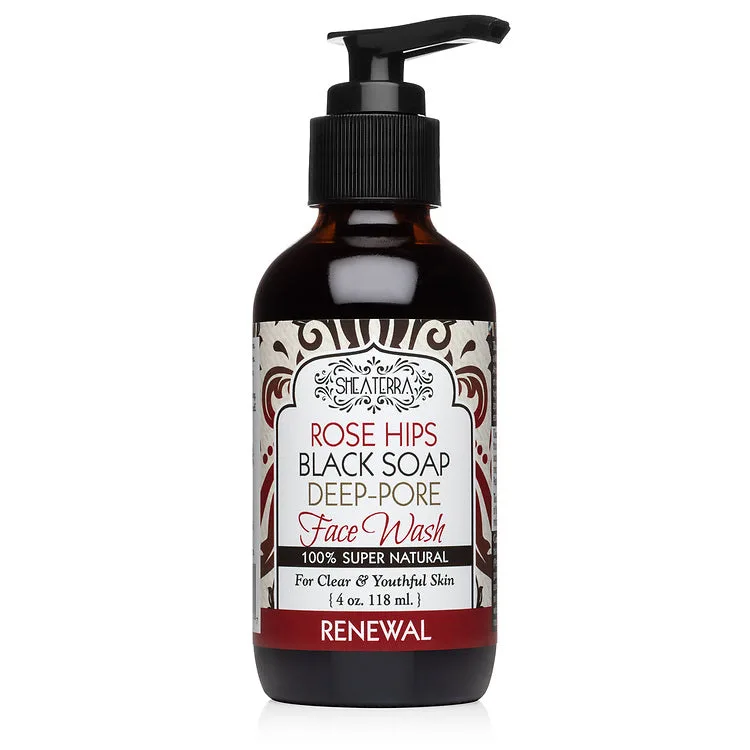
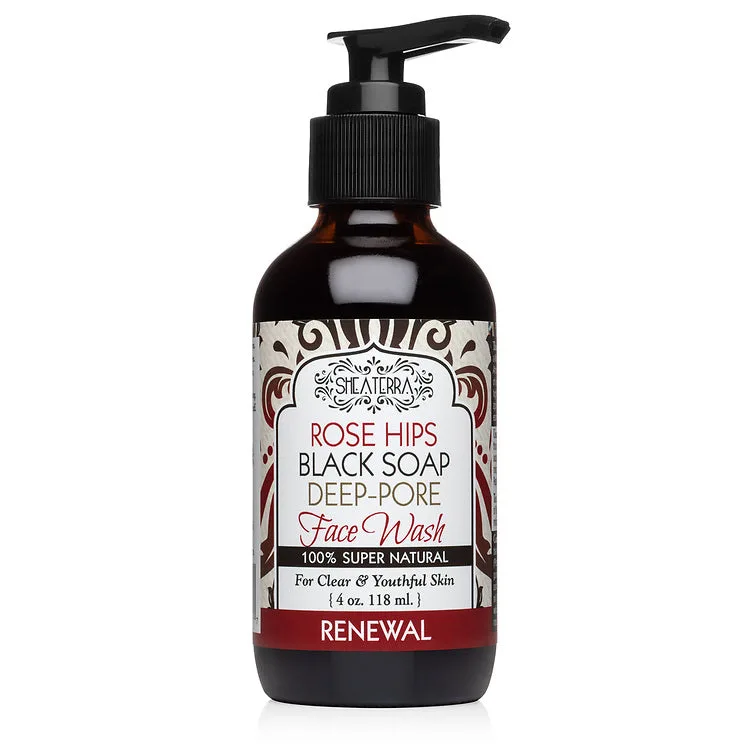
Shea Terra's Rose Hips Black Soap Deep Pore Facial Wash combines black soap with rose hips, and it is the brand's most-reviewed single product at 678 reviews, reflecting strong demand for formulas that pair exfoliation with brightening ingredients.
If you want a versatile, multi-use product
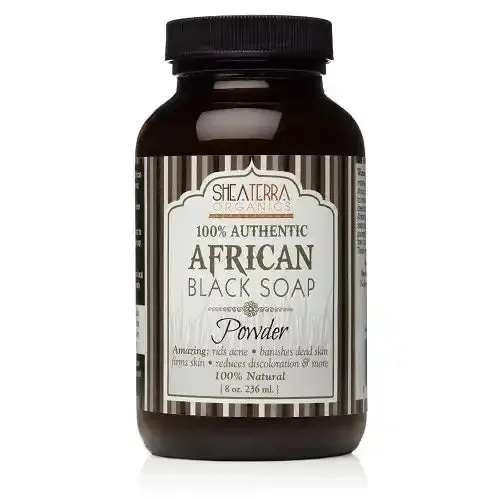
Choose the powder format. It can be mixed with water into a paste for spot use, or diluted further into a liquid for use as a body wash or shampoo, making it the most flexible option in the lineup.
Comparing Shea Terra's African black soap products
| Product | Best for | Format & use |
|---|---|---|
| Authentic African Black Soap Bar | Everyday face and body cleansing | Solid bar, lather and rinse or leave 5 minutes as a mask |
| Rose Hips Black Soap Deep Pore Facial Wash | Acne, dullness, uneven tone | Facial wash blended with rose hips for pore care |
| African Black Soap Powder (8oz) | Custom paste, body wash, or shampoo | Powder mixed with water to desired consistency |
How to use African black soap safely for best results
For the face, lather the soap in your hands and apply the lather as a mask on clean skin for about 5 minutes before rinsing thoroughly. Sensitive skin does best with 3 to 5 uses per week rather than daily use; more resilient skin can typically handle it once a day. Always follow with a moisturizer, such as shea butter, to prevent over-drying.
For the body, lather the bar onto wet skin and rinse, or lather in your hands first and apply. It is generally suitable for daily cleansing, and you can leave it on for a few extra minutes if you want a light exfoliating effect.
For the powder format, mix roughly one spoonful with water to form a paste, then apply and rinse. You can dilute it further with more water for a thinner, liquid consistency suitable as a shampoo or full-body wash.
- Wet skin or hair with warm (not hot) water.
- Lather the bar or mixed powder paste directly onto the area.
- Leave on for 1 to 5 minutes depending on your skin type and goal.
- Rinse thoroughly with warm water.
- Follow immediately with a nourishing moisturizer, such as shea butter, to protect the skin barrier.
Rose Hips Black Soap Deep Pore Facial Wash
What We Like
- Combines two proven exfoliating and brightening ingredients in one wash
- Formulated for daily facial cleansing rather than a full-body bar
What to Consider
- Can be drying if used without a follow-up moisturizer
- Best introduced gradually for sensitive skin
It is Shea Terra's most-reviewed single product, which points to strong repeat demand for a formula that targets acne and exfoliation at once.
Common mistakes to avoid with African black soap
Even a well-made, traditional bar can disappoint if it is used the wrong way. These are the most common issues people run into.
- Skipping the moisturizer. The ash content is naturally alkaline and can leave skin feeling tight or flaky without a follow-up like shea butter.
- Using it daily on sensitive skin. Start at 3 to 5 times per week and increase frequency only if your skin tolerates it well.
- Expecting overnight results for hyperpigmentation. Vitamin A and E content may support a more even tone over time, but this is a gradual process, not a spot treatment.
- Leaving lather in eyes or on broken skin. The alkaline nature of traditional soap-making means it should be kept away from open wounds and the eye area.
- Buying an unverified "black soap" with added synthetic fillers. Authentic African black soap should list plant-derived ash and traditional oils, not a long list of synthetic detergents.
Alternatives and pairing products
African black soap works well as a foundation step, but it is rarely a complete routine on its own. Many people pair it with a lightweight facial oil, such as a cold-pressed rosehip seed oil, to replace moisture after cleansing, or with a fragrance-free shea butter for body-wide hydration. For a detailed guide to rosehip oil and how it pairs with cleansing, see our rosehip seed oil benefits guide. If your main concern is dryness rather than acne or dullness, a moisturizing oil-based cleanser may suit your skin better than a soap-based one. For the fuller sourcing story behind these African botanicals, see our deep dive on why Shea Terra Organics stands out in natural skincare.
The bottom line on African black soap
African black soap has real, source-backed benefits for acne-prone, oily, and unevenly toned skin, supported by published dermatology research and strong real-world satisfaction data. For most people, the Authentic African Black Soap Bar is the best starting point, while the Rose Hips Black Soap Deep Pore Facial Wash is worth the upgrade if acne and dullness are your main concerns. Always pair it with a moisturizer to keep skin balanced.
Shop Shea Terra Organics African Black SoapThis article is for informational purposes and is not medical advice. African black soap is not a treatment for chronic skin conditions. If you have persistent acne, eczema, or another ongoing skin concern, consult a licensed dermatologist. Individual results vary based on skin type and consistency of use.
Recommended for you