Shea Terra Organics Review: Wildcrafted African Skincare
Shea Terra Organics turns African botanicals — shea butter, black soap, rosehip oil — into fair-trade skincare. Here's how the brand sources ingredients, what the science says, and how to choose.
What is Shea Terra Organics
Shea Terra Organics has spent more than two decades turning African botanicals — shea butter, black soap, rosehip oil, black seed oil — into cold-pressed skincare, and if you have ever wondered whether the brand's fair-trade story matches what is actually inside the jars, this guide walks through it. We break down where Shea Terra Organics sources its ingredients, what the science says about its core botanicals, and how to decide if the brand fits your routine, all at Purisia.
Shea Terra Organics is a fair-trade African skincare brand built around raw, cold-pressed botanicals
If you want fewer synthetic fillers and are comfortable with a slightly more rustic texture, Shea Terra Organics is worth exploring. If you prefer lightweight, heavily fragranced formulas, it may not be the best starting point.
Browse Shea Terra OrganicsWhat you'll learn
- Where Shea Terra Organics sources its African botanicals and how the brand operates
- The science behind shea butter, African black soap, rosehip oil, and black seed oil
- Who Shea Terra Organics products tend to suit — and who might want to skip them
- How to compare product categories before you choose one to start with
- Common myths about "raw" and "organic" African skincare
What is Shea Terra Organics
Shea Terra Organics is a skincare brand founded in 1999 by Tammie Umbel with a mission to bring Africa's indigenous beauty ingredients to global markets while supporting the communities that produce them. The brand specializes in cold-pressed oils, shea butters, and natural skincare formulations sourced from African botanicals including Egyptian, Ethiopian, Moroccan, Senegalese, and Madagascar origins.
Rather than manufacturing synthetic actives in a lab, Shea Terra Organics works with the raw materials African communities have used for generations — shea nuts, plantain ash, black seed, and rosehip — and processes them with minimal refinement so more of the original fatty acids and micronutrients survive into the jar.
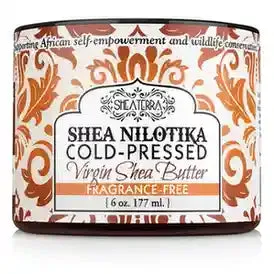
The brand collaborates directly with local farmers and cooperatives across Africa, aiming to secure quality ingredients while supporting economic growth for women artisans and small farmers. Production leans on traditional methods and fair-trade, sustainable sourcing intended to protect biodiversity in the regions the ingredients come from.
On quality, the brand's approach centers on small-batch handling, cold-pressed formulations, and hands-on checks rather than mass industrial processing. Many products remain certified organic and raw, though the founder has spoken publicly about becoming skeptical of overclaimed organic certification language in the wider industry — a useful reminder to read ingredient lists rather than marketing badges alone.
How its African botanicals work
Shea Terra Organics is not a single formula — it is a catalog of individual African botanicals, each with its own mechanism. Understanding how the core ingredients behave on skin explains why the brand markets them the way it does.
African black soap (Ose Dudu)
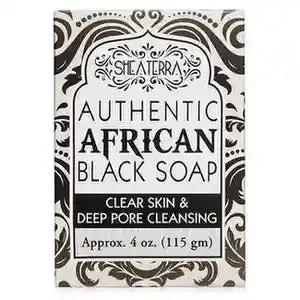
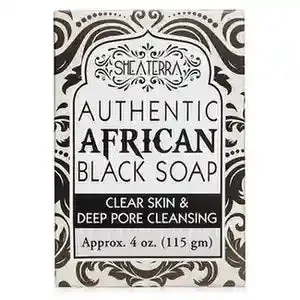
African black soap traces back to Yoruba communities in Nigeria, Benin, and Togo. Traditional production sun-dries and roasts plantain skins, cocoa pods, palm tree leaves, and shea tree bark into ash, which is mixed with water and filtered into an alkaline lye. That lye is slowly blended with palm oil, palm kernel oil, and shea butter while continuously stirred, triggering saponification — the chemical reaction that converts fats into soap.
Research published in the Journal of Drugs in Dermatology found that African black soap removed bacteria more effectively than some medicated cleansers, and the ash content acts as a gentle exfoliant that helps unclog pores. A 2017 survey of 100 clients at New York dermatology clinics found 94% were either "very satisfied" or "somewhat satisfied" with African black soap for overall skin care.
For a detailed walkthrough of how African black soap works for acne and congestion, refer to our African black soap benefits guide.
Shea butter
Shea butter is a plant lipid extracted from the nuts of African shea trees (Vitellaria paradoxa). It contains oleic, linoleic, palmitic, and stearic fatty acids alongside antioxidants, phytosterols, and vitamins A, D, and E, which together condition skin and help lock in moisture. Cleveland Clinic and cosmetic-ingredient sources note it has ceramide-like properties that strengthen the skin barrier, and most dermatologists rate it as non-comedogenic — meaning pure shea butter should not clog pores.
For more on how shea butter supports your skin barrier and anti-aging routine, see our shea butter benefits guide.
Rosehip seed oil
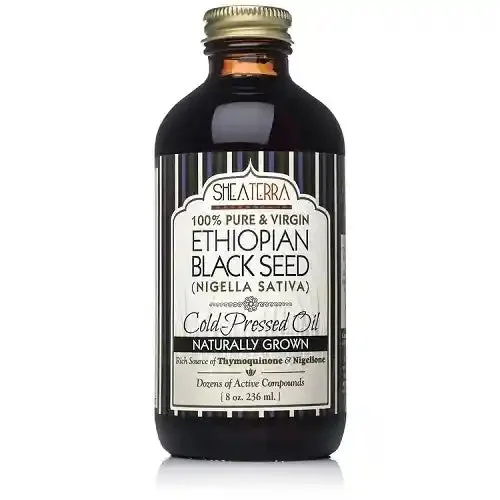
Rosehip seed oil carries provitamin A carotenoids, vitamin C precursors, and essential fatty acids including linoleic, alpha-linolenic, and oleic acid. In a controlled surgical scar trial of 108 patients, participants applying pure rosehip oil twice daily for six weeks showed significantly better outcomes than untreated controls across nearly every scar-related measure, and both 20% and 100% rosehip formulations improved skin hydration in clinical testing.
Learn more about how rosehip seed oil improves scars, hydration, and skin firmness in our rosehip seed oil benefits guide.
Benefits and who it helps
Because Shea Terra Organics is built from a handful of well-studied botanicals rather than a proprietary chemical blend, the benefits map closely to the ingredient science above: gentle antibacterial cleansing from black soap, barrier repair and moisture retention from shea butter, and collagen-supportive, scar-fading action from rosehip oil. Together they suit people managing dryness, occasional breakouts, uneven tone, or general skin-barrier maintenance.
The brand tends to be a better fit for readers who already lean toward "clean" or minimally processed beauty routines and don't mind a heavier, less foamy texture than a typical drugstore cleanser or lotion. It is a weaker fit for anyone who wants fragrance-free, ultra-lightweight, or dermatologist-formulated actives like retinoids or prescription-strength acids — Shea Terra Organics is a botanical brand first, not a clinical-actives brand.
Product categories and how to choose
Shea Terra Organics' catalog groups into a few recognizable categories. The table below compares them at a category level so you can see where to start before drilling into a specific product.
| Category | Core botanical | Best for |
|---|---|---|
| Facial cleansers | African black soap + rosehip | Acne-prone or congested skin needing gentle antibacterial cleansing |
| Body & face butters | Shea (Nilotika) butter | Dry skin, barrier repair, everyday moisturizing |
| Facial oils & serums | Rosehip, black seed oil | Uneven tone, scar fading, anti-aging support |
| Bar soaps | Traditional African black soap | Readers who want the classic Ose Dudu format for body or face |
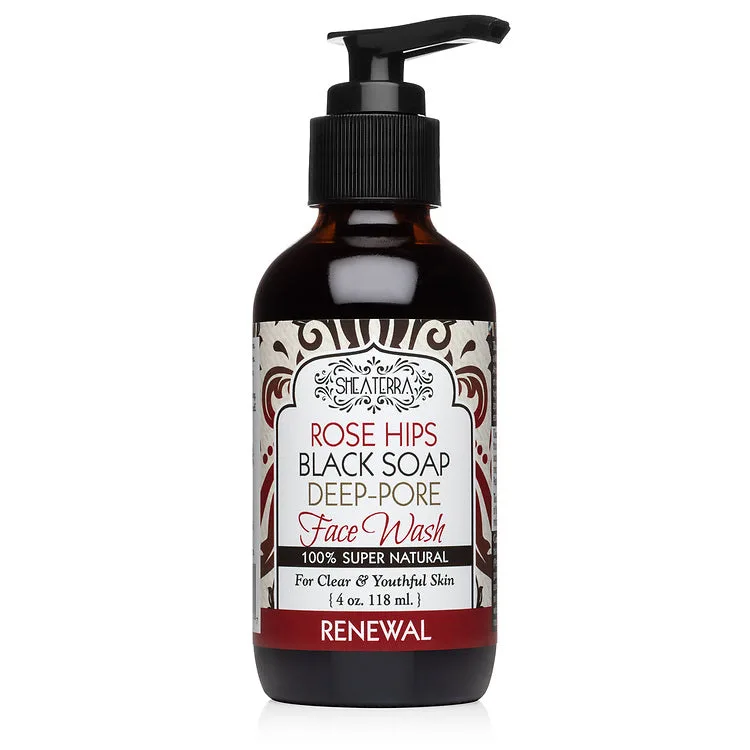
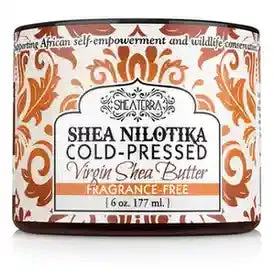
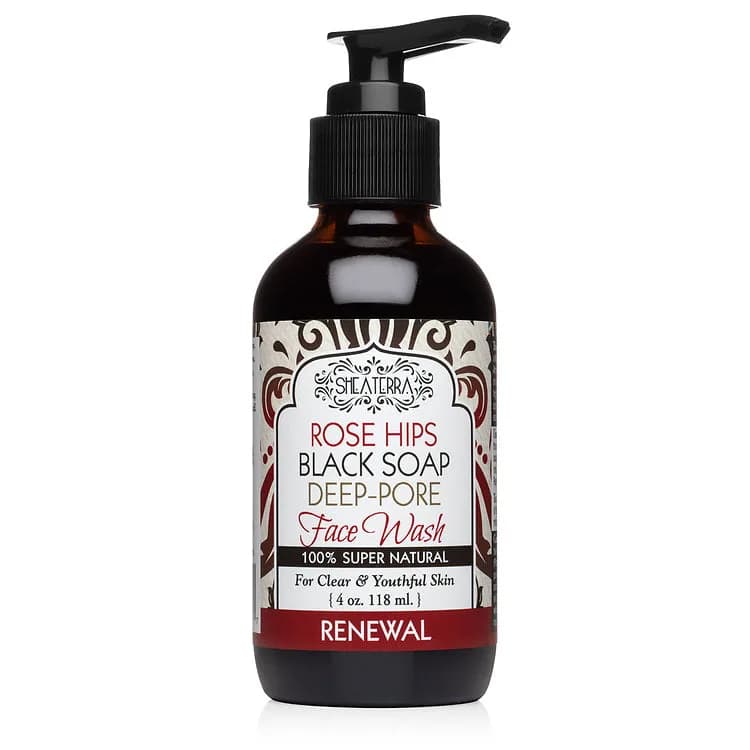
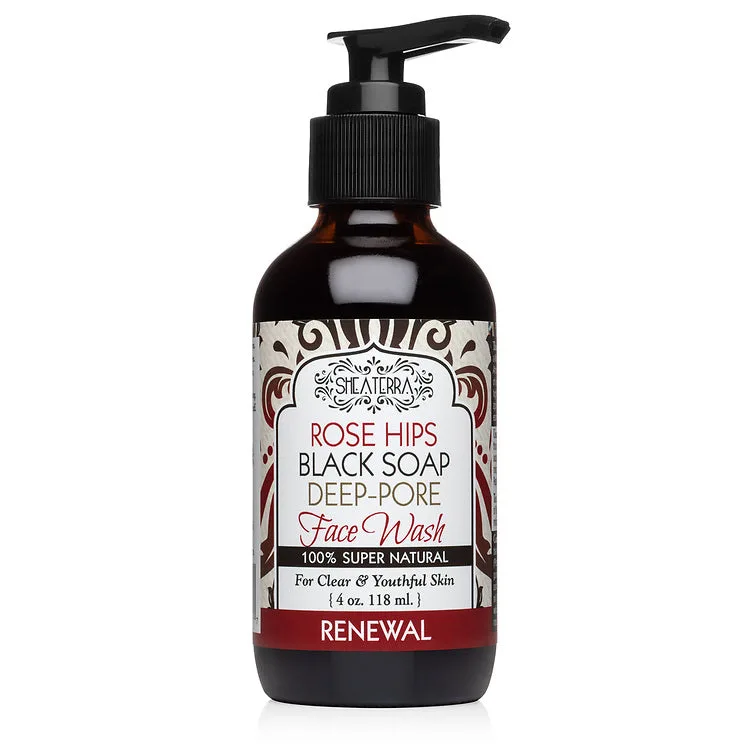
Among the brand's listed products, the Rose Hips Black Soap Deep Pore Facial Wash carries 678 reviews, making it Shea Terra Organics' most-reviewed single item, followed by the 100% Pure Ethiopian Black Seed Oil with 439 reviews and the Shea Nilotika Cold-Pressed Virgin Shea Butter with 342 reviews. The high review count on the facial wash suggests strong demand for a formula that combines black soap's cleansing action with rosehip's brightening properties in one step.
Risks, myths and common mistakes
"Raw" and "organic" African skincare is often marketed as risk-free, but that isn't accurate. Traditional African black soap is genuinely alkaline (it starts as a lye-based saponification process), so it can feel drying or mildly irritating for very sensitive or eczema-prone skin if used too frequently. African black soap is not a medical treatment for chronic skin conditions, and dermatologist consultation is recommended for persistent issues rather than relying on any single product to resolve them.
A second common mistake is assuming more "raw" automatically means more effective. Unrefined botanicals vary batch to batch in texture and scent, which is normal for small-batch, cold-pressed production — it is not necessarily a quality defect, but it does mean first-time users should patch-test on the inner forearm before applying a new product to the face.
Finally, don't expect a botanical brand to replace prescription-strength treatments for cystic acne, diagnosed eczema, or other medical skin conditions. Shea Terra Organics products are best framed as supportive, everyday skincare rather than clinical intervention.
Alternatives and related approaches
If you want to understand one specific Shea Terra Organics botanical in more depth before buying anything, Purisia has dedicated deep-dive guides on the individual ingredients — African black soap, shea butter, and rosehip seed oil — covering how each is made, the clinical evidence behind it, and how to choose a specific product. These are natural next stops once you know which category above fits your skin concern. For a wider look at everyday perks across the whole line, see our roundup of unexpected Shea Terra Organics benefits.
Outside Shea Terra Organics, other African-botanical and clean-beauty brands offer similar raw shea or black-soap formulations; the ingredient science in this guide (saponification for black soap, fatty-acid profile for shea butter, carotenoid and collagen support for rosehip oil) applies broadly, so it's a useful framework for evaluating any brand in this category, not just this one.
Getting started with Shea Terra Organics
If you're ready to try the brand, start with the category that matches your main concern rather than buying several products at once. Acne-prone or congested skin usually does best starting with a black-soap-based cleanser; dry or barrier-compromised skin benefits most from a pure shea butter; and uneven tone or early fine lines respond best to a rosehip-based oil or serum.
A patch test, one product at a time, and a couple of weeks of consistent use is the simplest way to see whether Shea Terra Organics earns a permanent spot in your routine.
Where to go next
Shea Terra Organics is a fair-trade, botanical-first skincare brand with real evidence behind its core ingredients — black soap's antibacterial cleansing, shea butter's barrier repair, and rosehip oil's collagen and scar support. It suits readers who want minimally processed African ingredients and are willing to patch-test and start slow. For a deeper look at any single ingredient, follow the links above to Purisia's dedicated guides, or explore the brand's current catalog directly.
Browse Shea Terra OrganicsThis article is for general informational purposes and is not medical advice. Botanical skincare products can affect individuals differently; discontinue use if irritation occurs and consult a dermatologist for persistent or severe skin conditions.
Recommended for you