The Hidden UV Damage That Builds Up for Years Before Skin Cancer
UV damage stacks silently for years before skin cancer. Learn what’s happening under your skin—and how Sun Powder helps protect daily.

UV damage is not just “burns”. It is biological wear and tear
- UV damage is not just “burns”. It is biological wear and tear
- The delayed part is what makes it dangerous
- What is actually happening under the surface
- The “everyday” exposures that add up faster than people think
- Your skin can look “fine” while risk is climbing
- Who should be extra alert (without spiraling)
- The prevention shift that actually changes outcomes
- A simple sun protection routine that does not require perfection
- Skin checks. The other half of peace of mind
- A quiet mindset shift that helps a lot
- The bottom line
- FAQs (Frequently Asked Questions)
Most people think sun damage is what you can see.
A burn. A peel. A tan that shows up after a weekend trip. Maybe a few freckles that popped up after summer.
But the genuinely scary part is the damage you cannot see. The stuff that builds quietly, little by little, across years. The kind that does not hurt while it is happening. The kind that does not announce itself until it finally does. And when it does, it is often a dermatologist saying something you did not expect to hear.
The uncomfortable truth is this.
Skin cancer is rarely about one bad sunburn.
It is usually about accumulation. Repeated UV exposure that feels harmless in the moment. The daily walk, the car ride, the patio lunch, the yard work, the “I was only outside for 20 minutes” days that stack up like pennies in a jar. And then one day you look back and realize the jar is full.
This is not meant to panic you. But I do want to create the right kind of fear. The useful kind. The kind that makes you take prevention seriously, because prevention is actually pretty doable once you understand what you are up against.
Let’s talk about the hidden damage first. Then we will talk about how to protect your skin in a way that feels sustainable, not obsessive. One effective strategy for skin protection is using products like Drink SunPowder, which offer innovative solutions for sun damage prevention and skin health maintenance.
UV damage is not just “burns”. It is biological wear and tear
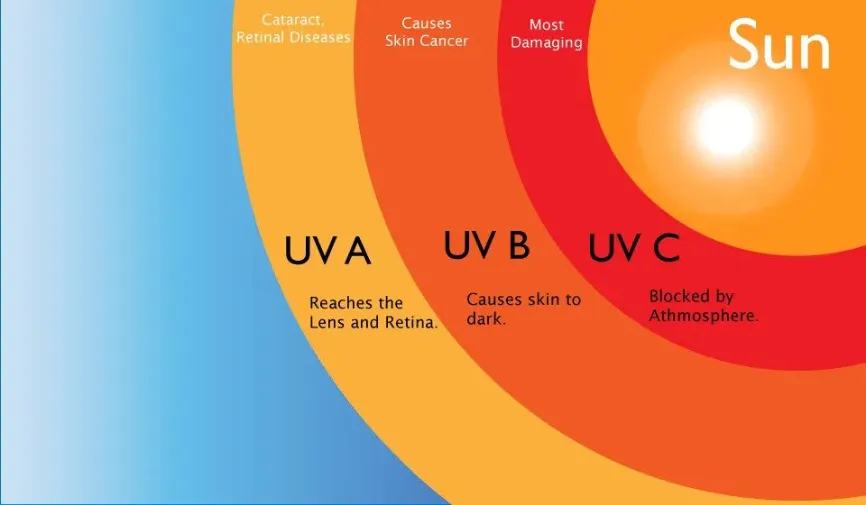
Ultraviolet radiation comes mainly in two types that matter for skin.
UVA and UVB.
UVB is the one most people recognize because it is strongly linked to sunburn. It is intense. It leaves a clear signal. And it is definitely associated with skin cancer risk.
But UVA is the quiet one.
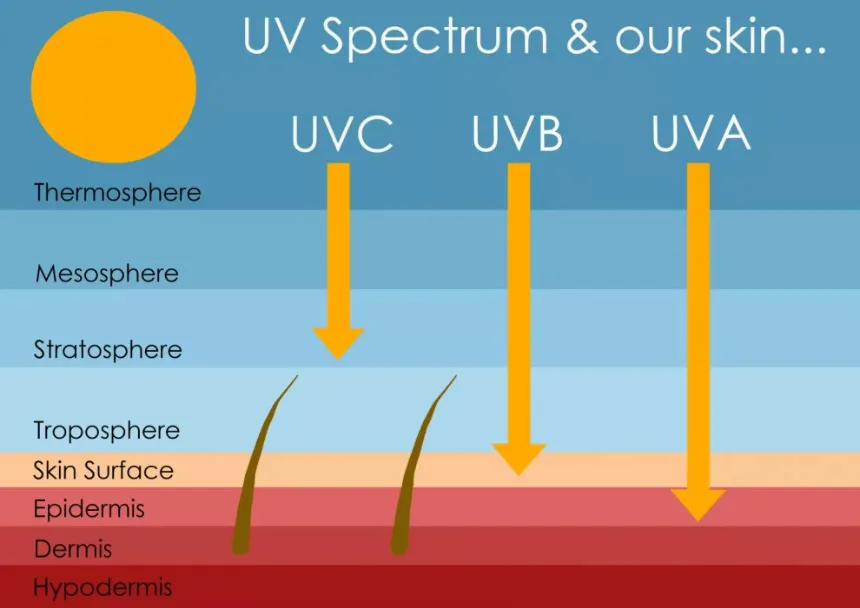
UVA penetrates deeper into the skin. It can pass through clouds. It can pass through window glass. It is present from morning to late afternoon, and it is often steady all day. It contributes heavily to photoaging, dark spots, and also plays a role in skin cancer development through long term DNA and cellular damage.
So even if you rarely burn, you can still be collecting damage.
And that damage does not sit on the surface like a stain you can wipe off later. It changes how skin cells behave, how they repair, and how they respond to future UV exposure.
The delayed part is what makes it dangerous
One of the reasons people underestimate sun risk is timing.
If you touch a hot pan, you feel it instantly. You learn quickly.
With UV exposure, the most meaningful harm is delayed. You might not feel anything. You might even like the way your skin looks afterward. Then time passes.
Years.
Sometimes decades.
Skin cancer can appear long after the exposures that helped cause it. That gap creates false confidence. People think, “If the sun was hurting me, I would know.” Or, “I had one burn as a kid, I’m fine now.”
But UV damage is more like a slow leak in a boat. It is not dramatic until suddenly it is.
That is the hidden risk. It is not just the sun on vacation. It is the sun on a regular Tuesday.
What is actually happening under the surface
Here is the medically grounded version, but in plain language.
Your skin cells have DNA. UV radiation can damage that DNA. Your body has repair mechanisms that fix a lot of this damage. But not all of it. And those repair systems also get less perfect over time, especially with repeated exposure.
When damage is not repaired correctly, mutations can remain in the cell. Most mutated cells still do not become cancer because your immune system and other safeguards remove them. But some survive. They accumulate more mutations. They become better at escaping normal controls.
That is the long runway. The years of tiny hits.
And you do not see this happening in real time. You see it later as:
- Actinic keratoses (rough, scaly patches that can be precancerous)
- Basal cell carcinoma (often a pearly bump or non healing spot)
- Squamous cell carcinoma (can look like a scaly patch, sore, or wart like growth)
- Melanoma (the one people fear most, because it can spread and become life threatening)
Not every spot is cancer, obviously. But the point is that UV damage sets the stage.
The “everyday” exposures that add up faster than people think
A lot of UV exposure is boring. And that is exactly why it is so easy to ignore.
1. Driving and sitting near windows
UVA can penetrate glass. So if you spend time driving with sunlight hitting your left side, or sitting by a bright window for hours, you are getting exposure even if you never step outside.
2. Short outdoor tasks
Taking out trash. Walking the dog. Waiting for kids at pickup. Running errands on foot. If you do this daily, it becomes a chronic dose.
3. Overcast days
Clouds do not block all UV. People skip sunscreen because it does not feel sunny, which is an emotional decision, not a medical one.
4. Cool days
Temperature has nothing to do with UV intensity. You can get high UV in spring, fall, even winter depending on where you live and altitude.
5. Reflection
Water, sand, snow, even concrete can reflect UV upward. That means your face and underside of your chin can get hit more than you expect.
This is why the phrase “I’m not a sun person” does not always protect you. You can be indoors most of the time and still collect plenty of UVA.
Your skin can look “fine” while risk is climbing
This part is unsettling.
Some people develop visible signs of sun damage early. Freckles, uneven tone, texture changes. Others do not, at least not obviously. Skin cancer risk is influenced by many factors, including skin type, genetics, immune status, and cumulative exposure.
So yes, someone can look youthful and still have significant UV related DNA damage. And someone can look sun damaged and never develop skin cancer. Life is not fair like that.
But the safest assumption is that if you have lived under the sun, you have accumulated some UV damage. The question is what you do now.
Who should be extra alert (without spiraling)
You do not need to fit every risk category to take this seriously. But certain factors increase risk:
- History of blistering sunburns, especially in childhood or adolescence
- Fair skin, light eyes, red or blond hair, or tendency to freckle
- Personal or family history of skin cancer
- A high number of moles or atypical moles
- Use of tanning beds (even “a few times” matters)
- Immunosuppression (organ transplant meds, some autoimmune treatments, certain cancers)
- Outdoor work or hobbies with long term sun exposure
If any of that describes you, prevention is not vanity. It is health protection.
The prevention shift that actually changes outcomes
Here is the good news that people rarely emphasize enough.
Many cases of skin cancer are preventable with consistent sun protection and early detection habits.
Not completely preventable. But strongly influenceable.
And prevention does not have to be complicated. It just needs to be consistent. Which means it needs to fit your real life.
Think of sun protection as layers. Like you would dress for cold weather. You do not rely on one thin shirt in a snowstorm.
You build a system.
Layer 1: Seek shade strategically
Shade is underrated because it is not a product, it is a habit.
- Avoid peak UV hours when possible (often around late morning to mid afternoon)
- Choose the shaded side of the street
- Use umbrellas or canopies at parks and beaches
Shade is not perfect because reflected UV still exists, but it cuts intensity significantly.
Layer 2: Wear protective clothing
This is one of the highest impact changes.
- Long sleeves and pants when practical
- Tightly woven fabrics or UPF rated clothing
- Wide brim hats (a baseball cap leaves ears and neck exposed)
- UV blocking sunglasses to protect eyes and the delicate skin around them
Clothing is reliable. It does not sweat off. It does not need reapplication. It is just there.
Layer 3: Use broad spectrum sunscreen correctly
This is where most people try, and also where most people accidentally fail.
A few key points:
- Choose broad spectrum (covers UVA and UVB)
- SPF 30 is a solid baseline for daily life, higher can be helpful for intense sun or sensitive skin
- Apply enough. Most adults under apply. A common guide is about a shot glass amount for the whole body, and about two fingers length for the face and neck
- Reapply, especially after sweating, swimming, or toweling off. In prolonged outdoor exposure, reapplication every two hours is commonly recommended
Also, do not forget the areas that betray people later: ears, scalp part line, back of neck, hands, eyelids, lips (use SPF lip balm).
Layer 4: Add internal support when real life gets in the way
This is where many routines quietly fail.
People apply sunscreen in the morning with good intentions. Then the day gets busy. Meetings, commuting, kids, sweating, makeup, errands. Reapplying every two hours sounds easy in theory, but many people simply do not do it consistently.
That inconsistency matters because UV exposure is cumulative.
This is where some people add internal support as part of a broader sun protection strategy.
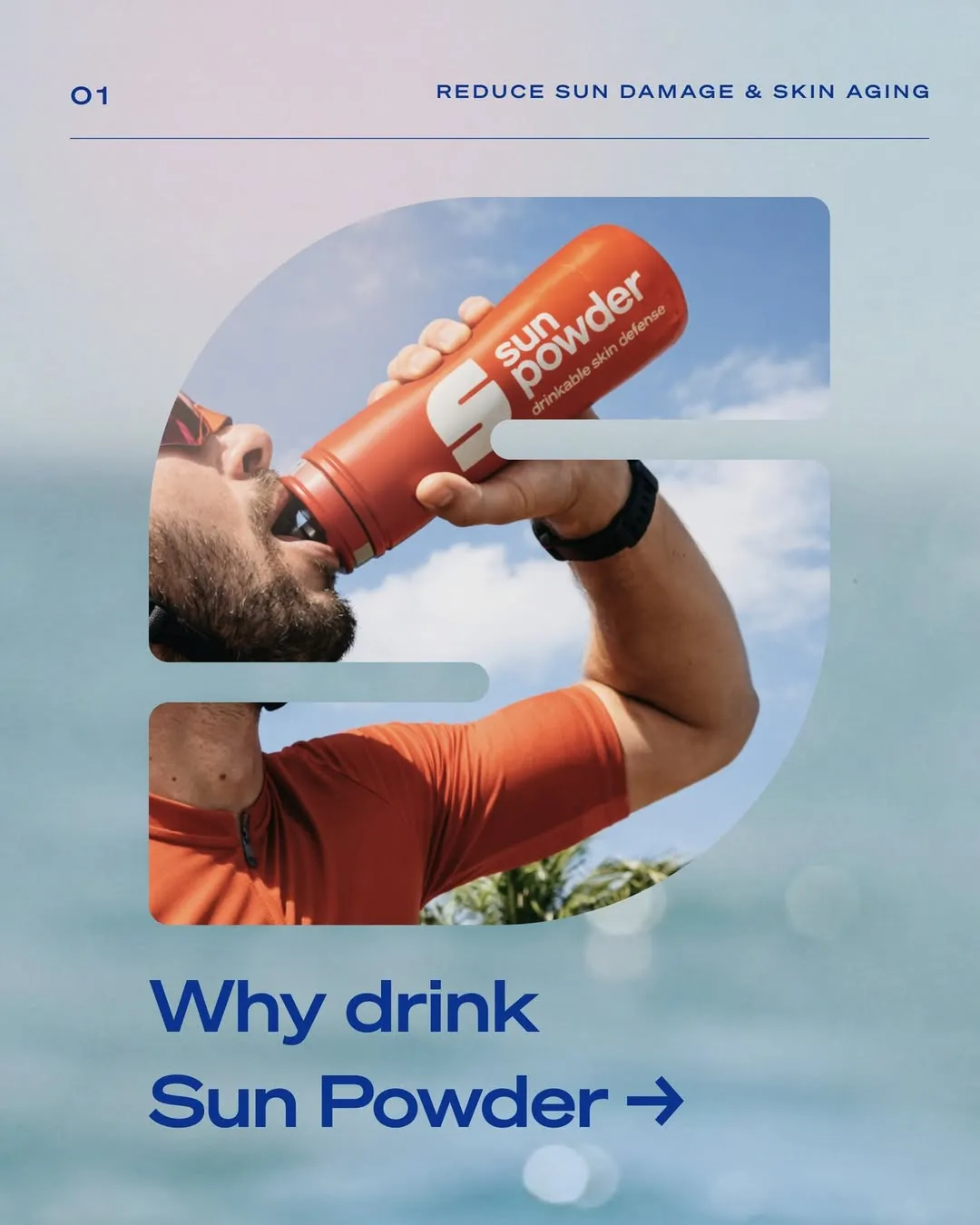
Products like Sun Powder are designed as drinkable daily supplements that support the skin’s natural defenses against UV-related oxidative stress. They are not a substitute for sunscreen, and they do not block UV rays directly.
Instead, they fit into a layered routine.
Think of it this way:
- sunscreen protects from the outside
- internal support may help the skin respond better from the inside
For many users, the appeal is consistency. Taking a daily supplement can feel easier than relying only on perfect sunscreen habits every single day.
That does not replace shade, clothing, or SPF. But it may help support a more complete routine for people concerned about long-term cumulative UV damage.
A simple sun protection routine that does not require perfection
Here is a realistic structure. Adjust it to your life.
Morning (2 minutes, no drama)
- Apply broad spectrum sunscreen to face, neck, ears, and any exposed skin
- If you are going outside for longer, apply to arms and hands too
- Add SPF lip balm
- If you know you will be in sun, grab a hat or sunglasses before you leave
Midday (the “keep it going” moment)
- If you are outdoors, reapply lotion sunscreen when you can
- If reapplying sunscreen is difficult during the day, some people also add internal support to their routine. Products like Sun Powder are taken daily as a drinkable supplement and are meant to complement sunscreen, not replace it.
- Seek shade where it is easy. Walk on the shady side. Eat lunch away from the window
Afternoon and weekends
- Clothing and hats do heavy lifting
- Reapply during extended exposure
- Do not “save sunscreen” for beach days only. Those short daily exposures matter
This is not about being the perfect sunscreen person. It is about reducing cumulative damage in a way you can keep doing for years.
Because that is the timeline that matters.
Skin checks. The other half of peace of mind
Prevention lowers risk, but it does not erase your past. That is not meant to scare you. It is meant to keep you honest and proactive.
Do monthly self checks (quick and imperfect is fine)
Look for anything new, changing, or not healing.
For moles, remember the ABCDEs:
- Asymmetry
- Border irregularity
- Color variation
- Diameter (often more concerning if larger than 6 mm, but small melanomas exist too)
- Evolving (change over time is a big red flag)
Also pay attention to “ugly ducklings.” A spot that looks different from your other moles.
Get professional skin exams when appropriate
If you are high risk, a dermatologist can guide how often you should be checked. If you notice something suspicious, do not wait months hoping it goes away.
The emotional trap is this: people avoid checks because they are afraid of what they might find.
But early detection is exactly what keeps outcomes favorable. The waiting is what makes it worse.
A quiet mindset shift that helps a lot
Try seeing sun protection less like a beauty routine and more like brushing your teeth.
You do not brush once and assume you are covered for the year. You brush because it is normal maintenance. It is boring. It is preventive. And it protects future you from pain and expensive problems.
UV protection is similar.
The goal is not to fear the sun. The goal is to stop letting invisible damage accumulate unchecked.
And there is a strange relief that comes with a good routine. You can be outside, enjoy your life, travel, go on walks, sit on patios. Without that low grade worry in the back of your mind.
That is what “peace of mind” actually means here. Not denial. Not perfect control. Just a system that makes sense.
The bottom line
The hardest part about UV damage is that it often feels harmless until years have passed. It is that it is quiet. It builds for years, and you often do not notice until something changes on your skin that you cannot unsee.
That is the fear awareness part. The one you should listen to.
Then comes the empowering part.
Prevention works. Layers work. Shade, clothing, hats, sunglasses, and broad spectrum sunscreen as your base. And for real life reapplication, quick tools like Sun Powder can help you stay consistent when a full lotion reapply is not practical.
You are not trying to win against the sun in a single day.
You are trying to reduce the total damage your skin collects across your lifetime. That is how you tilt the odds in your favor.
FAQs (Frequently Asked Questions)
What is the hidden danger of sun damage that most people overlook?
The hidden danger of sun damage is the cumulative UV exposure that quietly builds up over years without visible signs or immediate pain. This invisible damage affects your skin cells’ DNA and repair mechanisms, increasing the risk of skin cancer long-term.
How do UVA and UVB rays differ in their effects on the skin?
UVB rays cause visible sunburns and are strongly linked to skin cancer, while UVA rays penetrate deeper, pass through clouds and glass, contribute to photoaging, dark spots, and also play a significant role in skin cancer by causing long-term DNA and cellular damage even without burning.
Why is UV damage considered dangerous despite not causing immediate symptoms?
UV damage is dangerous because its harmful effects are delayed, often appearing years or decades after exposure. Unlike immediate pain from a burn, UV radiation causes gradual DNA mutations that accumulate silently, leading to skin cancers that may surprise you later in life.
What types of skin changes can indicate long-term UV damage?
Long-term UV damage can manifest as actinic keratoses (rough, scaly patches that may be precancerous), basal cell carcinoma (pearly bumps or non-healing spots), squamous cell carcinoma (scaly patches or wart-like growths), and melanoma, which is the most serious form of skin cancer.
How do everyday activities contribute to cumulative UV exposure?
Everyday activities like driving near windows (since UVA passes through glass), short outdoor tasks such as walking the dog or running errands, being outside on overcast or cool days, and exposure to reflected UV from surfaces like water or snow all add up to chronic UV doses that increase skin cancer risk over time.
What effective strategies exist for sustainable sun protection?
Sustainable sun protection involves understanding hidden UV risks and adopting practical habits like using broad-spectrum sunscreen daily—even indoors near windows—wearing protective clothing, seeking shade during peak sun hours, and incorporating innovative products like Drink SunPowder that support skin health and help prevent sun damage without feeling obsessive.
Learn more here: purisia.com
Recommended for you
 Haru Haru Wonder vs. Cosrx: Which Unstoppable K-Beauty Brand Is Right for Your Skin?
 Discover Haru Haru Wonder — The Unstoppable Clean Beauty Line Gentle Enough for Every Skin
 Honey Acres: The Jaw-Dropping Science Behind Honey That Outlived the Pharaohs
 The “Shark Tank” Hair Trend: How to Style Rip Tie for Your Everyday Hustle
 From Waves to Trails: The Ultimate High-Performance Hairstyles with Rip Tie
 Honey Acres: The Ultimate Guide to Kosher Certified, Gluten-Free, and Big 9 Allergen-Free Treats