Lola Health At-Home Blood Test Review: A Closer Look
An honest look at the Lola Health at-home blood test review: how the professional venous-draw kit works, what the panels cover, and who it may suit — informational only, not medical advice.
How the Lola Health at-home blood test kit works
If you are researching a Lola Health at-home blood test review before booking a kit, here is the short version: Lola Health skips the DIY fingerprick approach used by many competitors and instead sends a certified phlebotomist to draw blood the same way a hospital or GP surgery would. That single design choice shapes almost everything else about the experience — from accuracy to who it best suits.
Key Highlights
- Professional venous blood draw by a certified phlebotomist, not a DIY fingerprick lance.
- Reports a 99.8% sample success rate for venipuncture-based collection.
- Samples analysed by UKAS-accredited (ISO 15189) UK laboratories that also process NHS samples.
- Every result is reviewed by a qualified doctor before it reaches you.
- Panels range from a 45-marker general health check up to a 70-marker comprehensive panel — no GP referral required.
A professional, doctor-reviewed alternative to DIY fingerprick blood tests
Lola Health is built around clinical-style venous blood collection rather than a self-administered fingerprick, which the brand positions as reducing sample rejection and improving accuracy. That makes it worth a look for anyone who wants lab-grade biomarker data without waiting on an NHS referral — though it is informational testing, not a diagnostic service, so results should always be discussed with your GP.
See Lola Health PanelsHow the Lola Health at-home blood test kit works
Most direct-to-consumer blood tests rely on a fingerprick lance and a few drops of capillary blood on a card, which the customer collects unsupervised. Lola Health takes a different route: a certified phlebotomist — often someone who also works within the NHS — performs a standard venous blood draw, either at your home or at a clinic appointment, using the same technique used in hospitals and GP surgeries. The brand reports this professional collection method achieves a 99.8% sample success rate, which it contrasts with the higher rejection and recollection rates that can affect self-collected fingerprick samples.
Every sample is sent to a UKAS-accredited (ISO 15189) UK laboratory that also processes NHS samples, so the underlying analysis runs through the same quality-control standards as hospital pathology. Once results are in, a qualified doctor reviews each report and adds written, personalised commentary rather than leaving you to interpret raw numbers alone. That combination — professional collection, accredited lab, doctor review — is Lola Health's core pitch versus lower-cost fingerprick competitors. For a step-by-step explainer of how this process works across at-home blood testing generally, see our guide to how at-home blood testing works.
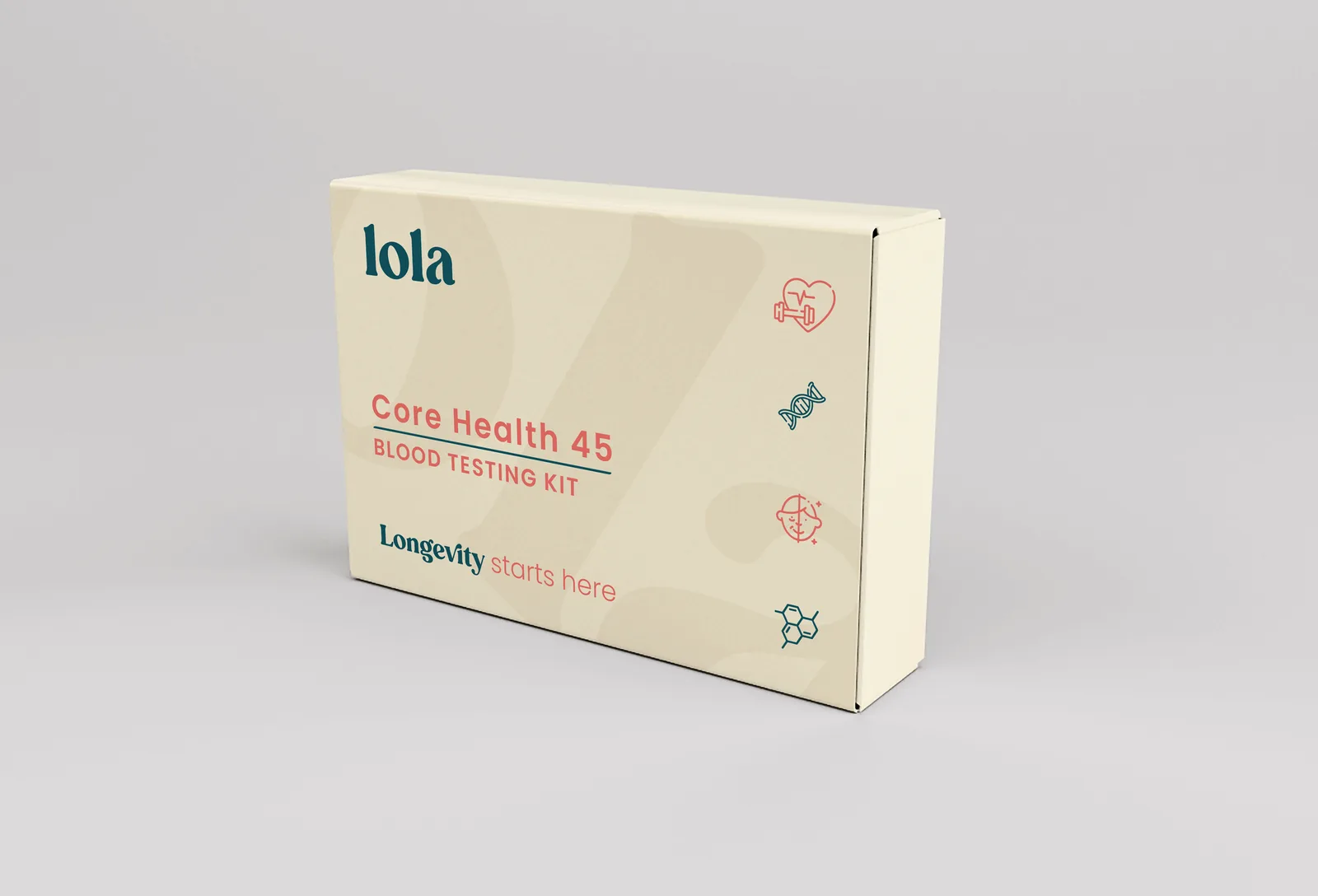
Core Health 45
A 45-biomarker general health panel covering blood count, metabolic, cardiovascular, liver, kidney, inflammation, and hormone markers — a reasonable first test for proactive screening.
Check Current PriceThe collection process, step by step
Booking follows a fairly linear path from panel selection to doctor-reviewed results, and understanding the sequence helps set realistic expectations on timing.
- Choose a panel online — general health, hormone-specific, or performance-focused — without needing a GP referral first.
- Pick a collection method at checkout: a phlebotomist visit at home, or an appointment at one of Lola Health's clinic locations.
- Book the appointment, allowing roughly 2–5 working days for scheduling a home visit.
- Provide the blood sample via standard venipuncture — some panels, including Peak Insights 70, ask for a 10–12 hour overnight fast beforehand for accurate glucose and lipid readings.
- Receive doctor-reviewed results within 2–5 working days of the lab receiving your sample — most panels in 2 working days, with the largest (Peak Insights 70) taking up to 4.
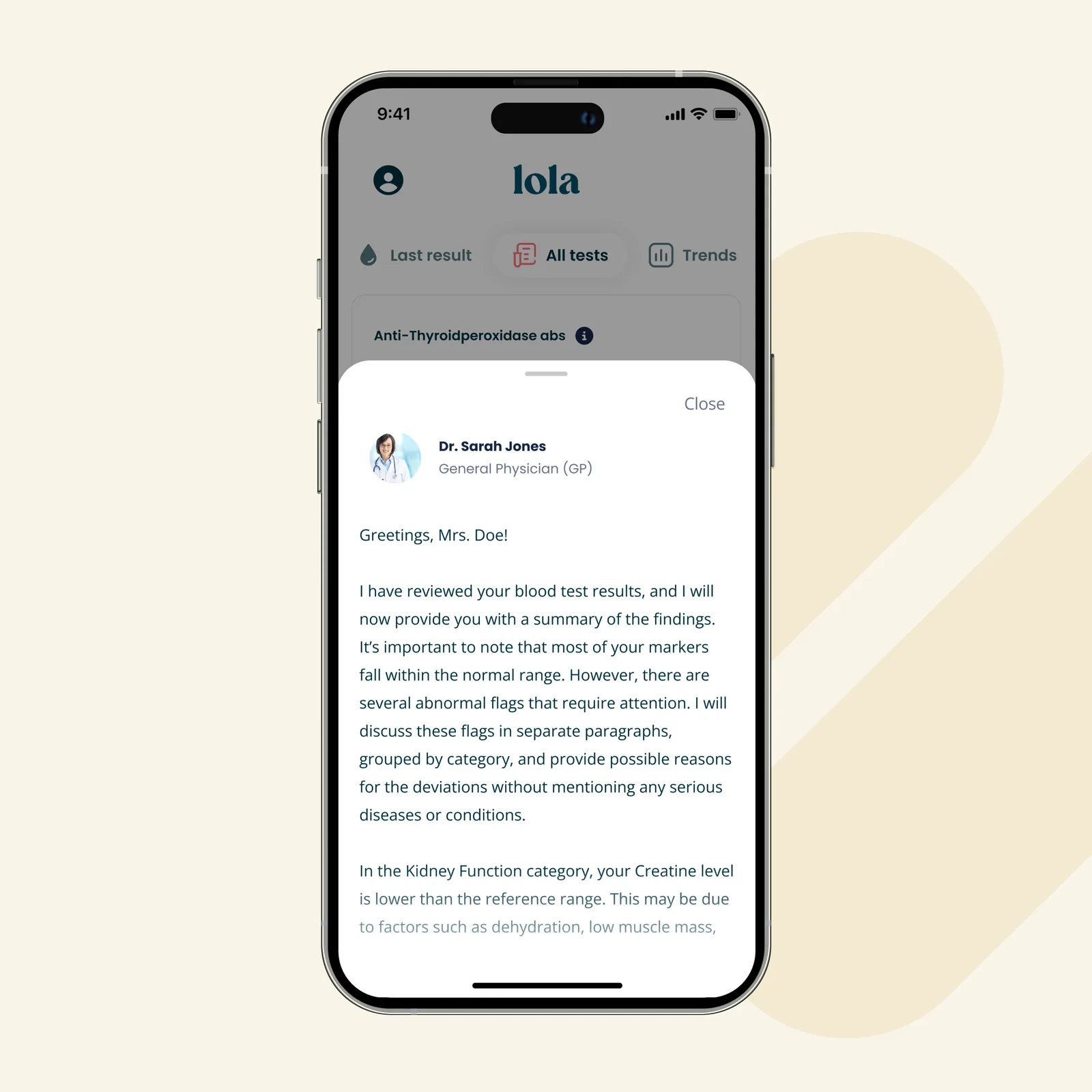
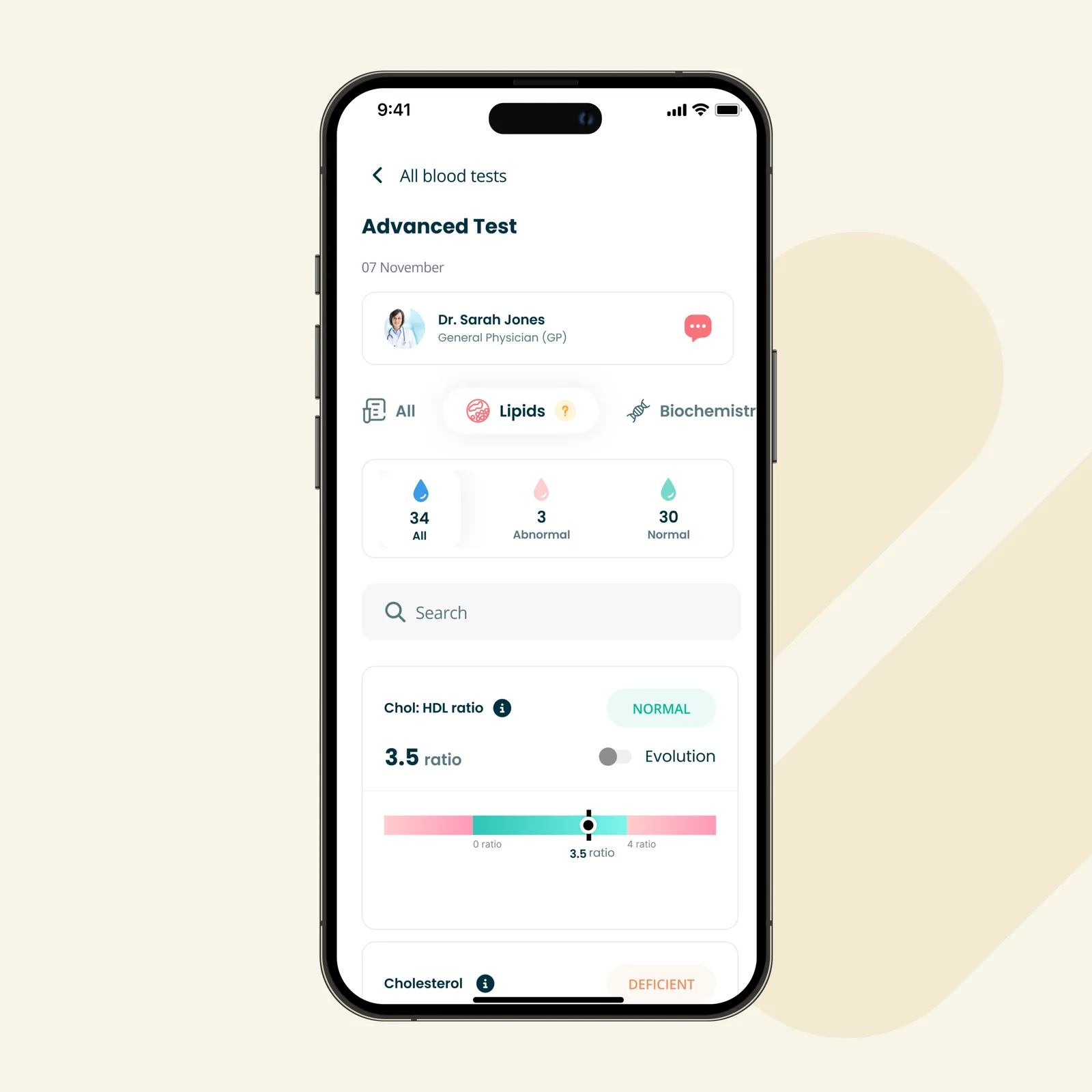
Results land in the Lola app, where you can track values over time and download a PDF or CSV to share with your own GP or a specialist. That trend view is arguably as useful as any single test — a single biomarker reading is a snapshot, while repeated tests over months can reveal whether a change in diet, training, or treatment is actually moving the needle.
Panels and biomarkers covered
Lola Health's panels scale from a broad general check-up to specialised hormone and performance tests, and biomarker count is the clearest way to compare them at a glance.
| Panel | Biomarkers | Focus |
|---|---|---|
| Core Health 45 | 45 across 9 categories | General proactive screening |
| Vital Check 56 | 56 | Broader mid-tier check |
| Peak Insights 70 | 70 | Most comprehensive overview |
| Female / Male Hormones Clarity | 31 / 14 | Reproductive & hormonal balance, HRT monitoring |
| Female / Male Active Boost | 39 / 36 | Athletic performance & recovery |
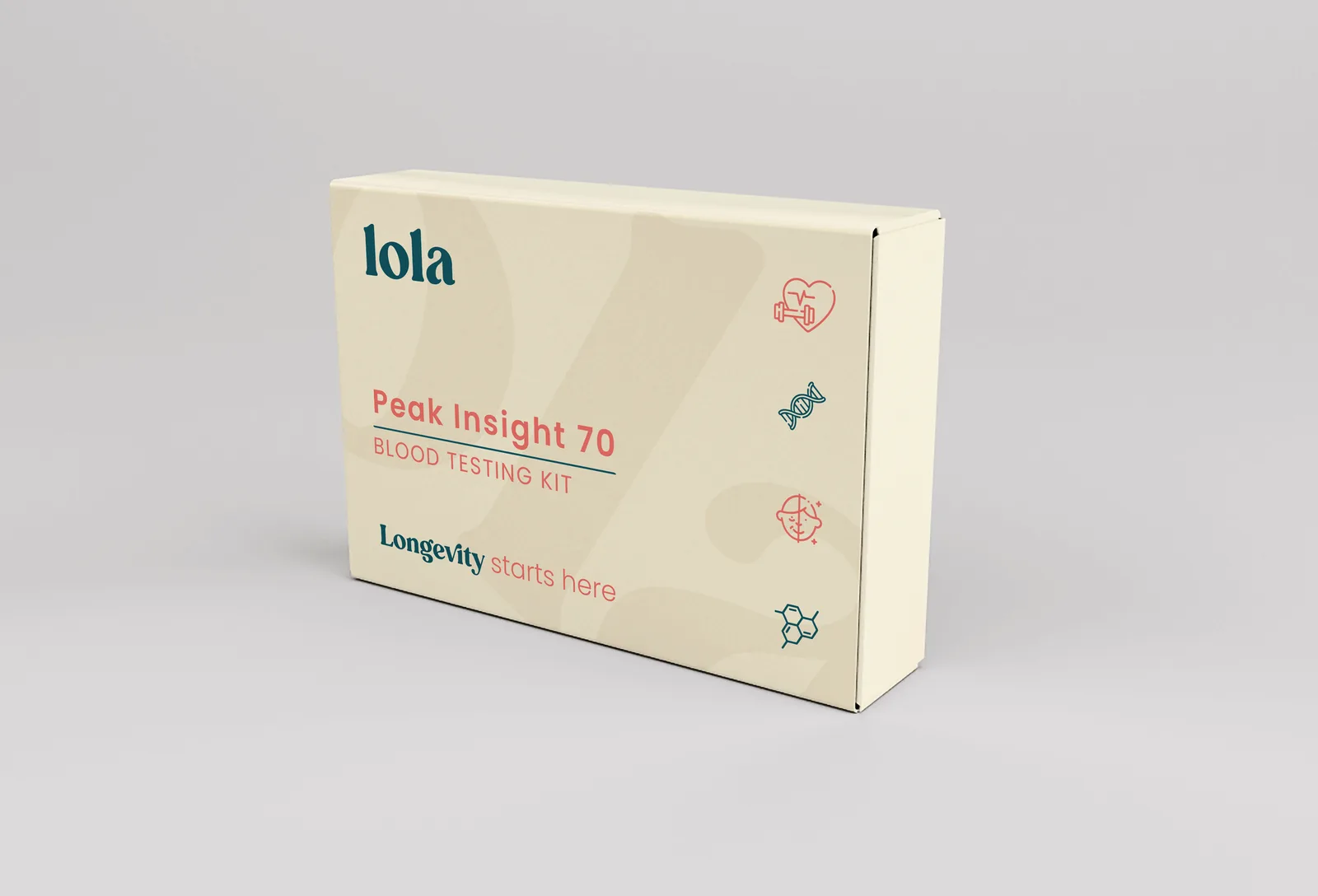
Peak Insights 70
What We Like
- Covers the widest biomarker range Lola Health offers.
- Doctor-reviewed report included, not just raw numbers.
What to Consider
- Requires overnight fasting, which needs a little planning.
- The most comprehensive panel may reveal more markers than a first-time tester wants to act on at once.
For readers who want the fullest possible biomarker picture in one appointment, Peak Insights 70 is the panel Lola Health positions as its top tier. It builds on the Core Health markers with additional hormonal, metabolic, and micronutrient detail, reported back through the same doctor-reviewed process as the smaller panels.
Across the range, the biomarkers Lola Health reports on include cardiovascular markers (cholesterol, triglycerides, LDL, HDL), metabolic markers such as HbA1c, thyroid function (TSH, Free T3, Free T4), inflammatory markers like high-sensitivity CRP, liver and kidney function, and micronutrient status including Vitamin D, B12 and magnesium. These readings may help flag developing issues before symptoms appear, though a single test is informational — it is not a diagnosis, and any concerning marker should be discussed with a doctor.
Beyond standard blood panels, Lola Health also lists a DNA-methylation biological age assessment (TruAge) and a gut microbiome test (GutID) for readers who want to extend testing beyond bloodwork. These sit outside the scope of a standard blood panel review but are worth knowing about if you're comparing the brand's full catalogue.
Who Lola Health may suit
Because ordering does not require a GP referral, Lola Health is aimed at people who want to be proactive about their health rather than wait for symptoms to prompt a doctor's visit. The brand frames its testing around a few common scenarios: routine proactive screening, monitoring an existing treatment such as HRT, watching for early signs of cardiovascular or metabolic change, and tracking biomarkers over time as lifestyle or treatment changes are made.
It may be a weaker fit if you specifically want the absolute lowest-effort test-at-your-kitchen-table option — the venous draw does mean scheduling an appointment rather than pricking a finger on your own schedule. It is also not a substitute for seeing a GP about existing symptoms; treat any result as a starting point for a conversation with a healthcare professional, not a standalone diagnosis.
Common mistakes to avoid
- Skipping the fasting window. Peak Insights 70 recommends a 10–12 hour fast — eating beforehand can skew glucose and lipid results.
- Choosing a panel that doesn't match your goal. A general Core Health 45 check is a different tool from a hormone-specific or performance-focused panel — pick based on what you actually want to monitor.
- Treating results as a diagnosis. Even doctor-reviewed reports are informational; share anything unusual with your own GP rather than self-treating.
How it compares to DIY fingerprick alternatives
The clearest way to place Lola Health in the market is against the fingerprick-first competitors it explicitly positions itself against. The trade-off is appointment scheduling versus do-it-yourself convenience — and, per the brand's own figures, sample reliability.
| Lola Health | Typical fingerprick-only kits | |
|---|---|---|
| Collection method | Professional venous draw by a certified phlebotomist | Self-collected fingerprick sample |
| Reported sample success rate | 99.8% | Higher rejection/recollection rates reported by comparison |
| Doctor review included | Yes, on every panel | Varies by provider |
If your priority is testing on your own schedule with zero appointment, a fingerprick kit may still appeal. If your priority is minimising the chance of an invalid or rejected sample and getting a doctor's written interpretation as standard, Lola Health's model is built around exactly that trade-off.
Worth noting: if you're already building an at-home health-monitoring routine, it's not just bloodwork worth a look — wearable tools for circulation and recovery are part of the same proactive-health trend; our compression socks review covers one option for travel and everyday circulation support alongside blood-based monitoring.
What to look for before you book an at-home blood test
Not every at-home testing brand collects, processes, or reports results the same way. Before choosing a panel, it's worth checking a few factors that materially affect accuracy and usefulness.
Collection method
Ask whether the kit uses a professional venous draw or a self-collected fingerprick sample. Venous collection by a trained phlebotomist generally produces a larger, more consistent sample and reduces the chance of an invalid result needing recollection.
Lab accreditation
Check whether the lab processing your sample carries recognised accreditation, such as UKAS/ISO 15189 in the UK, and whether it's the same lab infrastructure used for NHS testing. This is a meaningful quality signal beyond marketing claims.
Doctor review and reporting
Raw biomarker numbers are only useful with context. Look for a service where a qualified doctor reviews every result and provides written commentary, not just a spreadsheet of values.
Turnaround time and tracking
Compare how long results take (Lola Health quotes 2–5 working days depending on panel) and whether the provider offers an app or downloadable report for tracking biomarkers over multiple tests.
How We Chose What to Cover
This review is based on Lola Health's own product, process, and comparison pages rather than first-hand lab testing — we did not commission blood work for this article. Every specification and figure below traces back to a specific brand source page reviewed as part of our research.
Our verdict
For a reader comparing at-home blood testing options, the Lola Health at-home blood test review comes down to this: the professional venous draw, UKAS-accredited lab processing, and doctor review on every panel make it a solid pick for anyone who wants clinical-style rigour without a GP referral. It suits people focused on proactive screening, treatment monitoring, or trend tracking over time — it's a weaker fit if pure convenience of a self-collected fingerprick matters more to you than sample reliability. Whatever the result, treat it as information to bring to your GP, not a diagnosis.
Check Lola Health Panels & PricingReferences
Informational only, not medical advice. This article describes Lola Health's publicly stated testing process, panels, and biomarkers for informational purposes. It is not a diagnosis, treatment recommendation, or substitute for professional medical advice. Always discuss blood test results with a qualified doctor or your GP before making health decisions based on them.
Recommended for you
 How At-Home Blood Testing Works: 5 Steps Explained (2026 Guide)
 The Zippra Review 2026: Compression Socks Worth It?
 Protein Supplies Australia: Complete 2026 Guide to Clean Protein
 Protein Supplies Australia WPI Review: 99.5% Pure Isolate (2026)
 Myoovi Period Pain Relief Device Review 2026: Safe & Effective?