Mouth Tape for Mustaches and Beards: How to Get a Better Fit
Mouth tape with beards and mustaches works with the right product. Learn which brands have beard-specific technology, how to apply safely, and skin prep steps for optimal hold and minimal irritation.
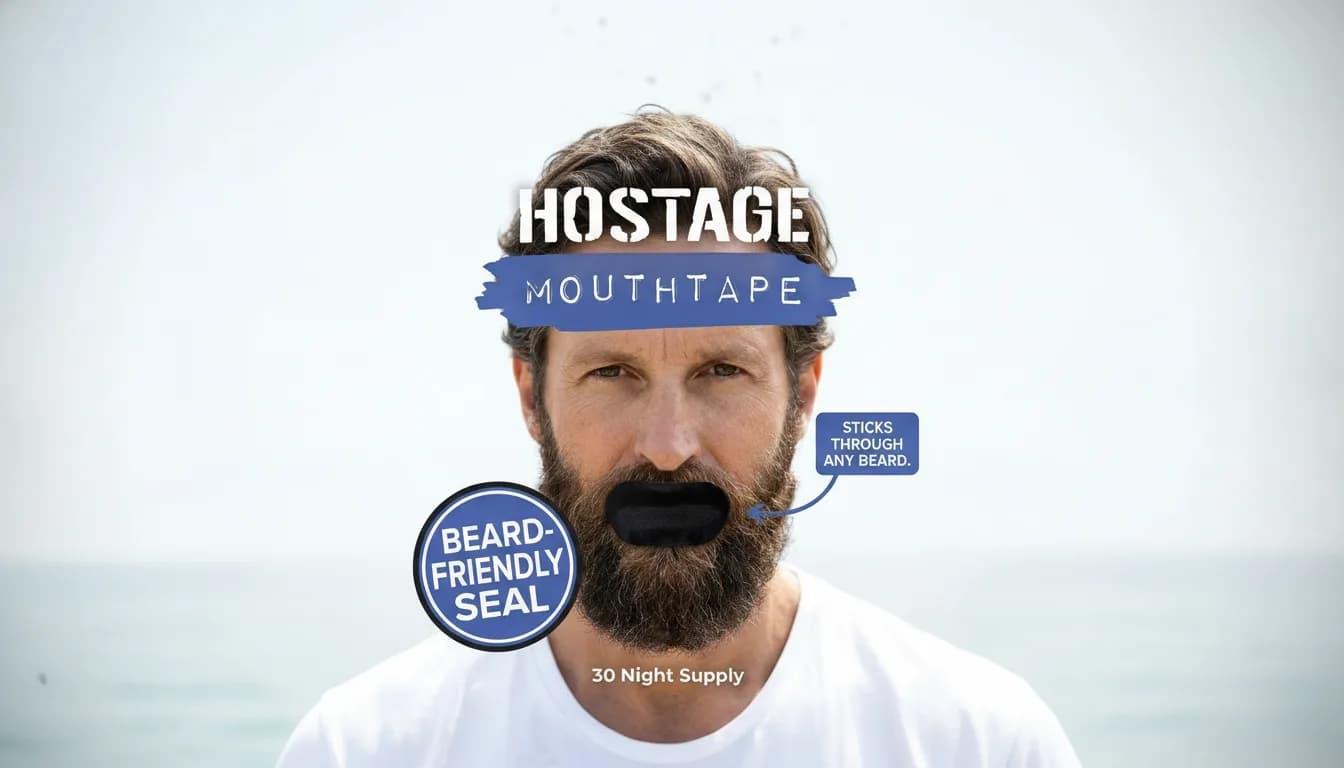
Does Mouth Tape for Mustaches and Beards Actually Work?
Mouth tape for mustaches and beards sounds counterintuitive—how can tape seal your mouth when facial hair blocks the edges? The answer is that specialized products like Hostage Tape and Tapehim are engineered specifically for men with facial hair. We'll break down whether mouth taping works with a beard, which products hold best, and how to prep your skin for safe, comfortable use.
Hostage Tape is engineered for facial hair with BeardFlex technology that maintains adhesion through beards.
Mouth tape with facial hair requires products specifically designed for beard-friendly adhesion. Hostage Tape delivers strong hold through BeardFlex technology and shows less than 1% refund rates. The trade-off: adhesion is never as strong as on freshly shaved skin, so proper application and skin prep are non-negotiable.
Key Highlights
- Facial hair reduces adhesion but doesn't prevent mouth tape from working if the product is designed for beard use.
- Hostage Tape's BeardFlex technology is specifically engineered for men with beards and mustaches.
- Proper skin prep—trimming beard edges and cleansing—dramatically improves sealing and reduces irritation.
- Patch-test before facial use, especially if you have sensitive skin.
- Mouth taping with facial hair works best for mild snoring; consult a sleep specialist if you have sleep apnea.
Does Mouth Tape for Mustaches and Beards Actually Work?
Yes, mouth tape can work with facial hair—but with important caveats. When facial hair (beard, mustache, or both) covers the mouth area, it creates a physical barrier between your skin and the adhesive. The adhesive must either press through the hair or grip the hair itself, both of which reduce sealing strength compared to bare skin.
Hostage Tape addresses this with proprietary BeardFlex technology, which maintains strong adhesion even when worn over facial hair. The breathable mesh design is specifically optimized for beard-friendly use.
A pilot study examining mouth-breathing patterns in mild obstructive sleep apnea showed that mouth taping produced a 47% reduction in apnea-hypopnea index (breathing pause episodes) and a 50% decrease in snoring frequency. However, these benefits depend on consistent nasal breathing throughout the night—something that becomes harder if the tape repeatedly peels away due to weak adhesion under facial hair.
The reality: Mouth tape with facial hair works, but adhesion is never as reliable as on freshly shaved skin. Success depends on three factors: (1) product engineering for facial hair, (2) proper skin prep, and (3) beard trim/maintenance.
How to Choose Mouth Tape for Mustaches and Different Beard Types
Selecting the right mouth tape for facial hair requires matching your beard style to the tape's design and adhesive strength.
Light Stubble or Goatee
If you have light facial hair (stubble to 1–2mm), standard mouth-tape adhesives usually work, but beard-specific products still perform better. Light stubble is less likely to cause premature peeling, but it can still weaken the seal if the adhesive doesn't grip enough. Choose a product with strong, stable adhesive—not just beard-themed marketing.
Full Beard (1+ inch)
A full beard creates a dense barrier that significantly reduces adhesive contact with skin. This is where specialized products matter most. Hostage Tape prioritizes strong adhesion through BeardFlex technology for users with facial hair; Somnifix sacrifices closure strength for psychological comfort with a vent design, while Hostage Tape sacrifices claustrophobia-friendliness for adhesion reliability.
For a full beard, Hostage Tape is the top choice. Alternatively, Tapehim (designed for men) offers a second option, though published comparisons show Hostage has the edge for thick facial hair.
Sensitive Skin Under Facial Hair
Men with sensitive skin who have facial hair face a double challenge: facial hair reduces adhesion, so stronger adhesives are tempting—but stronger adhesives (especially acrylate-based) increase irritation risk. Daily mouth tape users with sensitive skin should prioritize silicone-based adhesives, which have the lowest sensitization risk. Before purchasing, ask the brand about adhesive composition. Silicone is gentler but may not adhere as strongly under facial hair.
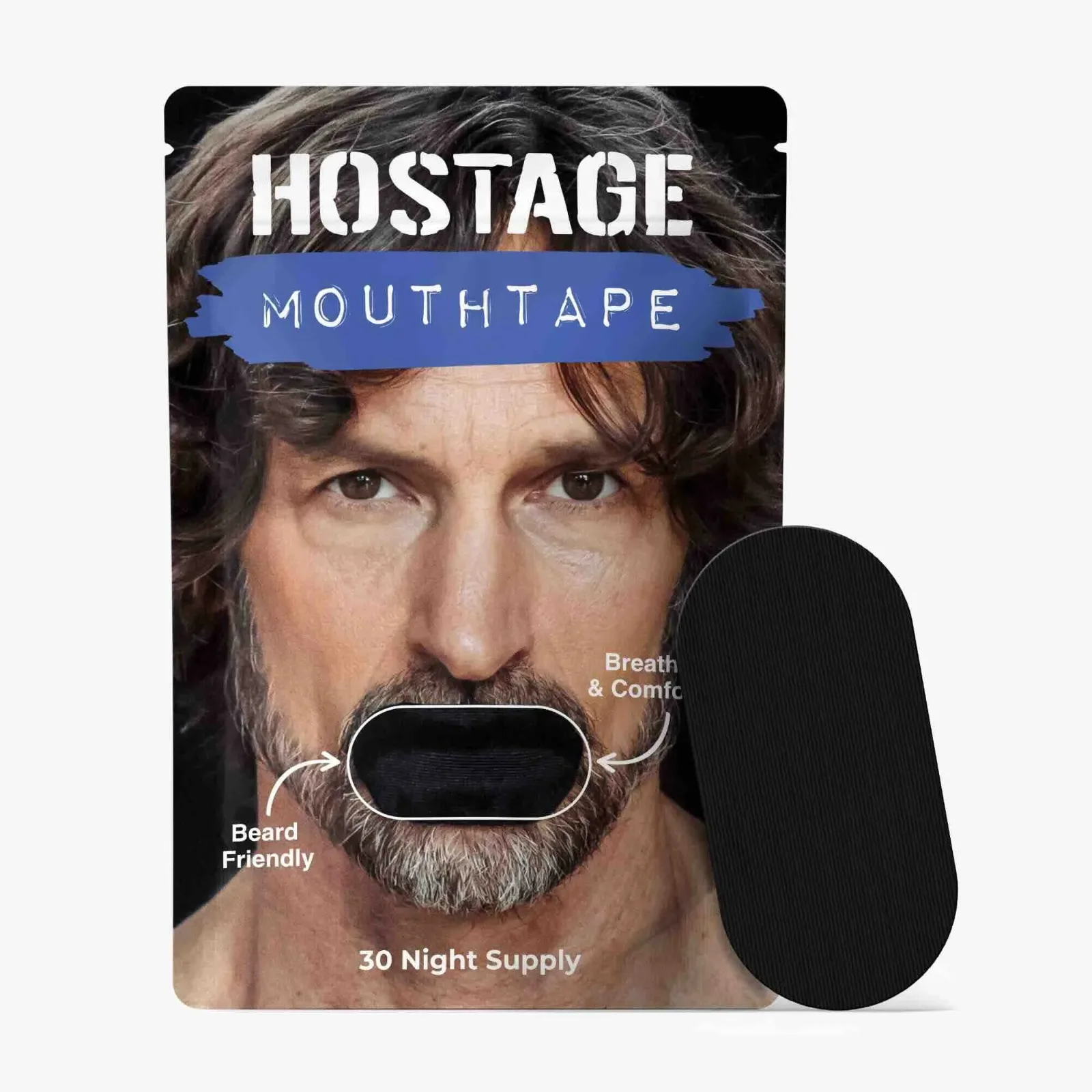
Hostage Tape
Engineered with proprietary BeardFlex technology to maintain strong adhesion over facial hair with a breathable mesh design. Less than 1% of customers request refunds.
Comparison: Top Products for Facial Hair
| Product | Beard Compatibility | Adhesive Type | Price | Best For |
|---|---|---|---|---|
| Hostage Tape | Excellent (BeardFlex technology) | Not disclosed; strong hold | Check current price | Full beards and mustaches; strong adhesion priority |
| Tapehim Mouth Tape | Good (designed for men) | Not disclosed | Check current price | Men seeking comfort + beard compatibility |
| SomniFix | Fair (center vent reduces hold) | Silicone-based | Check current price | Light facial hair + anxiety-free first-time use |
| MyoTape | Fair (elastic design allows opening) | Unknown | Check current price | Daytime breathing habit training over sleep |
Why Hostage Tape wins for facial hair: It sacrifices the anxiety-friendly vent design that products like SomniFix offer, prioritizing maximum adhesion—which is essential when facial hair weakens the seal. If you have a full beard and need reliable mouth closure, Hostage is the strongest choice currently available.
How to Apply Mouth Tape With a Beard
Proper application is the difference between the tape staying on all night and peeling off within an hour. Follow these steps:
- Trim beard edges around the mouth. Use scissors or a trimmer to carefully trim the facial hair around your lip line, leaving approximately 3–5mm of hair. This creates a shorter contact zone, improving adhesive grip without requiring a full shave. Do this 1–2 hours before bed to avoid irritation.
- Cleanse the mouth and face. Wash your face with a gentle cleanser and pat completely dry. Any moisture (saliva, water, or sweat) will weaken adhesion. Wait at least 10 minutes after washing to ensure your skin is fully dry.
- Avoid creams and oils. Do not apply lip balm, beard oil, or moisturizer to the mouth area immediately before taping. These create a slippery barrier. If you use beard oil earlier in the day, wash thoroughly before bed.
- Apply the tape smoothly. Gently press the tape over your mouth in one smooth motion, pressing down firmly on all edges (especially the corners). Hold for 5–10 seconds to ensure full adhesion.
- Check the seal. Try to open your mouth slightly—the tape should resist. If it peels easily, reapply by pressing down again or choose a stronger tape on your next purchase.
Skin Prep and Removal for Sensitive Skin
Men with sensitive skin face extra risk when using mouth tape with facial hair, since the stronger adhesives needed for beard-hold are often the ones that trigger contact dermatitis.
Pre-Tape Patch Test (Essential)
For daily mouth tape users with sensitive skin, a 24-hour patch test on the wrist or behind the ear should be done before facial use, and you should monitor for signs of redness, itching, or rash.
Apply a small piece of tape to your inner wrist or behind your ear and leave it on for 24 hours. If you see redness, itching, or any rash, do not use the product on your face.
Safe Removal
Aggressive removal tears skin and weakens the beard. Instead:
- Do not rip the tape off. This causes micro-tears and irritation, especially under facial hair.
- Dampen the edges. Use a damp washcloth to gently soften the tape edges. Apply water or a cleanser around the tape perimeter.
- Peel slowly from one corner. Gently lift a corner of the tape and slowly peel downward, supporting your skin with your other hand. Take 10–15 seconds to remove completely.
- Cleanse immediately after. Wash your face with gentle cleanser to remove any adhesive residue. Do not use harsh scrubbing.
Post-Removal Care
After removing mouth tape, especially with facial hair:
- Avoid applying any products (creams, oils, balms) to the mouth area for at least 2 hours.
- If you see redness, let your skin breathe for at least one full night before using tape again.
- If irritation develops, use a hypoallergenic, fragrance-free moisturizer (without added dyes or fragrances).
- If a rash persists beyond 48 hours, consult a dermatologist before resuming mouth tape use.
Acrylate-based adhesives (the most common type in mouth tapes) are the leading cause of allergic contact dermatitis, with 2.1–3.7% of the general population showing sensitization, and rates rising over time. If you suspect an allergic reaction, stop use and switch to a product with silicone-based adhesive or consult a dermatologist.
For more detailed guidance on application and product selection, see our guide on how to put mouth tape on safely and our comprehensive review of the best mouth tape options.
Sources & Further Reading
- PLOS ONE: Systematic Review of Mouth Taping Safety and Efficacy — peer-reviewed research on clinical evidence and safety contraindications.
- Pulmonology Advisor: Mouth Taping for Sleep Apnea — medical trade publication reporting on clinical studies.
- PubMed: Allergic Contact Dermatitis from Acrylates — peer-reviewed dermatology research on adhesive safety.
- FDA: Hypoallergenic Cosmetics Q&A — federal guidance on unregulated labeling claims.
- Breathe First: Nitric Oxide and Nasal Breathing — evidence-based respiratory health information.
Medical disclaimer: Mouth taping is not recommended for individuals with nasal obstruction, moderate to severe obstructive sleep apnea, or undiagnosed breathing concerns. Always confirm comfortable nasal breathing before attempting mouth taping. If you have sleep apnea, allergies, acid reflux, or respiratory conditions, consult a sleep specialist or physician before use. This article is for informational purposes and not a substitute for professional medical advice.
Recommended for you
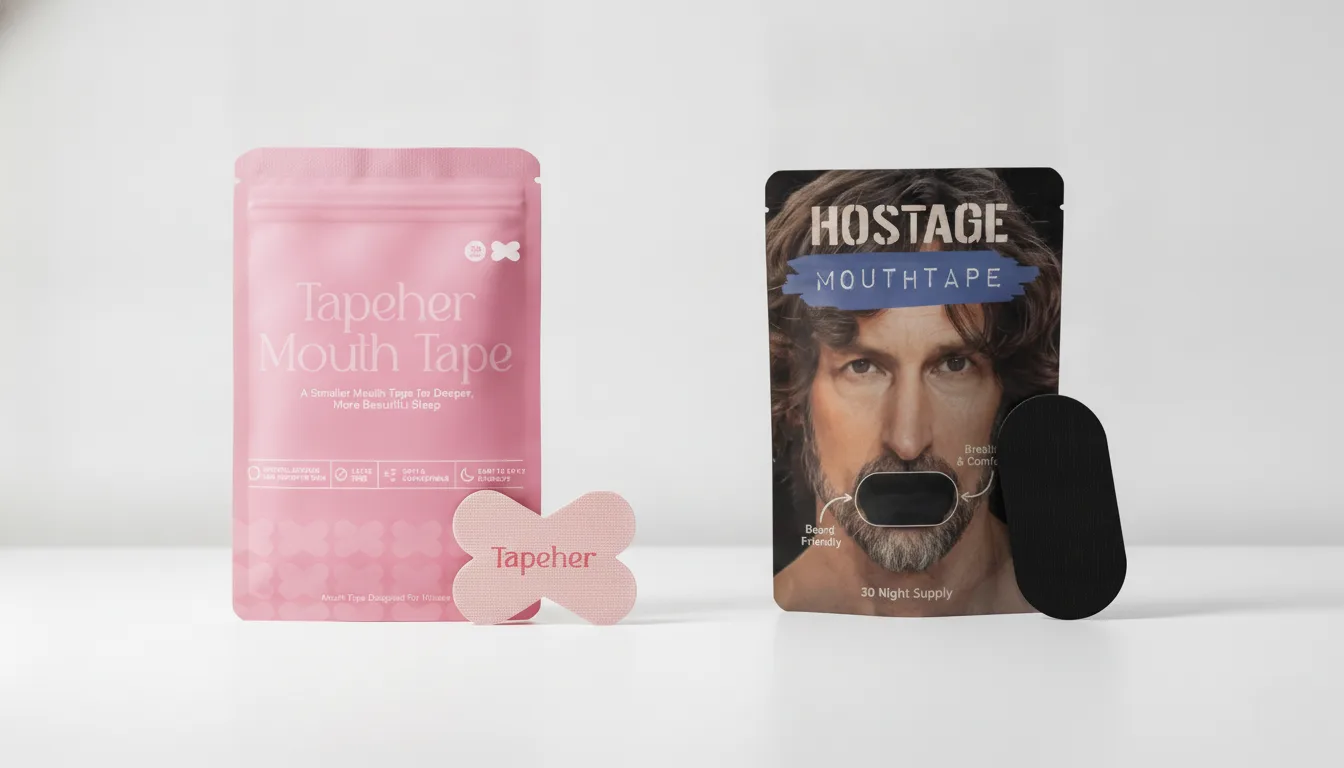 Skinny Confidential Mouth Tape Review: 7 Best Alternatives (2026)
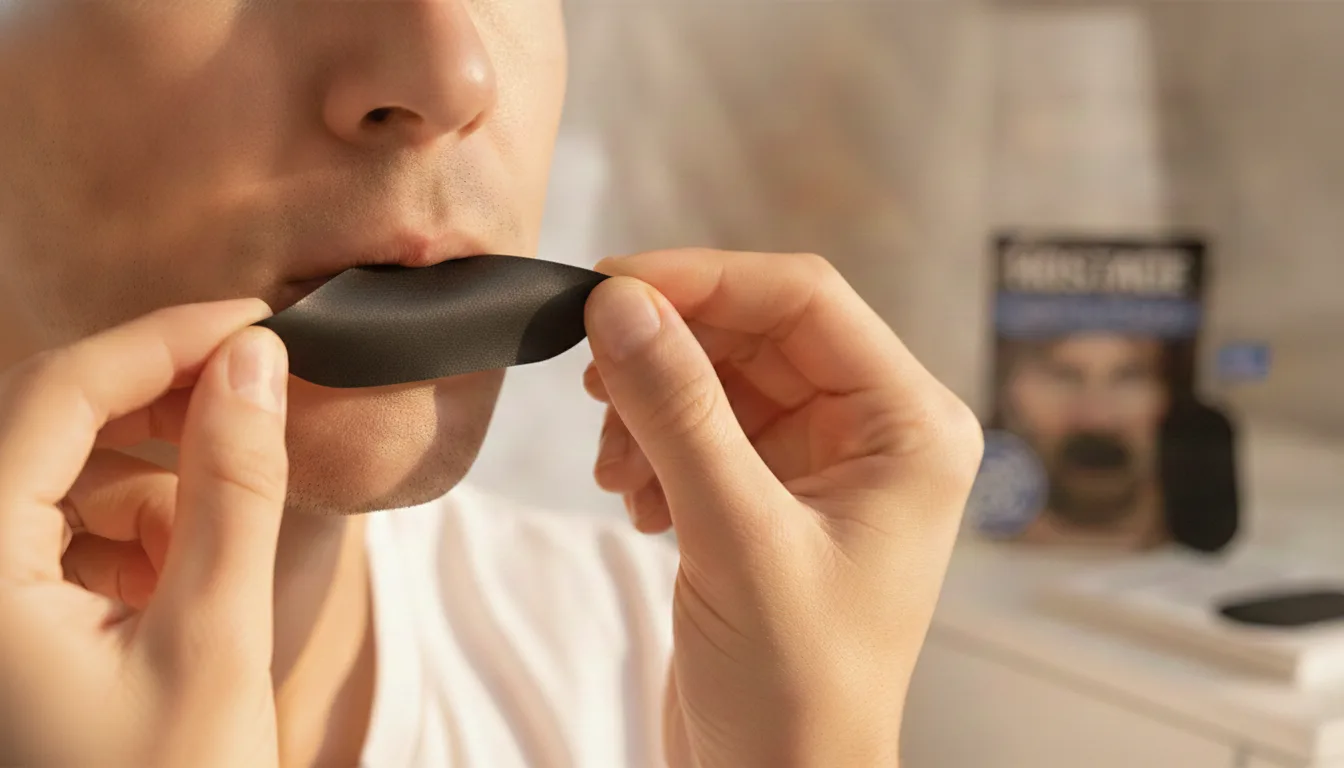 How to Remove Mouth Tape Residue: 5 Tips to Avoid Irritation
 Best GuruNanda Mouth Tape Review: Safety Gaps & Alternatives (2026)
 Carlos Alcaraz Nose Strips: 5 Best Reasons Athletes Breathe Better
 How to Put Mouth Tape On: Safe Step-by-Step Guide (2026)
 Mouth Tape Before and After: 5 Real Changes to Expect (2026 Guide)