Mouth Tape Before and After: What Changes People May Notice
Mouth tape before and after results vary by person. Learn what the evidence actually shows — reduced snoring, less dry mouth, calmer sleep — and which product fits your situation best.
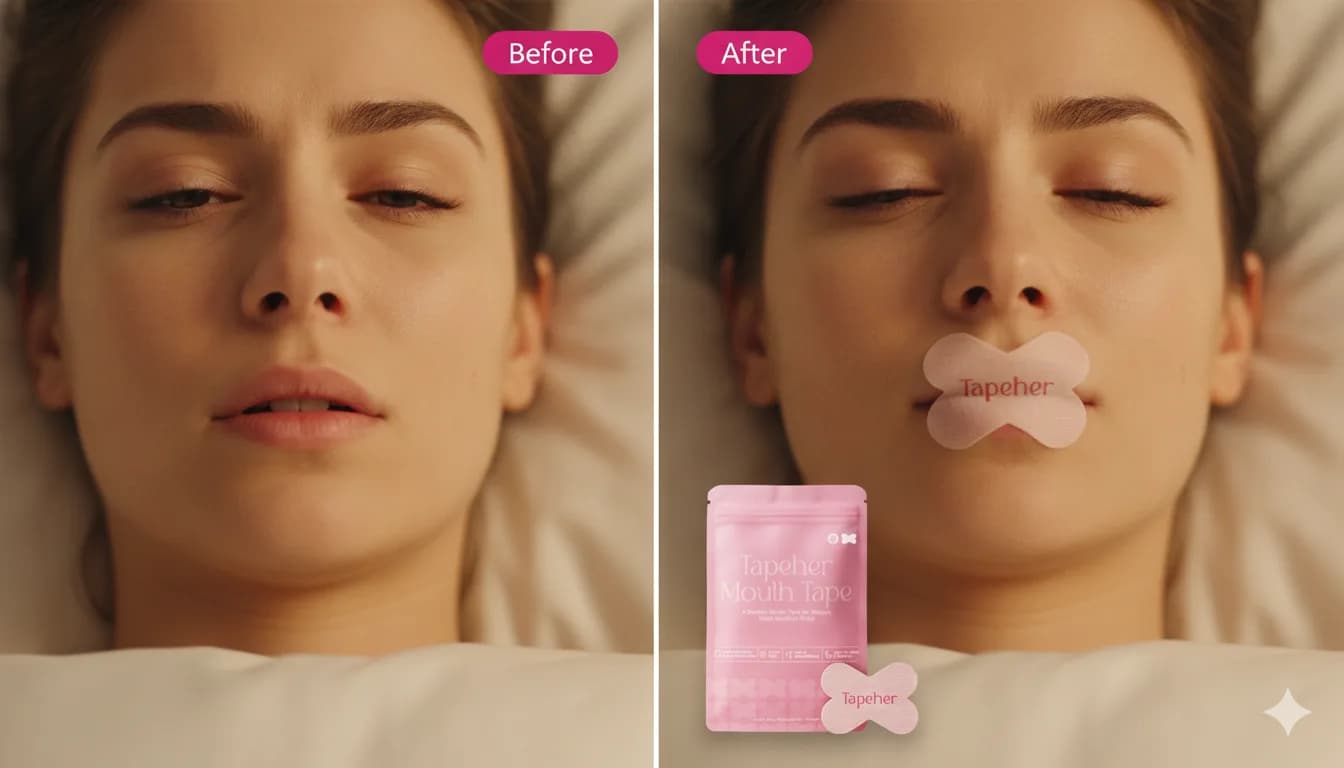
Does mouth tape actually work? The evidence
If you've seen mouth tape before and after photos on social media and wondered whether the results are real, you're not alone. The habit of sleeping with your mouth taped shut has exploded in popularity — but the honest evidence tells a more nuanced story than the highlight reels suggest. This guide breaks down what actually changes, who sees the best outcomes, and which tape fits your situation.
In this guide
Mouth tape delivers real but modest before-and-after changes — mainly less snoring and less dry mouth — for healthy adults who already breathe well through their nose.
If you can breathe comfortably through your nose during the day and your snoring or dry mouth isn't linked to a diagnosed condition, mouth tape is a low-cost habit worth trying. If you have any nasal obstruction, moderate-to-severe sleep apnea, or anxiety — skip it and talk to a doctor first.
Try TapeHer X-shape fitKey highlights
- A 2022 clinical pilot study found a 47% reduction in snoring frequency in mild sleep apnea patients after one week of mouth taping.
- Nasal breathing produces 5–20× more nitric oxide than mouth breathing — a molecule that dilates blood vessels and supports oxygen uptake.
- A 2024 systematic review (10 studies, 213 patients) found benefits were limited to mild cases — evidence for broader populations is thin.
- Mouth tape is contraindicated for anyone with nasal obstruction or moderate-to-severe sleep apnea.
- TapeHer's X-shape design is 50% smaller than standard tape and made from 95% cotton/5% spandex — SGS-verified PFAS-free.
Does mouth tape actually work? The evidence
The honest answer: it works for a specific subset of people — mild snorers and mouth-breathers without nasal obstruction or diagnosed sleep apnea. The clinical picture is more limited than social media suggests.
A 2022 pilot study at Chang Gung Memorial Hospital tracked 20 patients with mild obstructive sleep apnea (AHI below 15) for one week of nightly mouth taping. The results showed meaningful improvements: the apnea-hypopnea index dropped from 8.3 to 4.7 events per hour — a 47% reduction — and snoring frequency fell by the same margin. Around 65% of participants saw at least a 50% drop in snoring events. Oxygen saturation also improved, with lowest overnight readings rising from 82.5% to 87%.
The physiological logic is sound. When you breathe through your nose, your sinuses produce nitric oxide — a molecule that dilates blood vessels and improves oxygen uptake by up to 10–20%. Nasal breathing produces 5 to 20 times more nitric oxide than mouth breathing. Taping your mouth closed nudges your body toward nasal breathing and, in theory, activates those benefits overnight.
But a 2024 systematic review examining 10 studies and 213 patients found that only 2 of 6 studies measuring sleep-disordered breathing showed statistically significant improvements — and both were limited to mild OSA. All 10 studies scored "poor quality" on the Newcastle-Ottawa Scale. The broader takeaway: social media promotion of mouth tape has outpaced the science.
There are currently no large randomized controlled trials examining mouth taping for general sleep quality in healthy populations. Claims about anxiety reduction, energy boosts, or dramatic face-shape changes lack rigorous clinical backing. Individual results vary considerably.
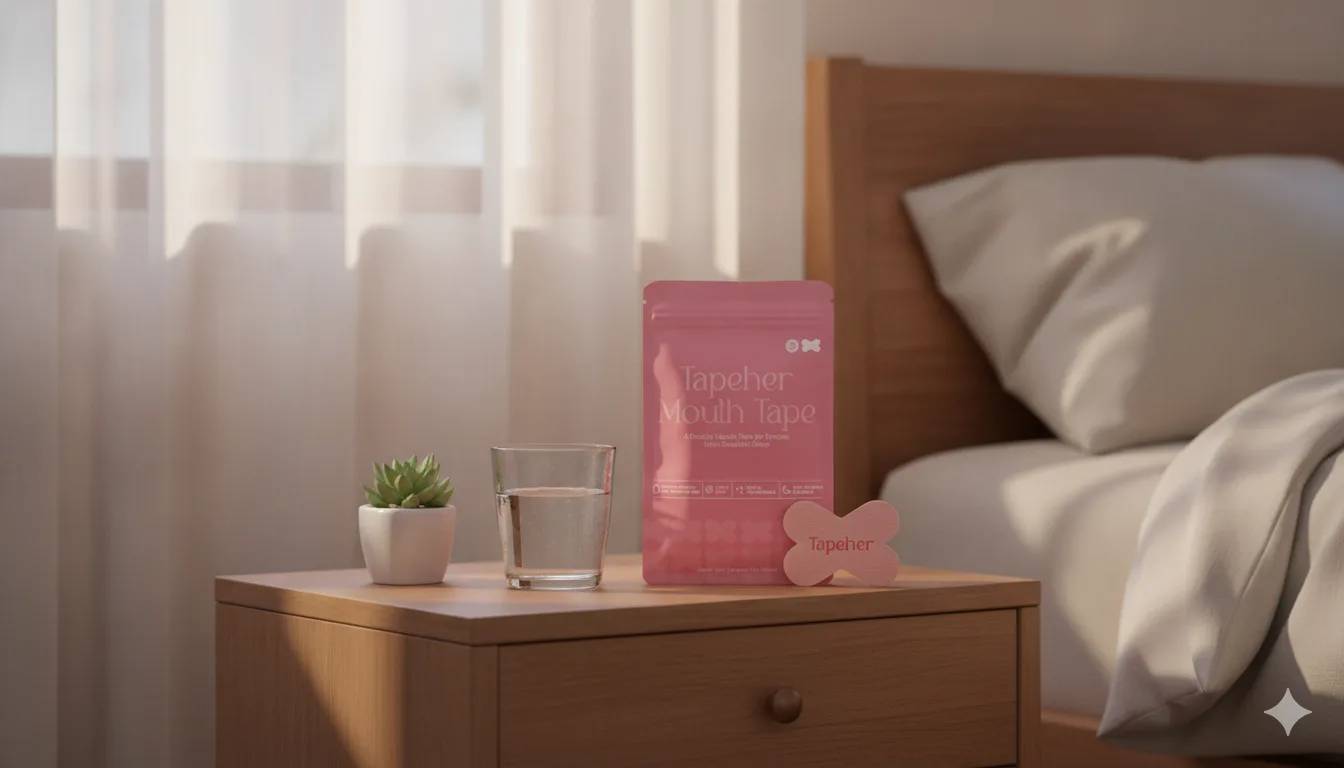
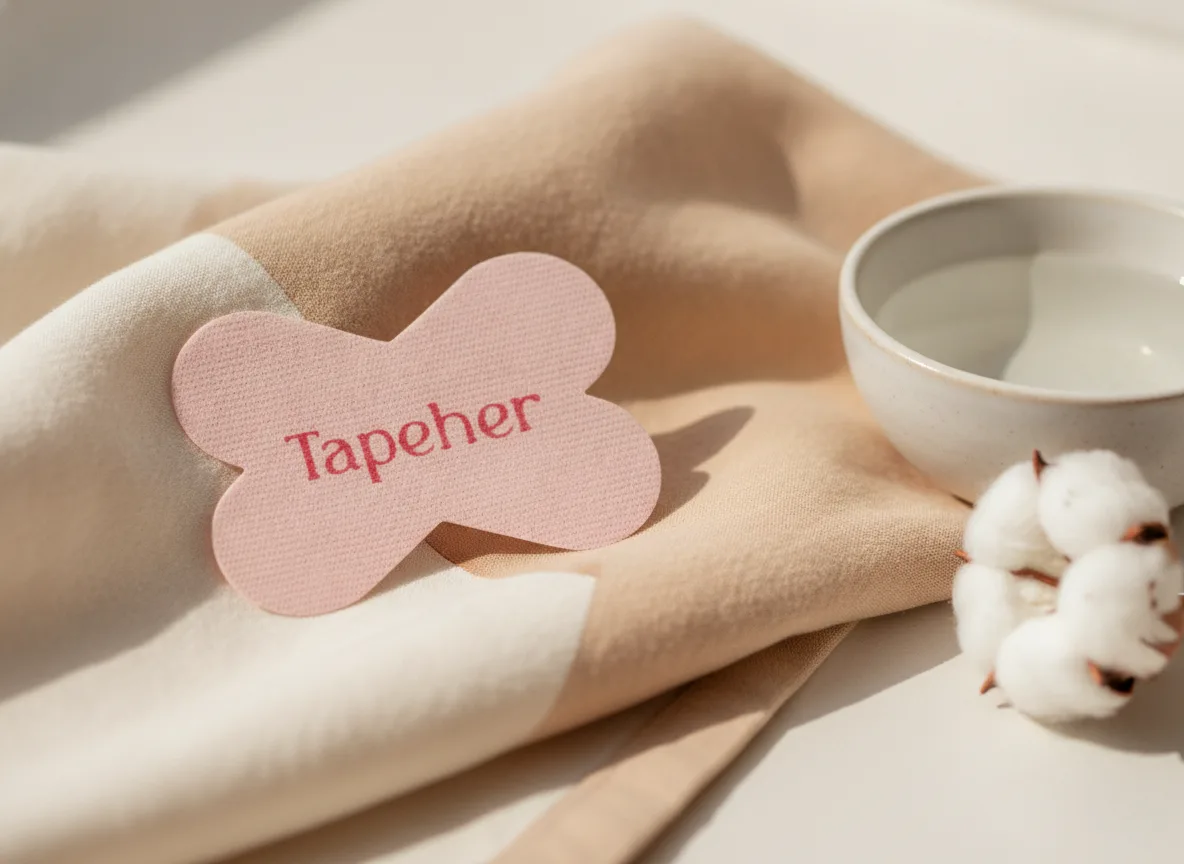
TapeHer Mouth Tape
X-shape design, 95% cotton + 5% spandex, PFAS-free verified by SGS North America. A gentler start for first-timers and sensitive skin.
Try TapeHer X-shape fit5 changes people notice — and realistic timelines
Based on the available clinical data and the physiology of nasal breathing, here are the five most plausible before-and-after changes — along with honest timelines and the conditions under which each is likely.
1. Less snoring (most likely change)
If your snoring is caused by mouth breathing — air rushing past a relaxed soft palate — then closing your mouth overnight removes the primary trigger. In the clinical study above, 65% of mild OSA participants saw snoring cut by at least half within a week. Partners often notice the change before the person taping does. Expected timeline: 1–2 weeks. Not applicable if snoring is caused by nasal obstruction or moderate-to-severe sleep apnea.
2. Less dry mouth in the morning
Mouth breathing during sleep evaporates saliva and creates a dry oral environment where bacteria thrive. This feeds bad breath and raises the risk of cavities over time. Switching to nasal breathing — even partially — keeps saliva flowing and the oral pH more stable. Most consistent mouth-tapers report noticeably less dry mouth within 3–5 days, making it one of the fastest and most reliably reported changes.
3. Calmer, more rested sleep (possible)
Nasal breathing filters, warms, and humidifies air before it reaches your lungs — a process that oral breathing bypasses entirely. The nitric oxide released during nasal breathing also dilates blood vessels slightly, which may contribute to a calmer physiological state. Some people report feeling more rested after 2–4 weeks. This is plausible but not guaranteed — and currently lacks large-scale RCT evidence in healthy adults.
4. Reduced morning breath (conditional)
Morning breath caused specifically by mouth-breathing at night may improve once oral dryness and bacterial proliferation decrease. However, if your morning breath or dry mouth stems from gum disease, poor oral hygiene, acid reflux, smoking, or other underlying causes, mouth tape will not fix it. Rule out those root causes first.
5. Jawline or face-shape changes (not supported)
This is the most exaggerated claim in mouth-tape before-and-after content online. The compliance notes for this article explicitly flag: individual results vary, and no guaranteed results should be implied. There is no published clinical evidence that mouth taping reshapes adult bone structure or jawlines. Skeletal changes from breathing habits are associated with childhood development, not adult sleep habits. Treat any social-media jawline transformation as anecdotal.
How to choose for your situation
Mouth tape is not one-size-fits-all. The right product — and whether to try it at all — depends on your specific situation.
- You snore mildly and have no diagnosed sleep apnea: You're the best candidate. Start with a gentle full-closure tape like TapeHer or a vented option like SomniFix if you feel anxious about full closure.
- You wake with a very dry mouth: Mouth tape is likely to help noticeably within days. Pick whichever product suits your skin type.
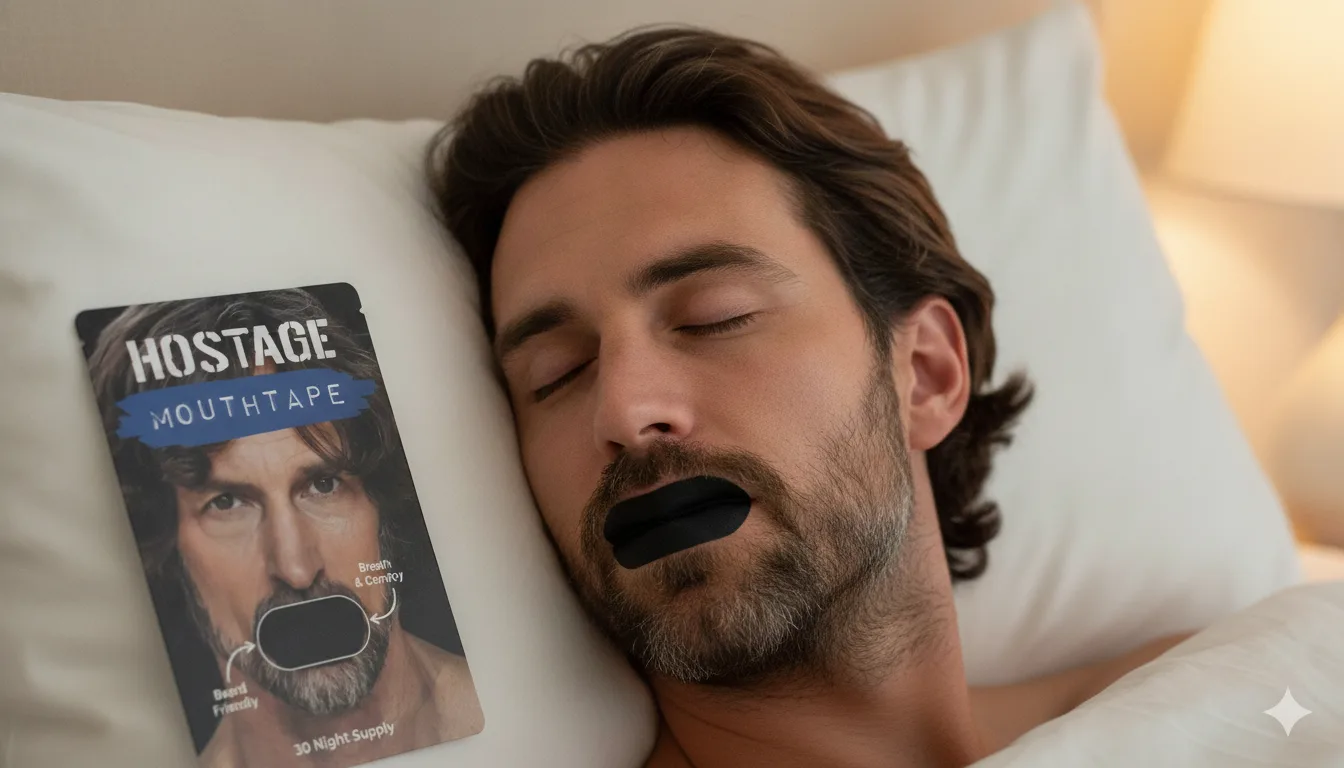
- You have facial hair or need maximum hold: Hostage Tape's BeardFlex technology is specifically engineered for adhesion through stubble and facial movement. Read our Hostage Tape review for the full breakdown.
- You have sensitive skin: Prioritize products with cotton or silk bases and documented adhesive transparency. TapeHer's SGS-verified PFAS-free formulation and 95% cotton base make it the leading sensitive-skin option in this niche.
- You have nasal congestion, a deviated septum, diagnosed sleep apnea, anxiety, acid reflux, or heart conditions: Do not use mouth tape without medical clearance. The primary safety risk is asphyxiation if nasal airflow is compromised while your mouth is sealed.
Mouth tape comparison: TapeHer vs Hostage Tape vs SomniFix
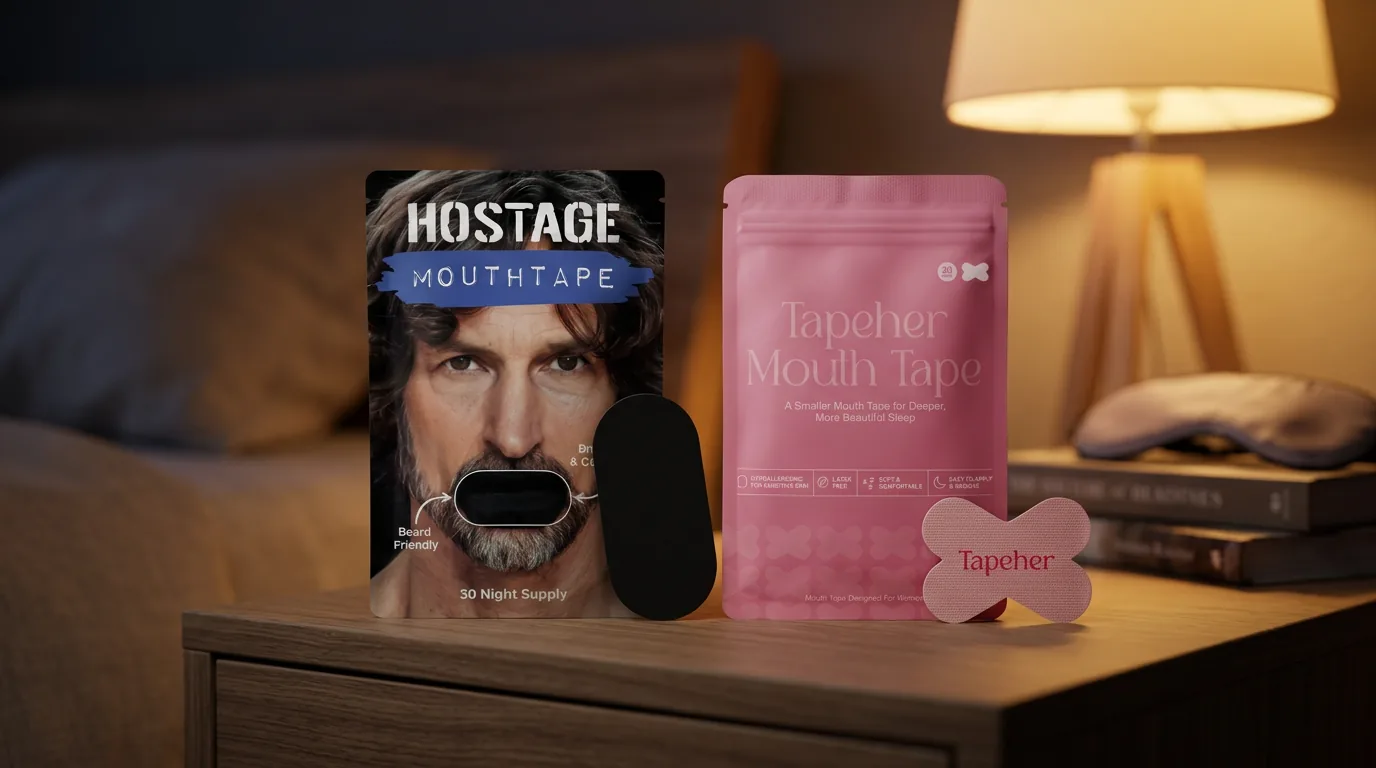
Three products dominate conversations about sleep mouth tape. Here's how they compare on the dimensions that matter for your before-and-after results:
| Feature | TapeHer | Hostage Tape | SomniFix |
|---|---|---|---|
| Design | X-shape, 50% smaller than standard | Full strip with AirFlow mesh | Central breathing vent |
| Base material | 95% cotton + 5% spandex | Flexible fabric (undisclosed blend) | Hypoallergenic, latex-free |
| Safety testing | SGS PFAS-free verified (Jan 2026) | No published third-party testing | Harvard Medical School clinical study |
| Adhesion strength | Moderate — gentle overnight hold | Strong — BeardFlex for facial hair | Lower — vent reduces full closure |
| Best for | Women, sensitive skin, first-timers | Beards, strong-hold preference | Anxiety, beginners, claustrophobia |
| Approx. price | Check vendor | ~$20–25 / 30 strips | ~$1.20 / strip |
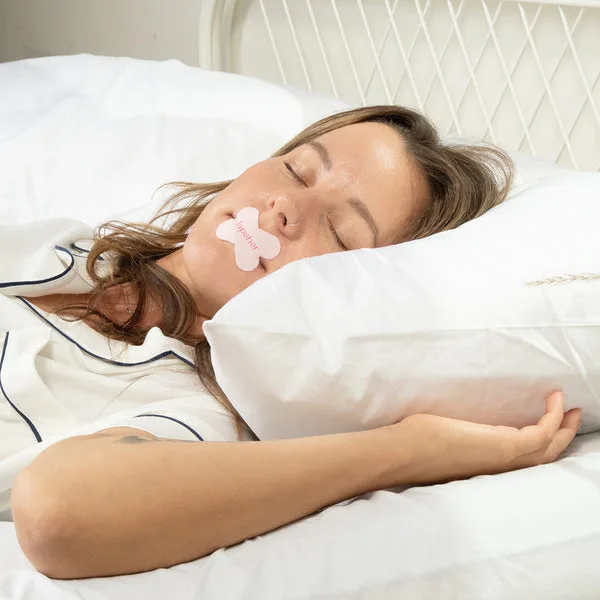
TapeHer Mouth Tape
What We Like
- X-shape leaves room on both sides — less claustrophobic than full strips
- Third-party SGS PFAS-free verification — objective, not just a marketing claim
- 95% cotton base — lowest sensitization risk among natural fiber bases
- Designed specifically for smaller face profiles and sensitive skin
What to Consider
- Adhesive type not publicly disclosed — inquire before purchase if you have known adhesive allergies
- X-shape may feel unfamiliar at first compared to standard horizontal strips
TapeHer was designed with women and sensitive-skin users in mind. The signature X-shape is 50% smaller than a standard horizontal strip, which means less surface area on the skin while still keeping the mouth gently closed through the night. The 95% cotton and 5% spandex construction is breathable and flexible — cotton carries among the lowest sensitization risks of any base material. SGS North America completed PFAS testing in January 2026, confirming no detectable forever chemicals in the finished product. For anyone building a consistent mouth-taping routine for sleep, TapeHer is the most credibly tested sensitive-skin option currently available.
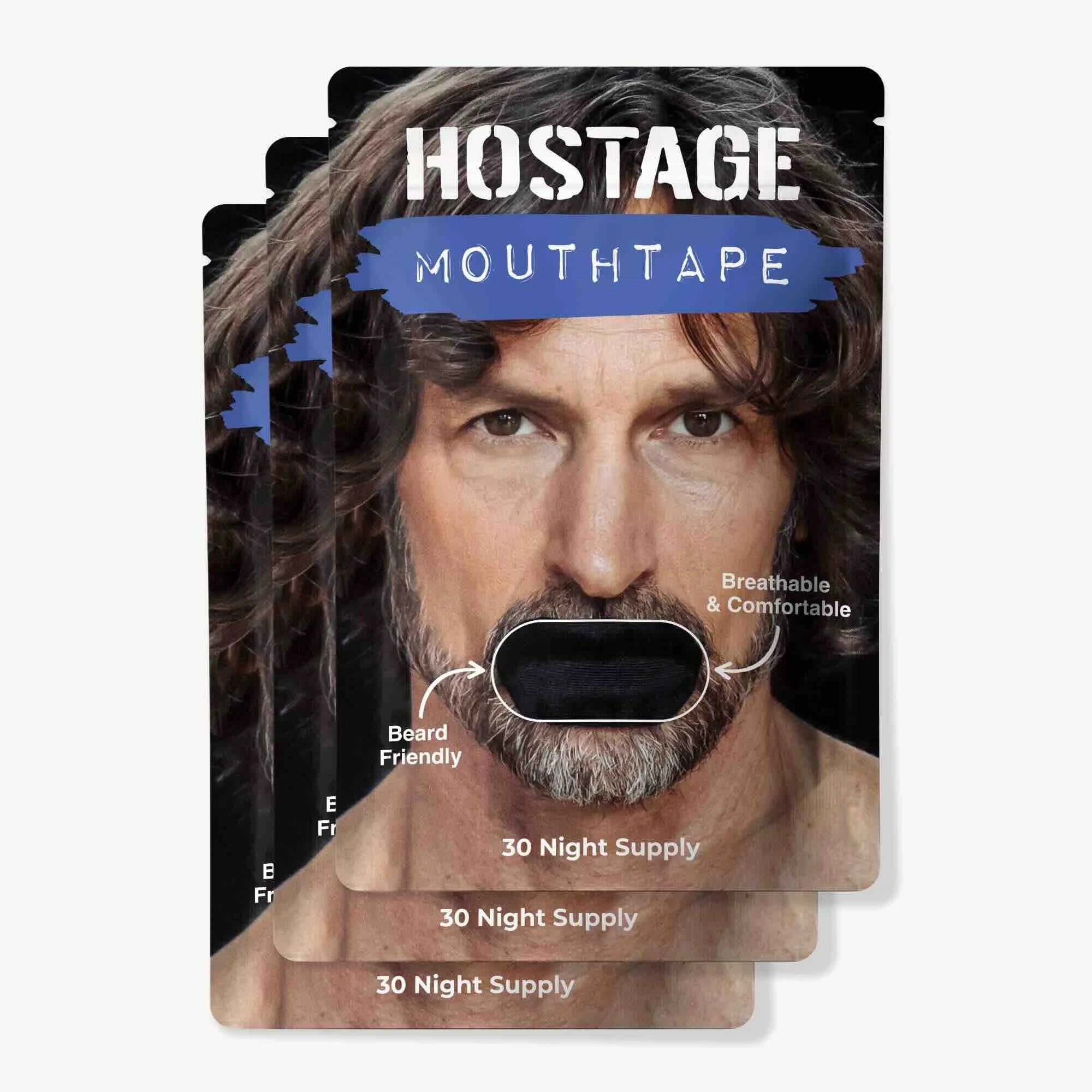
Hostage Tape Starter Pack
What We Like
- BeardFlex technology — specifically engineered to grip through stubble and full beards
- Less than 1% customer refund rate per company statements — suggests high satisfaction
- AirFlow mesh reduces the closed-off feeling during sleep
What to Consider
- No published third-party PFAS testing or ISO biocompatibility certification found
- Some users report redness and adhesive residue around the mouth area
- Stronger adhesive may be uncomfortable for sensitive skin users
Hostage Tape's standout feature is its BeardFlex technology — a premium adhesive combined with flexible fabric that grips through stubble and movement. For men who have struggled with other tapes peeling off overnight, the hold is a genuine differentiator. The AirFlow breathable mesh addresses claustrophobia concerns. At roughly $20–25 for 30 strips, it's competitively priced. Read our full Hostage Tape review for a deeper breakdown of adhesion, comfort, and removal experience.
How We Chose
We evaluated mouth tape products based on three criteria: published safety credentials (third-party testing, material transparency), design suitability for different user profiles, and alignment with clinical evidence on nasal-breathing benefits. We did not conduct first-person wear testing — all conclusions are drawn from manufacturer disclosures, peer-reviewed research, and established safety frameworks for skin-contact adhesives.
How to use mouth tape safely and get results
Following a consistent routine maximises the chance of seeing before-and-after changes. Here's a simple step-by-step process for beginners:
- Confirm nasal breathing first. Before your first night, sit for 5 minutes and breathe only through your nose. If it feels impossible or uncomfortable, do not tape — nasal obstruction makes mouth tape unsafe.
- Start with a daytime trial. Wear the tape for 10–15 minutes while relaxing at home, so the sensation isn't new when you're trying to sleep.
- Choose the right tape. Use medical-grade products — not duct tape, masking tape, or generic household adhesives, which can cause chemical irritation, redness, and skin damage.
- Apply to clean, dry skin. Remove any lip balm or moisturiser before applying — oils break down adhesives and the tape will shift overnight.
- Remove gently in the morning. Dampen the edges with warm water or a drop of coconut oil to break the adhesive bond before peeling. Ripping the tape off quickly causes irritation, especially on sensitive or freshly-waxed skin.
- Track changes consistently. Keep a simple morning note for 2–4 weeks: dry mouth level, sleep quality, and whether a partner reports snoring. This gives you real data rather than impressions.
Stop immediately and seek medical advice if you experience difficulty breathing through your nose during the night, chest tightness, significant anxiety or panic, nausea, or vomiting.
Common mistakes and fixes
- Using tape with nasal congestion. Seasonal allergies, a cold, or even slight congestion can make a taped mouth genuinely dangerous. Always check your nasal airflow before taping. Use a saline rinse if mild congestion is present.
- Buying based on social media claims alone. Jawline transformation videos and dramatic before-and-after photos are anecdotal and often edited. Focus on the evidence-backed outcomes: snoring reduction and dry-mouth improvement.
- Trusting "hypoallergenic" labels without verification. The FDA has no legal definition of hypoallergenic — it's an unregulated marketing term. Look for documented third-party testing (SGS PFAS testing, ISO 10993-1 biocompatibility) rather than label claims.
- Starting with the strongest adhesive product. If you're new to mouth tape, start with a gentler option like TapeHer or a vented strip like SomniFix. You can always move up in adhesion strength once you know your skin tolerates it well.
- Giving up after one or two nights. The adjustment period is real. Many people find the sensation odd for the first 3–5 nights before it becomes unremarkable.
Alternatives worth knowing
If mouth tape isn't right for your situation, these alternatives address the same underlying issues through different mechanisms:
- Nasal strips (e.g. Breathe Right) — lift nasal passages mechanically, improving airflow by 35–50% in users with nasal obstruction. A safer starting point if your nose is partly blocked rather than fully clear. Drug-free and available over the counter.
- Positional therapy — sleeping on your side reduces soft-palate collapse and is one of the most effective non-device interventions for snoring. Often combined with mouth tape for compounding effect.
- Saline nasal rinse — clears the nasal passages before bed, making nasal breathing easier and reducing the temptation to mouth-breathe.
- CPAP therapy — the evidence-backed first-line treatment for diagnosed obstructive sleep apnea. Mouth tape does not replace CPAP and should never be used as an alternative if sleep apnea is diagnosed. Explore the full range of sleep accessories that complement nasal breathing habits.
For a deeper look at building a full nasal-breathing routine, see our guide on the benefits of nasal breathing.
Our verdict
For healthy adults who already breathe comfortably through their nose, mouth tape before and after results are real but modest — the most consistent changes are less snoring (in mild cases) and noticeably less dry mouth within the first week. TapeHer is our top pick for women and sensitive-skin users thanks to its X-shape design, cotton base, and SGS-verified PFAS-free testing. If you need stronger hold through facial hair, Hostage Tape delivers with its BeardFlex technology. Neither product is a treatment for sleep apnea — if you snore loudly or wake gasping, see a sleep specialist before trying tape. For the full roundup of top products, see our guide to the best mouth tape and our best mouth tape for sleeping picks.
References
- PubMed Central — "The Impact of Mouth-Taping in Mouth-Breathers with Mild OSA" (2022 clinical study, Chang Gung Memorial Hospital)
- PubMed Central — "Nocturnal mouth-taping and social media: A scoping review" (2024, 10 studies, 213 patients)
- PLOS ONE — Systematic Review of Mouth Taping Safety and Efficacy
- Cleveland Clinic — Mouth Taping: Is It Safe To Use? (Dr. Brian Chen)
- American Journal of Respiratory and Critical Care Medicine — Nitric oxide and nasal breathing physiology (2003)
- ADA News — Safety of Social Media Mouth Taping Trend
- FDA — Hypoallergenic Cosmetics Q&A
- SleepApnea.org — Mouth Taping for Sleep
This article is for informational purposes only and does not constitute medical advice. Mouth taping is not a treatment for any sleep disorder, including obstructive sleep apnea. Always consult a qualified healthcare provider before starting any new sleep intervention, particularly if you have a diagnosed breathing, cardiac, or anxiety condition. Individual results vary.
Recommended for you
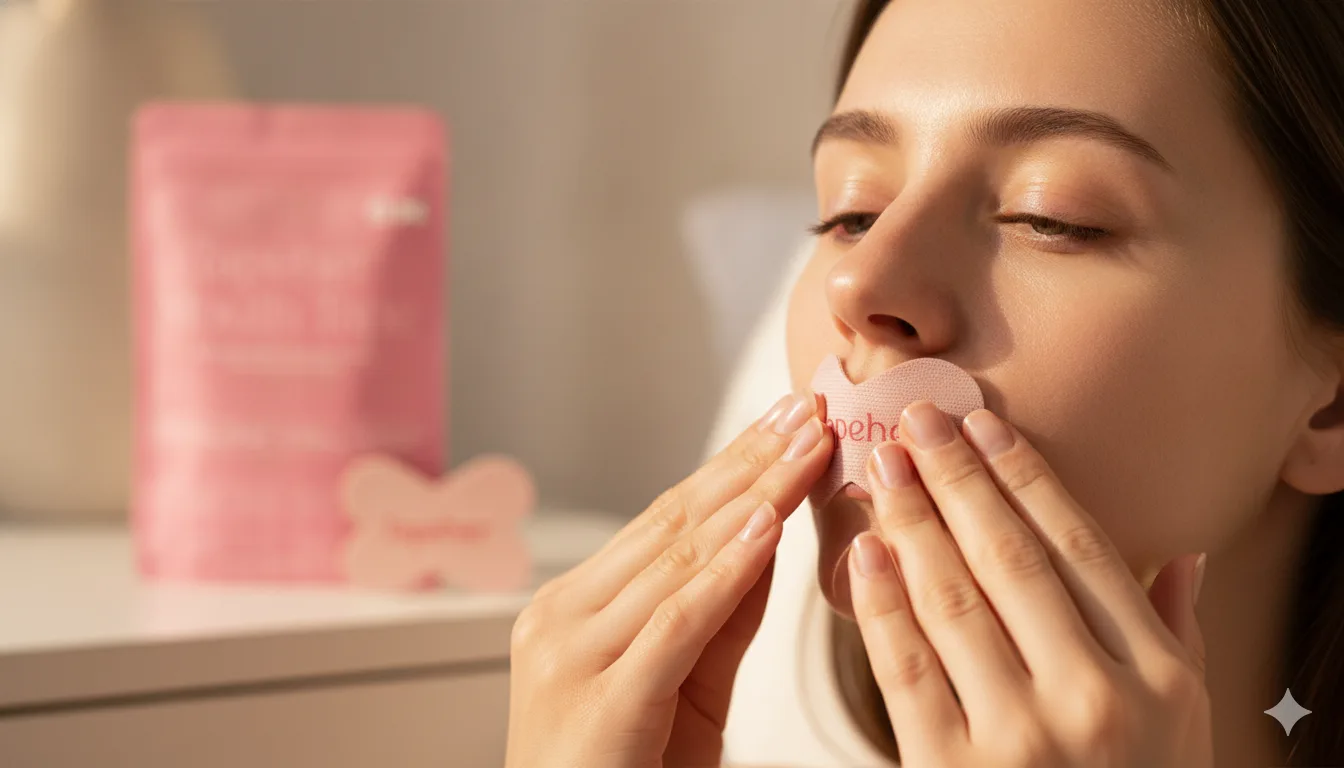 How to Put Mouth Tape On: Safe Step-by-Step Guide (2026)
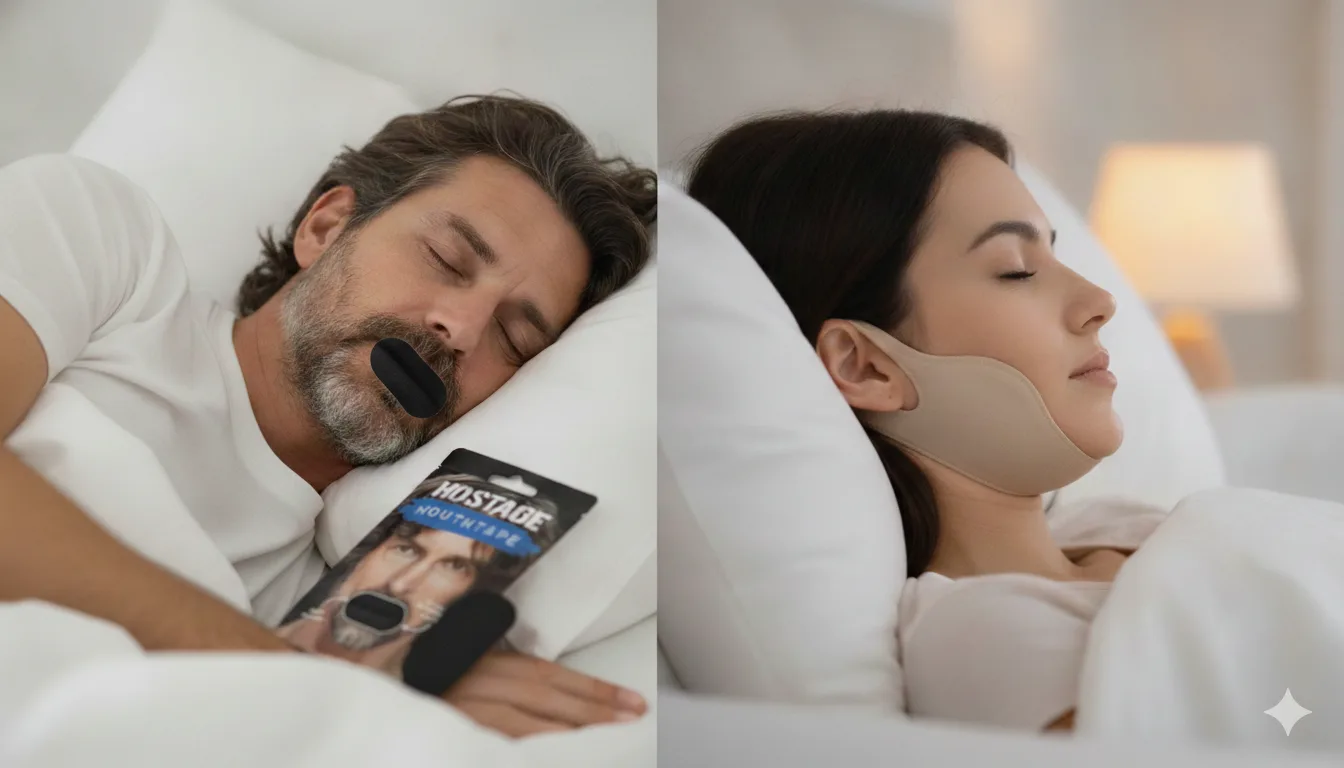 Chin Strap vs Mouth Tape: 2 Smart Options Compared (2026)
 Mouth Tape Guide: 5 Key Features to Compare Before Buying (2026)
 Mouth Tape for Sleep: 7 Benefits, Safety Rules & How to Start
 Mouth Tape for Snoring: Does It Work and Which One to Use
 Mouth Tape Side Effects: What to Know Before You Try