EmeTerm Review: Drug-Free Anti-Nausea Wristbands Compared
An evidence-led EmeTerm review comparing the Smart, Explore Active/Classic, Explore for Kids, and Fashion wristbands — what the P6 acupoint research actually shows, and who each model fits.
How EmeTerm wristbands work
This EmeTerm review breaks down all five wristband models — Smart, Explore Active, Explore Classic, Explore for Kids, and Fashion — so you can see exactly which one fits your situation, and where the underlying science is strong versus still thin. EmeTerm® builds drug-free, FDA-cleared wristbands that stimulate the P6 (Neiguan) acupoint on the wrist to help calm nausea and vomiting, without pills, patches, or gel.
Key takeaways
- All EmeTerm wristbands are FDA-cleared for over-the-counter nausea and vomiting relief, and the line also carries CE, MDSAP, TGA, UKCA, and ISO marks.
- A Cochrane network meta-analysis of 77 trials in 9,847 participants found noninvasive P6 stimulation lowered postoperative nausea risk versus sham, but evidence specifically for motion sickness is much thinner.
- EmeTerm's own 85% success rate figure comes from the brand's own trials, not an independently published study — treat it as a brand claim, not a verified statistic.
- Every model ships with a 30-day money-back guarantee and a 1-year quality guarantee.
A legitimate, FDA-cleared drug-free option for post-op and pregnancy-related nausea — just don't expect the same strength of proof for motion sickness.
If you want a drug-free, rechargeable wristband backed by real (if narrow) FDA clearance and a return policy that lets you test it risk-free, EmeTerm is a reasonable pick. If drug-free wellness devices are what you are shopping for generally, our yourTMJ review looks at a heated jaw massage pen under the same evidence lens. Choose the model based on your use case rather than assuming one size fits all.
Check EmeTerm on the official siteHow EmeTerm wristbands work
EmeTerm's wristbands use transcutaneous electrical acupoint stimulation (TEAS) aimed at the P6 point, also called Neiguan or "inner gate." This point sits on the inner wrist, roughly two to three finger-widths above the wrist crease, between the palmaris longus and flexor carpi radialis tendons — directly over the median nerve. Each device positions a stimulation node against that spot so it can deliver a mild electrical pulse when worn snugly.
The scientific backing for P6 stimulation is real, but the strength of that backing depends heavily on which condition you're treating. A Cochrane network meta-analysis pooling 77 randomized controlled trials across 9,847 participants — spanning the US, South Korea, India, China, Turkey, and Iran — compared invasive (needle) and noninvasive (wristband) PC6 stimulation against sham procedures and standard antiemetic drugs for postoperative nausea and vomiting. Noninvasive PC6 stimulation alone showed a relative risk of 0.67 for postoperative nausea versus sham (low-confidence evidence), and when combined with standard antiemetic drugs it probably reduced the need for rescue antiemetic medication (relative risk 0.44, moderate-confidence evidence). That review also found no serious or long-term complications across the included trials — minor, reversible effects like skin irritation or temporary discomfort turned up in 39 of the studies, but nothing severe, regardless of stimulation method.
Where this matters for an EmeTerm review: that evidence base is strongest for postoperative nausea, not for the travel and motion-sickness use case many buyers actually shop for. We break that distinction down in detail further below, because it's the single most important thing to understand before you order.
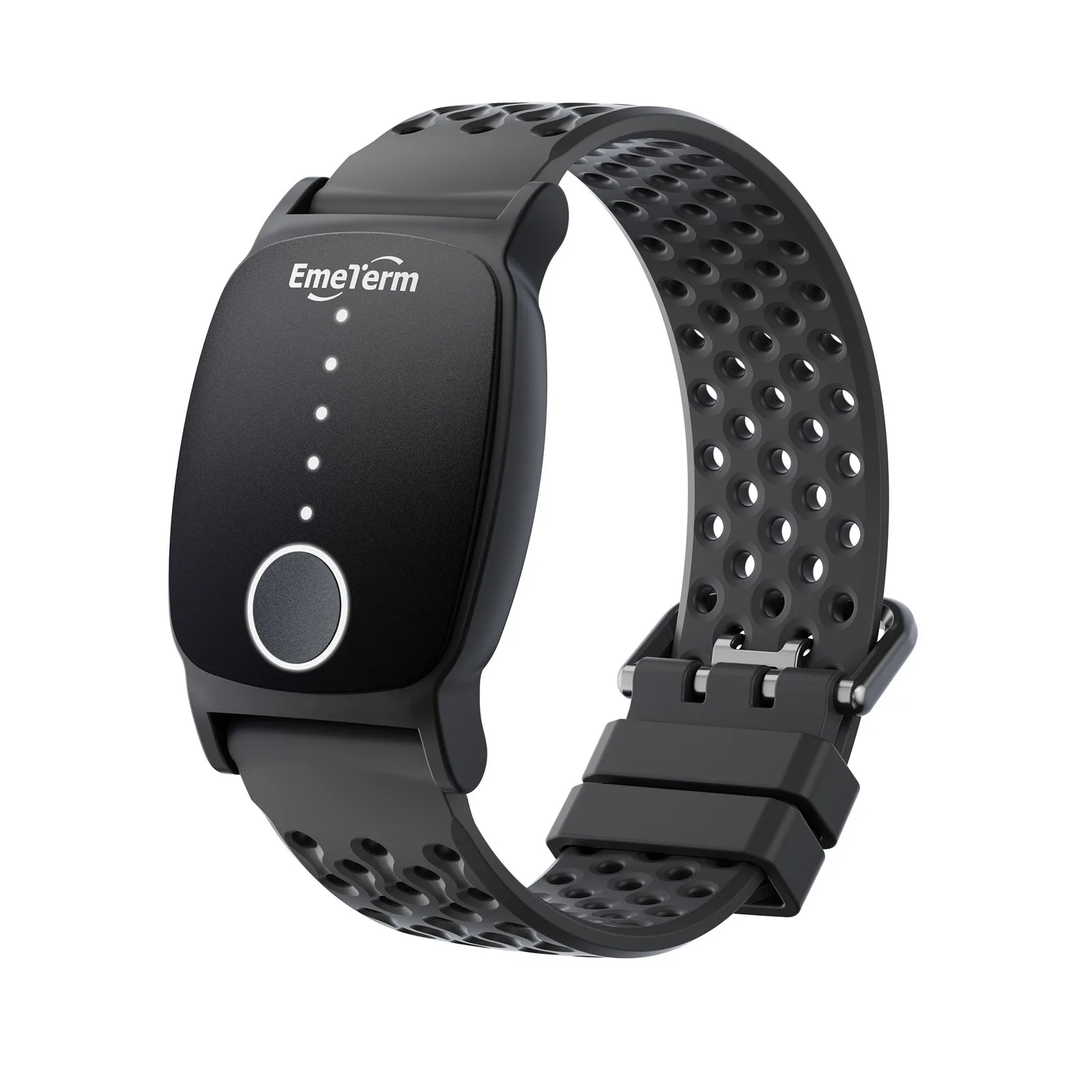
EmeTerm Explore Active
Rechargeable, IP67 waterproof, and adjustable across 5 intensity levels — the most versatile everyday model in the lineup.
Check current priceEmeTerm review: the 5-model lineup
EmeTerm sells five distinct wristbands, and picking the wrong one for your situation is the most common buying mistake. Here's what actually differentiates them.
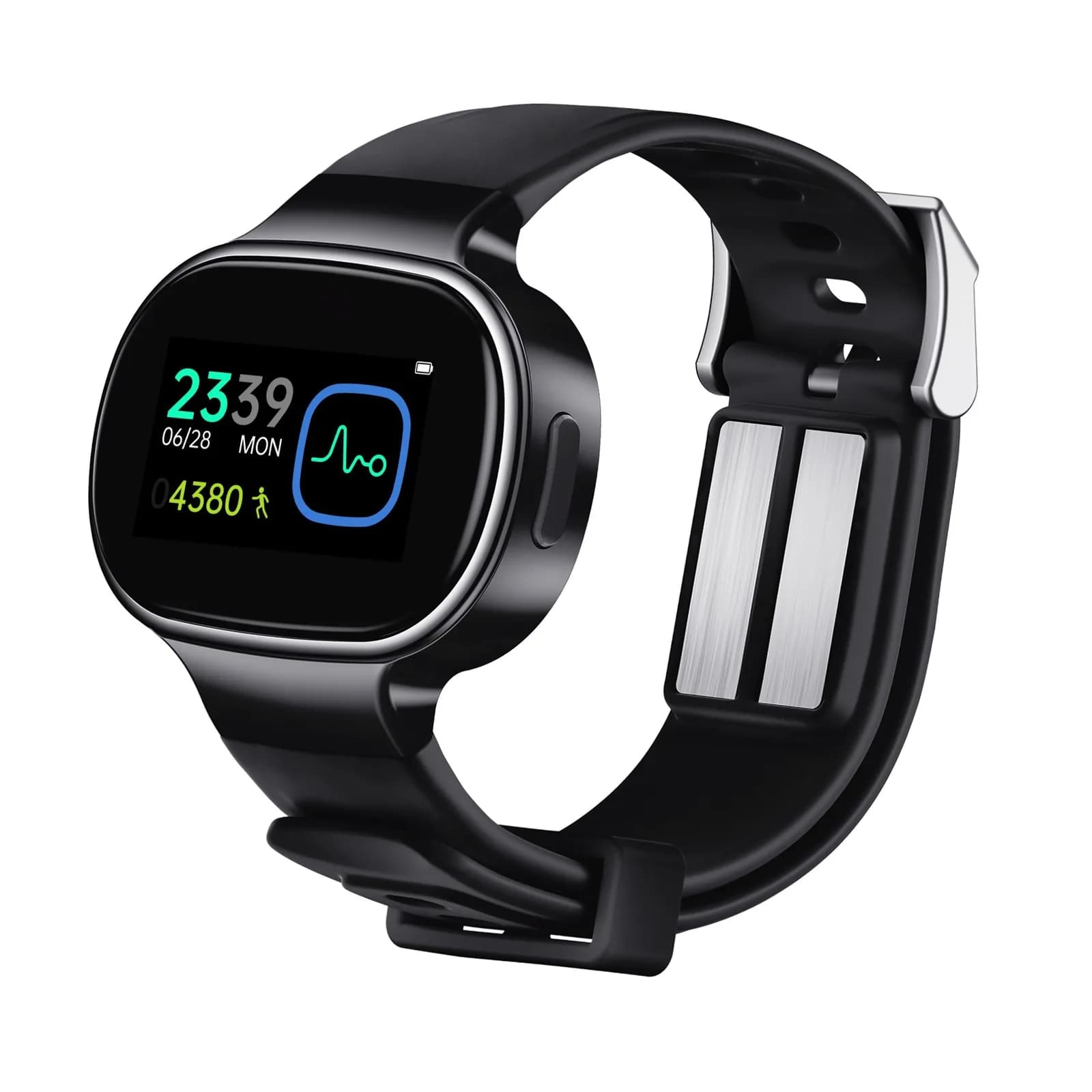
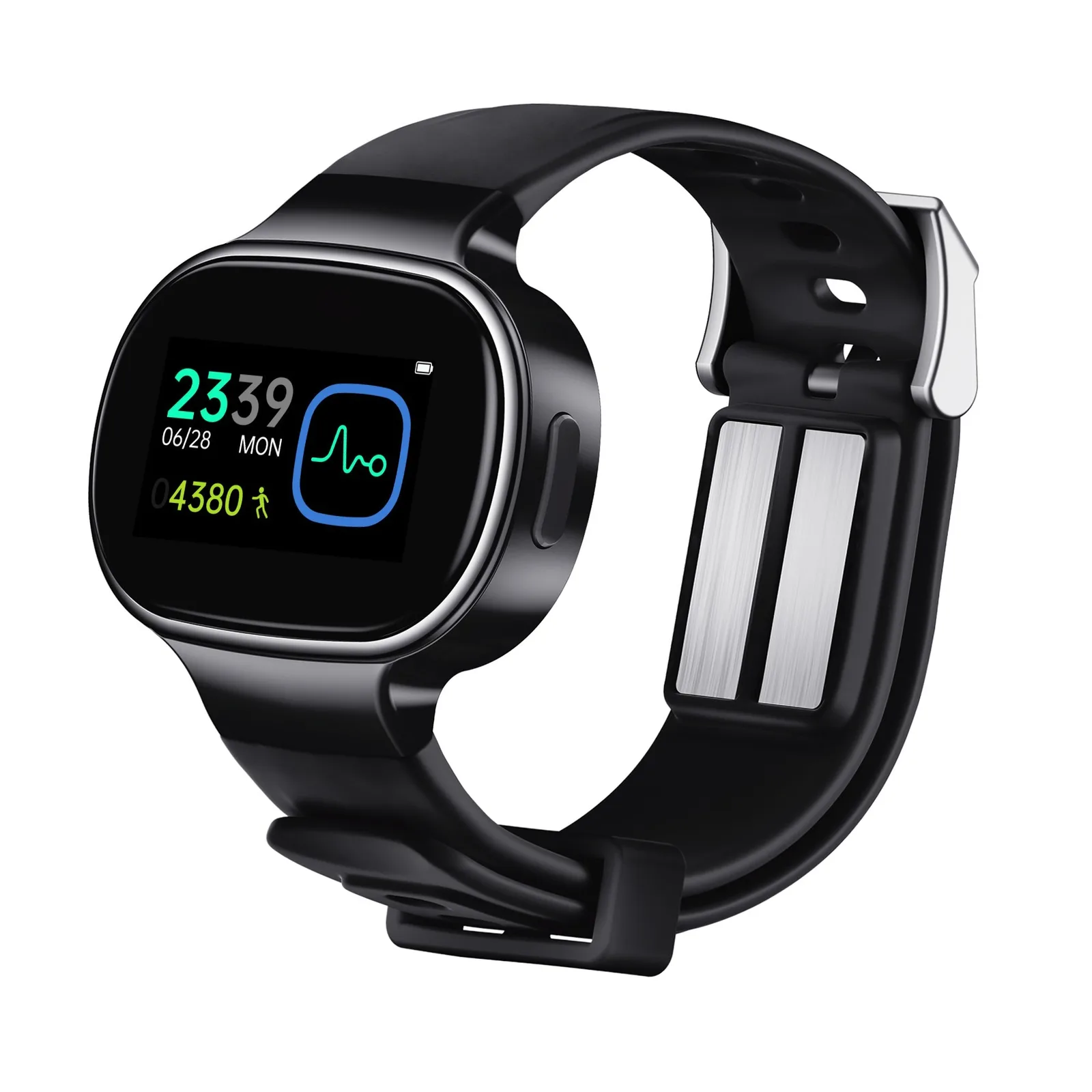
EmeTerm Smart
What We Like
- Discreet, wearable-tech look that doesn't scream "medical device"
- Hybrid TEAS technology built specifically for reliable median-nerve contact
What to Consider
- Fit against the wrist has to be snug for the electrode to maintain contact
The Smart is EmeTerm's flagship model, built around a patented hybrid TEAS design in a smartwatch form factor. Because the stimulation only works when the node sits directly over the P6 point, a properly fitted band matters more here than the styling does.
EmeTerm Explore Classic and Explore Active
What We Like
- Simple, rechargeable design suited to daily wear
- 5 intensity levels let you dial in stimulation strength rather than guessing
What to Consider
- IP67 is splash/rain resistant, not designed for full submersion swimming
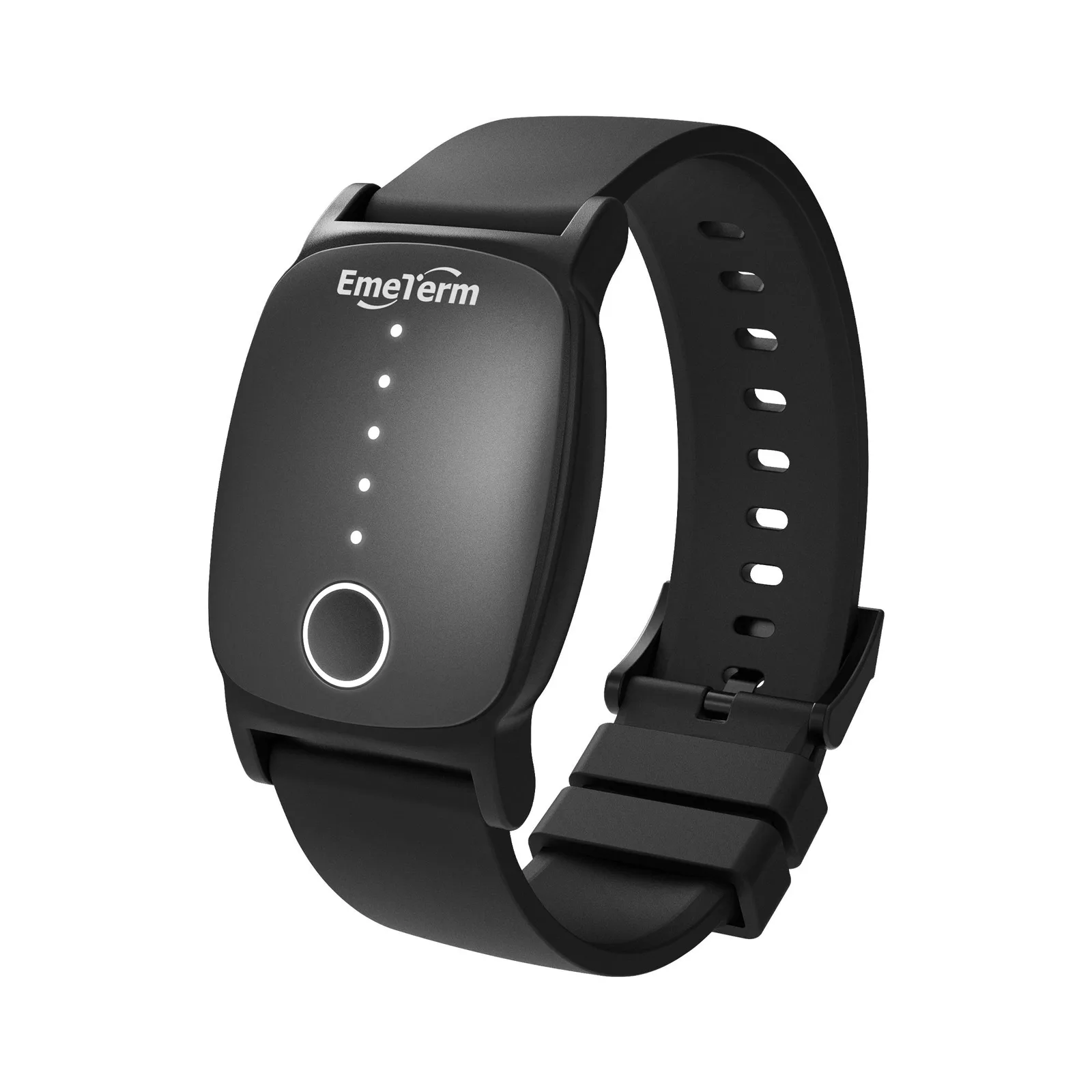
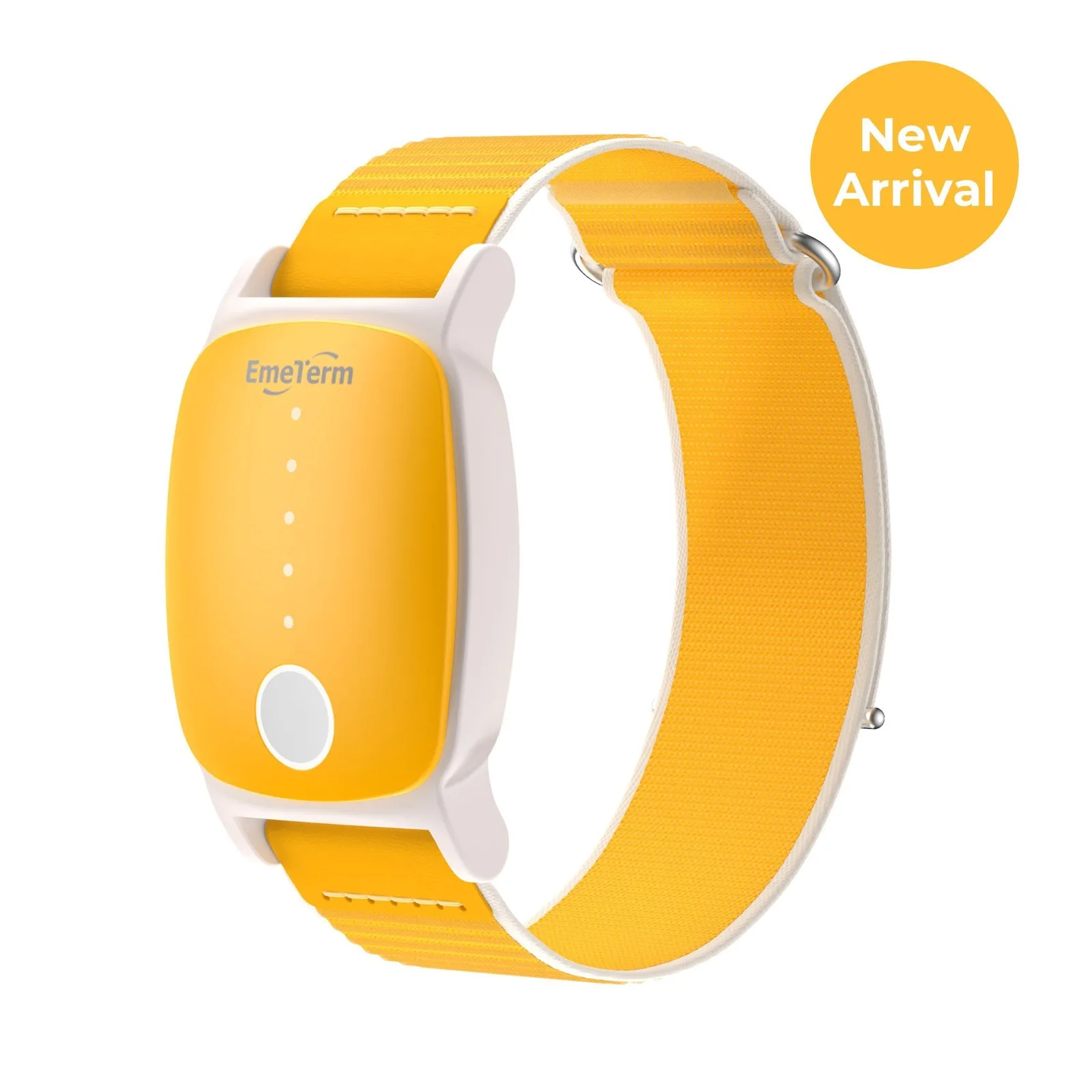
These two share the same core hardware — rechargeable, IP67 waterproof, five intensity levels — and are marketed for travel nausea, pregnancy-related nausea, motion sickness, and even VR-induced queasiness. Explore Classic and Explore Active differ mainly in styling rather than function.
EmeTerm Explore for Kids
What We Like
- Purpose-built stimulation levels for a younger, smaller wrist
- IP68 rating means water play and swimming won't damage it
What to Consider
- Not intended for children outside the 3–12 age range
This model uses the same FDA-cleared TEAS neuromodulation as the adult line, calibrated for gentler stimulation and sized for kids ages 3 to 12, with an IP68 rating that holds up to swimming and water play.
EmeTerm Fashion
What We Like
- Looks less like a medical device for everyday, non-clinical wear
What to Consider
- Choose based on stimulation needs first, styling second
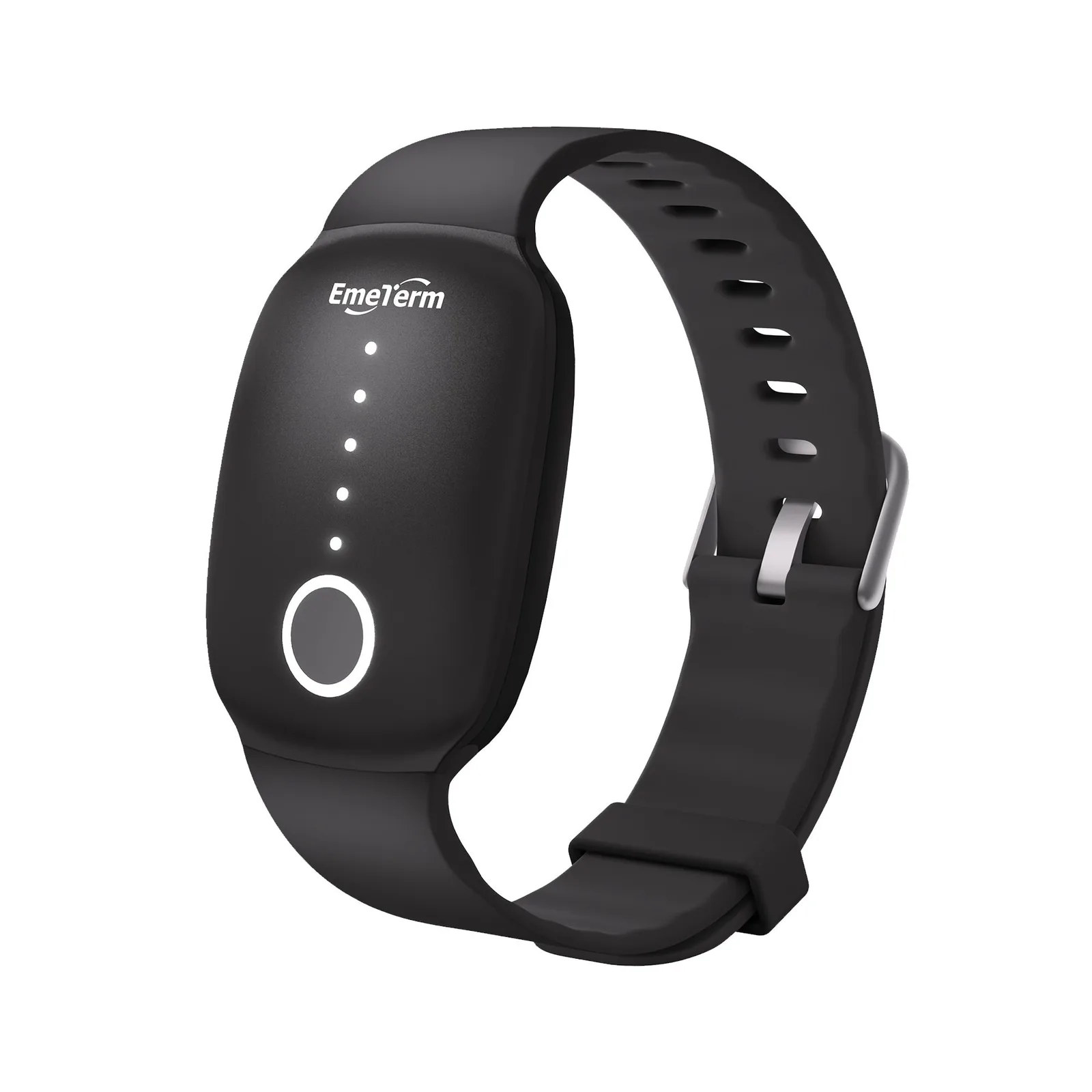
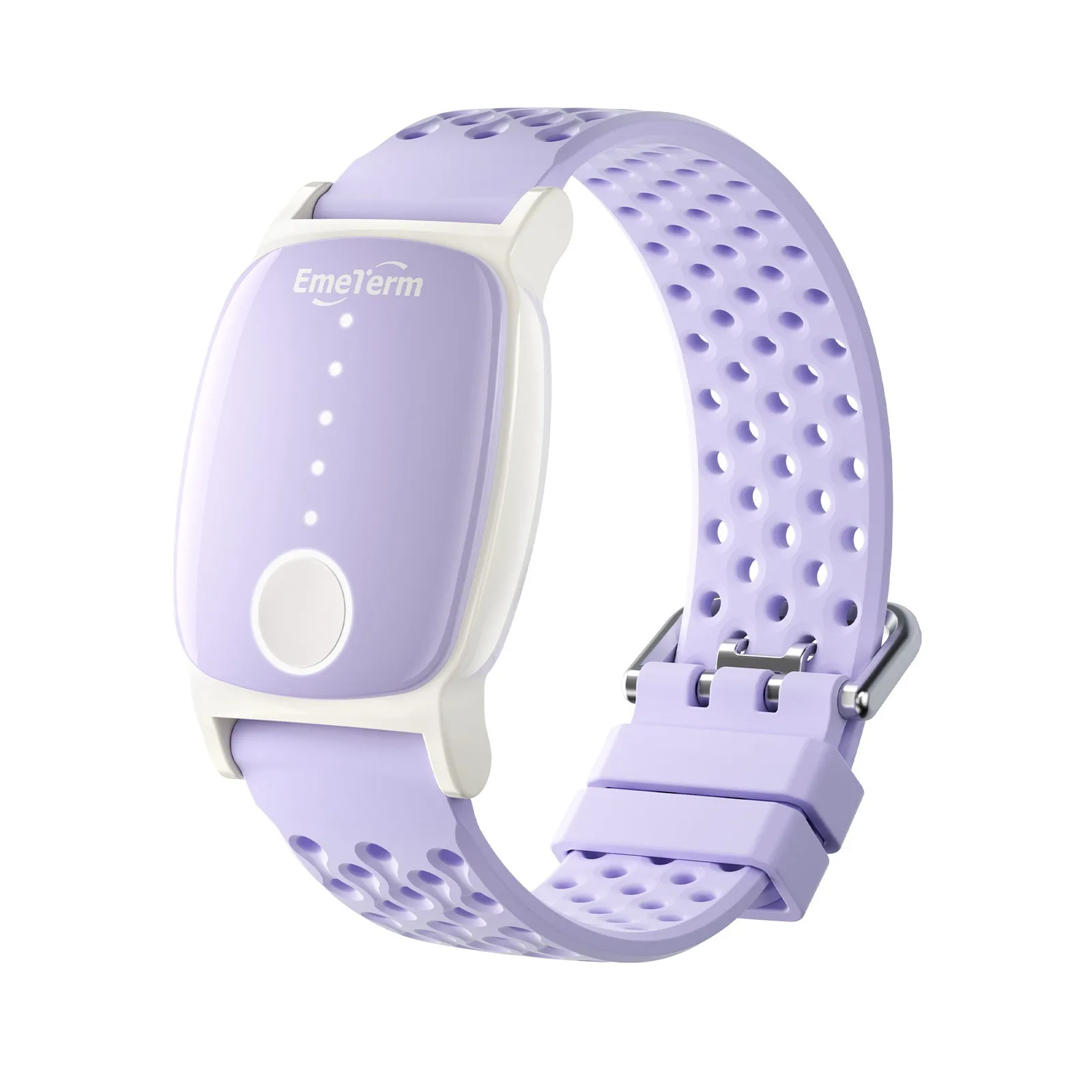
The Fashion model targets buyers who want the same FDA-cleared relief without a clinical look. If you need specific waterproofing or intensity-level control, compare its specs against Explore Active before choosing style over function.
Model comparison table
Use this table to compare the five models side by side before you commit to one.
| Model | Best for | Waterproofing | Key differentiator |
|---|---|---|---|
| EmeTerm Smart | Tech-forward users wanting a smartwatch look | Not specified for full submersion | Patented hybrid TEAS technology |
| EmeTerm Explore Active | Daily travel, pregnancy, motion sickness | IP67 | 5 adjustable intensity levels |
| EmeTerm Explore Classic | Everyday wear, simple styling | IP67 | Same core hardware as Explore Active |
| EmeTerm Explore for Kids | Children ages 3–12 | IP68 | Gentler calibration for younger users |
| EmeTerm Fashion | Discreet, style-first everyday wear | Not specified | Style-oriented variant of the core line |
Motion sickness: what the evidence actually shows
This is the section most EmeTerm reviews skip, and it's the most important one if you're buying for a cruise, road trip, or VR headset. Acupressure wristbands are heavily marketed for seasickness, car sickness, and general travel-related motion sickness. However, no systematic reviews or meta-analyses have been published specifically on P6 acupressure effectiveness for motion sickness. The strongest evidence for P6 stimulation applies to postoperative nausea and vomiting and to pregnancy-related nausea — not motion sickness.
Individual randomized controlled trials do exist in motion-sickness contexts, but there is no high-quality synthesized evidence — the kind a Cochrane review would produce — specifically for this indication. That means any claim that P6 wristbands "cure" or reliably prevent motion sickness should be treated as anecdotal or supportive rather than proven. This doesn't mean the devices can't help; it means the evidence bar for this specific use case is lower than for postoperative nausea, and you should set your expectations accordingly.
EmeTerm's own marketing cites an 85% success rate according to our clinical trials — but this figure comes from the company's own proprietary trials, not a peer-reviewed, independently published study. A search of PubMed and clinical trial registries did not turn up independent verification of that number. Treat it as a brand claim worth noting, not a settled fact.
Pregnancy nausea: mixed trial results
If you're considering EmeTerm for morning sickness, the research picture is genuinely mixed rather than uniformly positive. Randomized controlled trials examining P6 acupressure wristbands for pregnancy-related nausea show mixed results. One randomized, double-blind, placebo-controlled study found that bilaterally applied acupressure wristbands did not significantly reduce the incidence of nausea and vomiting during labour and delivery.
Other trials, however, report clinically significant reductions in nausea tied to early pregnancy and hyperemesis gravidarum when P6 acupressure was applied multiple times daily. The likely explanation for these divergent outcomes is study design — differences in timing, application frequency, and how severe the baseline nausea was at enrollment all vary across trials. If you're pregnant, this is a conversation worth having with your midwife or physician before relying on a wristband as your primary nausea strategy — especially given that FDA clearance for these devices covers OTC nausea/vomiting relief in general, not a pregnancy-specific claim.
Buying guide: what to check before ordering
A few practical checks make the difference between a wristband that actually contacts your P6 point and one that just sits loosely on your wrist doing nothing.
Fit and placement
Because the stimulation node has to sit directly over the median nerve at the P6 point, a snug — not tight — fit matters more than the model you pick. Measure your wrist against EmeTerm's sizing guidance before ordering, and re-check node placement each time you put it on.
Match the model to your use case
Don't buy Explore for Kids sizing for an adult wrist, and don't assume the Fashion model has the same waterproofing as Explore Active — check the specs table above rather than assuming feature parity across the line.
Set expectations by condition
If you're buying for post-surgical nausea, the evidence base is comparatively strong. If you're buying for motion sickness, go in knowing the evidence is thinner and largely anecdotal. If you're pregnant, read the mixed pregnancy-trial evidence above and loop in your clinician.
Use the return window
Every model carries a 30-day money-back guarantee plus a 1-year quality guarantee, so there's a built-in way to test fit and effect on your own body before committing.
How We Chose
We compared EmeTerm's five published models against its own product specifications and cross-checked every efficacy and safety claim against the Cochrane network meta-analysis and independent pregnancy-nausea trials rather than relying on brand marketing copy alone.
For related drug-free, evidence-aware wellness options, see our reviews of the Myoovi period pain relief device, post-surgical compression fajas, and The Zippra compression socks. If you're building out an at-home wellness routine, our Lola Health at-home blood test review covers another drug-free way to track what's actually going on in your body.
Verdict: is EmeTerm worth it?
EmeTerm earns its FDA clearance and backs every model with a real return policy, which makes it a low-risk way to try drug-free nausea relief. It's a stronger fit if you're managing postoperative nausea or want a well-documented, non-drug option to discuss alongside pregnancy-related nausea care with your clinician. It's a weaker fit if you're buying purely for motion sickness expecting clinical-trial-level proof — the evidence there is thinner and largely anecdotal, so go in with realistic expectations rather than treating the brand's 85% figure as independently verified.
Check EmeTerm on the official siteReferences
- Cochrane Systematic Review (2025 update) — P6 acupoint stimulation network meta-analysis, 77 trials, 9,847 participants: PubMed
- International Journal of Obstetric Anesthesia / PubMed — Acupressure wristbands for pregnancy-related nausea, mixed RCT evidence: ScienceDirect
- USPTO Patent Database / Medical Anatomy References — P6/Neiguan point location on the median nerve: PubMed
- EmeTerm Official Website — regulatory approvals and warranty policy: emeterm.com
This article is for informational purposes only and is not medical advice. EmeTerm devices are FDA-cleared for over-the-counter nausea and vomiting relief; this clearance does not extend to diagnosing, treating, curing, or preventing any disease. If you are pregnant, recovering from surgery, or have a chronic health condition, consult a qualified healthcare provider before using a P6 stimulation device. Individual results vary, and the evidence base differs significantly by use case, as detailed above.
Recommended for you
 yourTMJ Review 2026: Honest Look at the Heated Jaw Pen
 Snatched Body Review: 4-Stage Fajas, Honest 2026 Guide
 Hanna Sillitoe Review 2026: Honest Gut-First Skincare Guide
 Lola Health At-Home Blood Test Review: A Closer Look
 How At-Home Blood Testing Works: 5 Steps Explained (2026 Guide)
 The Zippra Review 2026: Compression Socks Worth It?