yourTMJ Review: Heated Jaw Massage Pen for TMJ Flare-Ups
An evidence-aware yourTMJ review of the heated, vibrating jaw massage pen for TMJ flare-ups — what heat and massage research shows, and where the brand's own claims end.
How TMJ pain works — and why heat helps
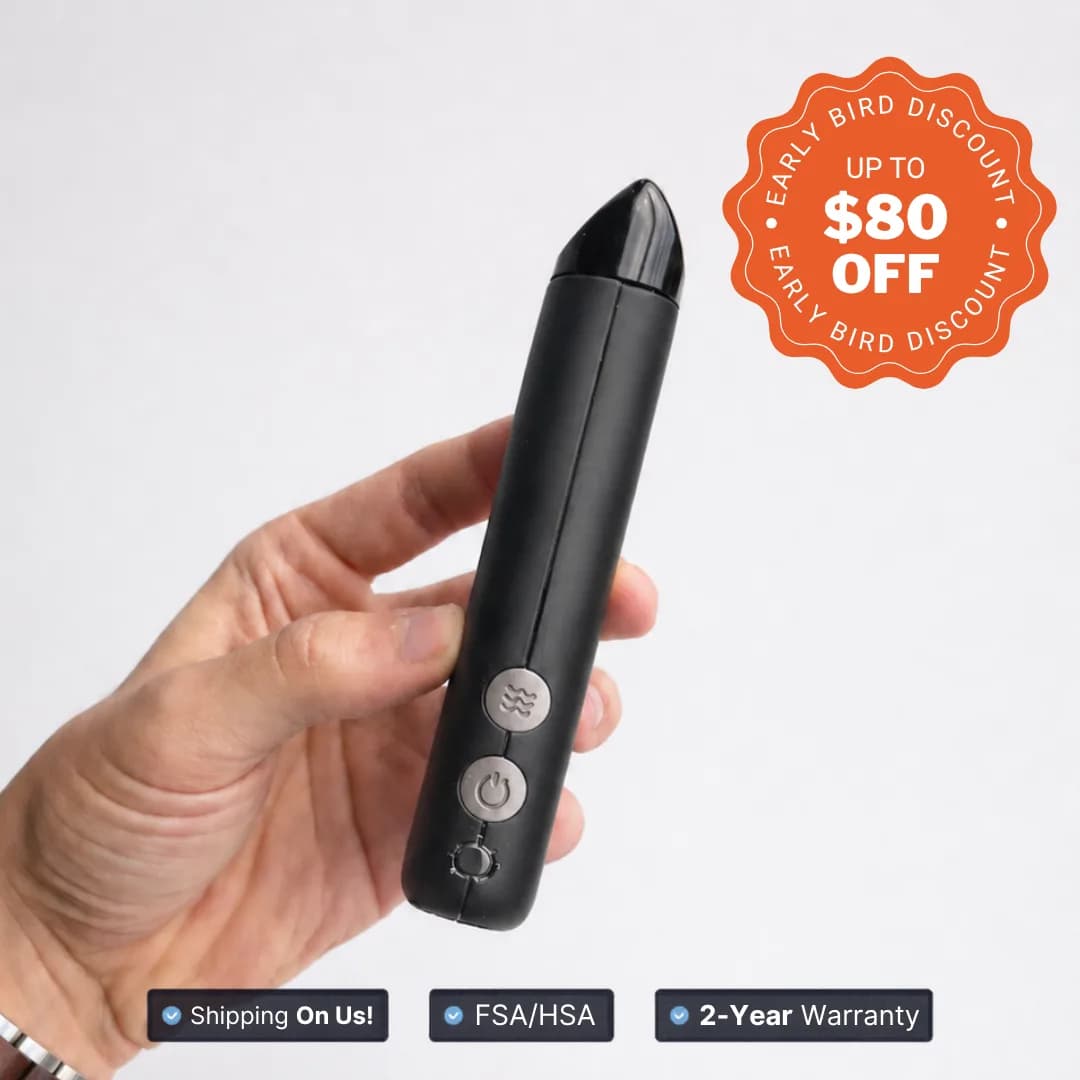
This yourTMJ review looks at the heated, vibrating jaw massage pen from yourTMJ, built for people managing temporomandibular joint (TMJ) pain and flare-ups at home. We separate the brand's own claims from what heat and massage research actually supports.
A reasonable heat-and-massage self-care tool for TMJ flare-ups — not a cure, and not independently tested
If you already find heat packs or jaw massage helpful, yourTMJ packages both into one rechargeable pen. If your jaw pain is persistent, worsening, or accompanied by locking, see a dentist or TMJ specialist first.
Check Price on yourTMJKey Highlights
- The yourTMJ Pen combines adjustable heat (100–118°F) with vibration and an acupressure tip in one handheld device.
- Heat and massage are both backed by real, published research for TMJ symptoms — but that research tested the modalities generally, not this specific product.
- yourTMJ's own reported 93% user-satisfaction figure is a brand claim, not an independent finding.
- Persistent, worsening, or locking jaw pain should be evaluated by a dentist or TMJ specialist — this device is a self-care tool, not a treatment for the underlying disorder.
How TMJ pain works — and why heat helps
Temporomandibular disorders (TMD) can show up as jaw or face pain, headaches, jaw stiffness or locking, clicking or popping sounds, difficulty opening the mouth, earaches, and neck or shoulder discomfort. Common causes include jaw injuries, teeth grinding (bruxism), arthritis in the jaw, bite misalignment, stress-related tension, and poor posture — TMD is not life-threatening but can meaningfully affect eating and speaking comfort.
The National Institute of Dental and Craniofacial Research (NIDCR) recommends applying "heat or cold in combination with exercises" as a non-invasive way to manage TMD, emphasizing that thermal therapy works best paired with therapeutic exercise rather than used alone. A 2024 physiotherapy review in PMC describes how superficial heat improves circulation, reduces pain-related nerve conduction, and relaxes the jaw muscles — with some studies showing gains in mouth opening of up to 9 mm when heat is applied at 104–107.6°F for 20 minutes, one to three times daily, as part of a broader treatment plan.
Massage has separate support: Healthline cites 2021 research finding that conservative manual techniques, including massage, are "highly beneficial" for TMD, improving pain and jaw-opening capacity through kneading, friction, and stretching techniques held for 30–60 seconds each. A 2024 randomized controlled trial (n=46) found that combining massage with post-isometric relaxation and exercise produced significantly better pain reduction and mouth-opening improvement than massage plus exercise alone, with large effect sizes on both measures. Separately, an independent survey by the TMJ Association found that 74% of respondents reported reduced symptoms after using hot and cold packs on the jaw, and among the 46 treatments the survey covered, thermal packs were rated the single most effective therapy by 91% of respondents who tried them — patient-reported results, not a clinical trial.
The important distinction: none of this research tested the yourTMJ Pen itself. It supports heat and massage as modalities in general. yourTMJ's own reported figure — 93% of users say the Pen helped them through flare-ups — comes from the brand's own website, without a disclosed sample size or methodology, so treat it as a marketing claim rather than independent evidence.
yourTMJ Pen lineup: Original vs Generation 2
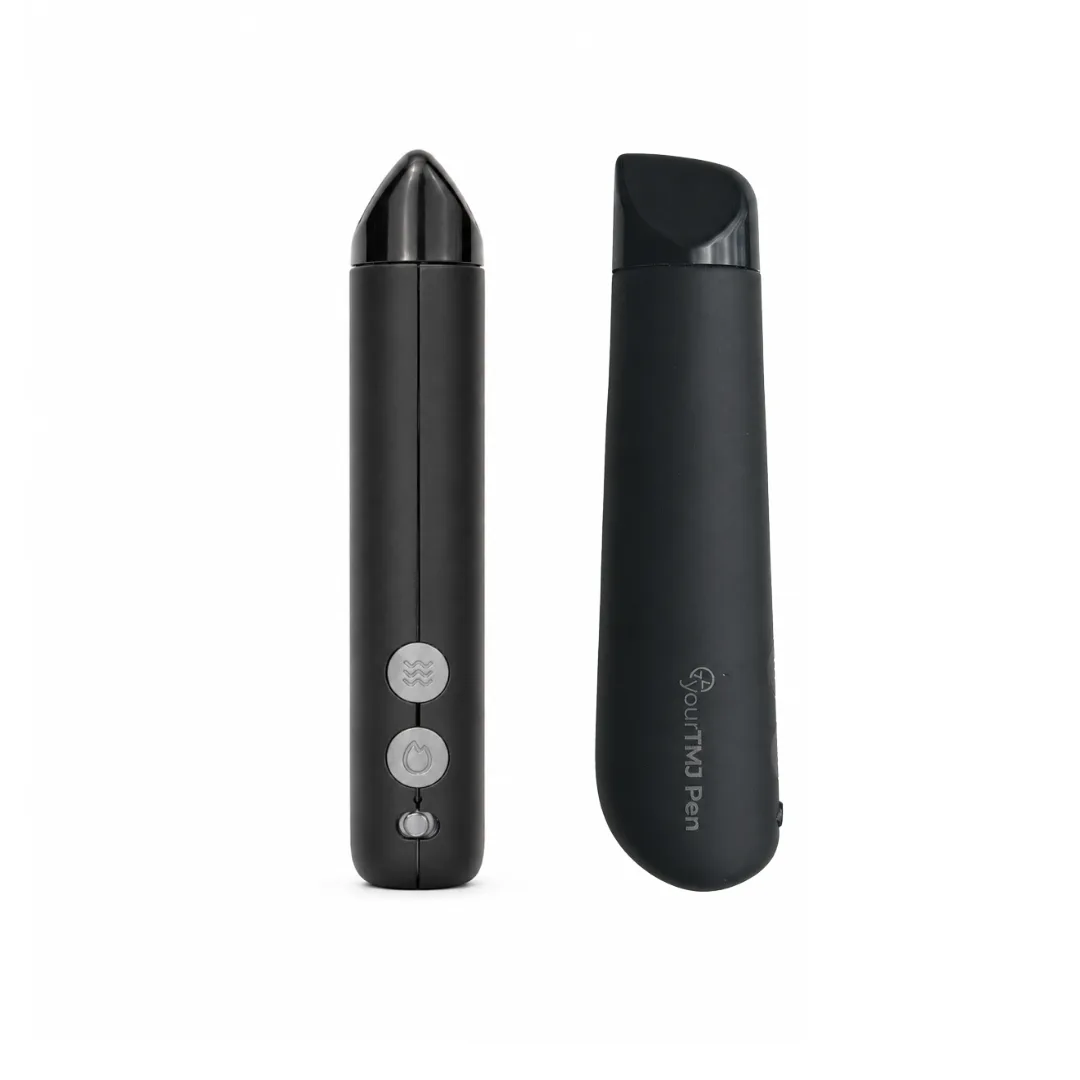
yourTMJ Pen Generation 2
Adjustable heat range of 100–118°F with a redesigned ergonomic grip and USB-C charging.
yourTMJ Pen (Original)
What We Like
- Combines heat, vibration, and an acupressure tip in one lightweight, portable device.
- Assembled in the USA per the manufacturer.
- Pairs with an included guidebook and course rather than shipping as a bare device.
What to Consider
- No independent lab testing or clinical trial of this specific device has been published.
- USB (not USB-C) charging, since replaced in Generation 2.
The Original pairs a 3-in-1 aluminum tip with adjustable heat and four vibration levels, aimed at people who want a heat-plus-massage routine without juggling a separate heat pack and a massage tool. The included guidebook and Dr. Joe Damiani course are meant to pair device use with broader symptom-management guidance, since NIDCR's own recommendation is to combine heat with exercise rather than rely on heat alone.
yourTMJ Pen Generation 2
What We Like
- Reworked ergonomic grip and USB-C charging over the Original.
- Includes the same guidebook and Dr. Joe Damiani course as the Original.
- Longer stated warranty and a risk-free trial window per the brand.
What to Consider
- Same lack of independent, product-specific clinical testing as the Original.
- Listed as a preorder item with a future delivery window at the time this research was gathered.
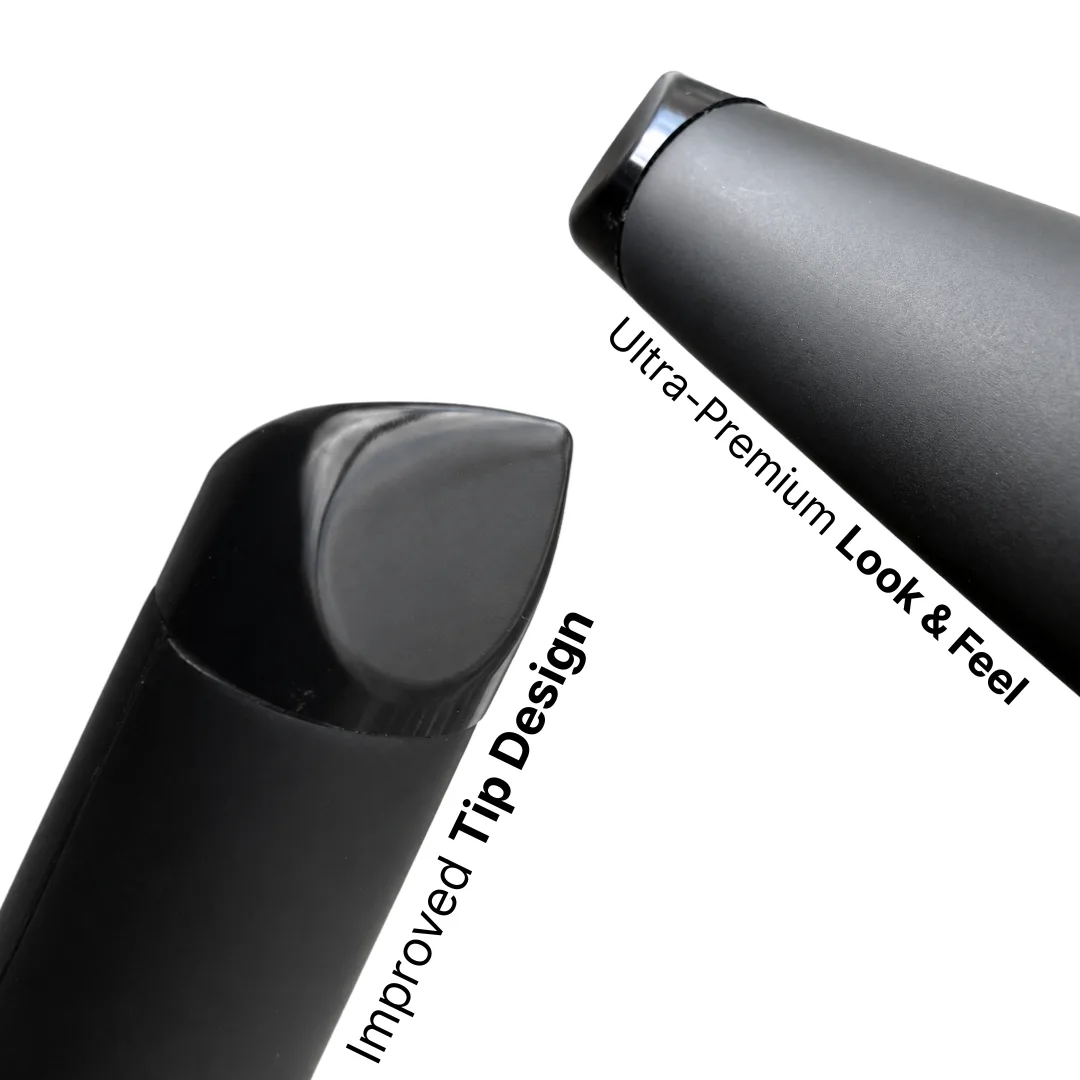
Generation 2 keeps the same 100–118°F heat range but swaps the tip for dual-size acupressure corners and moves to USB-C charging inside a redesigned, soft-touch matte body. If you want the newest hardware and don't mind a preorder-style delivery timeline, this is the version to check first.
| Feature | yourTMJ Pen (Original) | yourTMJ Pen Generation 2 |
|---|---|---|
| Heat range | 100–118°F | 100–118°F |
| Tip design | 3-in-1 aluminum tip (heat, scraping, acupressure) | Dual-size acupressure corners |
| Vibration levels | 4 adjustable levels | Not separately specified |
| Charging | USB | USB-C |
| Included extras | Guidebook + Dr. Joe Damiani course | Guidebook + Dr. Joe Damiani course |
How to use the yourTMJ Pen
The brand's included guidebook and course are meant to guide day-to-day use. Post-operative nausea after dental work can also benefit from drug-free management options. The general pattern lines up with published heat-and-massage protocols:
- Set a moderate heat level first. Published thermotherapy protocols for TMD use roughly 104–107.6°F applied for about 20 minutes, once to three times daily — use that as a reference point rather than the pen's maximum setting.
- Apply the tip along the jaw muscles, not directly over the joint itself, moving slowly rather than pressing hard.
- Use kneading, friction, and stretching motions in 30–60 second intervals per area, mirroring the manual massage techniques described in published TMD research.
- Pair sessions with gentle jaw exercises rather than heat alone, in line with NIDCR's guidance to combine thermal therapy with exercise.
- Stop and reassess if pain worsens or if you notice new locking, clicking, or swelling — those are reasons to contact a dentist or TMJ specialist rather than increasing heat or pressure.
Common mistakes with heat and massage therapy
Most complaints about heat-and-massage tools for jaw pain trace back to a handful of avoidable habits rather than the tools themselves.
Using heat without any exercise or stretching
NIDCR specifically frames heat as a companion to exercise, not a stand-alone fix. Skipping the exercise half of that pairing is a common reason people feel like heat "stopped working" after the first few uses.
Pressing too hard directly on the joint
Published massage protocols use gentle-to-moderate pressure and target the surrounding muscle, not the joint itself. Heavy pressure directly on the TMJ can aggravate symptoms rather than relieve them.
Treating a persistent disorder as a self-care-only problem
Self-massage and heat are described in the research as beneficial adjuncts, and Healthline specifically recommends working with a registered massage therapist experienced in TMJ work rather than relying solely on self-massage for ongoing cases. If jaw locking, worsening pain, or new symptoms show up, that is a signal to see a dentist or TMJ specialist, not to increase at-home use.
yourTMJ vs. other self-care options
Sleep quality is deeply connected to jaw health. Mouth-breathing patterns during sleep, which can be influenced by nasal or structural factors, often worsen jaw tension in people with TMJ issues.
The yourTMJ Pen isn't the only wearable or handheld device built around drug-free pain relief. If you're weighing a heated jaw pen against other categories, it helps to know what each is actually designed for and what evidence backs it. For example, we've also reviewed a wearable TENS device built for a different type of pain relief — useful context if you're comparing device-based approaches to managing pain generally.
Compared with a plain drugstore hot pack, the yourTMJ Pen adds targeted vibration and an acupressure-shaped tip, plus a bundled guidebook and course. Compared with seeing a massage therapist experienced in TMJ work, it's more convenient and repeatable at home, but it can't replace professional assessment of what's actually causing the pain.
What to look for before buying a jaw massage device
Adjustable heat within a safe range
Published protocols for TMD thermotherapy sit around 104–107.6°F. A device that lets you dial heat down from its maximum (both yourTMJ Pens run 100–118°F) gives you more control to match that range rather than defaulting to the hottest setting.
A tip shape built for the jaw, not a generic massager
General-purpose massage guns are built for large muscle groups; a tip sized and shaped for acupressure points and jaw muscle contours, like the aluminum or acupressure-corner tips on the yourTMJ Pens, is more relevant to this specific use case.
Realistic expectations, not treatment claims
Look for brands that frame these devices as symptom-management tools alongside exercise and professional care, not as a cure for TMD. NIDCR's own guidance treats heat as one part of a broader plan.
How We Chose
We compared the two current yourTMJ Pen models against the manufacturer's own published specifications and cross-checked the heat and massage claims against named clinical and patient-survey sources rather than the brand's marketing copy alone.
The Bottom Line
If you already respond well to heat or massage for jaw tension, the yourTMJ Pen is a reasonable way to combine both in one device — just treat it as a self-care aid, not a treatment for TMD itself, and see a dentist or TMJ specialist for persistent or worsening pain.
Check Price on yourTMJReferences
- Cleveland Clinic. Temporomandibular Disorders (TMD) Overview.
- The TMJ Association. Hot and Cold Packs Rated Most Effective Therapy (patient survey).
- PMC. Physiotherapy Approaches for Temporomandibular Disorders: A Multimodal Conservative Management Strategy (2024).
- PMC. Efficacy of Massage Versus Massage With Post-Isometric Relaxation in Temporomandibular Disorders: A Randomized Controlled Trial.
- Healthline. TMJ Massage: Techniques and Benefits.
Recommended for you
 EmeTerm Review 2026: Best Anti-Nausea Wristband Guide
 Snatched Body Review: 4-Stage Fajas, Honest 2026 Guide
 Hanna Sillitoe Review 2026: Honest Gut-First Skincare Guide
 Lola Health At-Home Blood Test Review: A Closer Look
 How At-Home Blood Testing Works: 5 Steps Explained (2026 Guide)
 The Zippra Review 2026: Compression Socks Worth It?