Does Mouth Tape Help Your Jawline: What the Evidence Says
Mouth tape is trending on TikTok with jawline transformation claims. But how does mouth tape help your jawline — if at all? Here is what the research actually says versus what social media is selling.
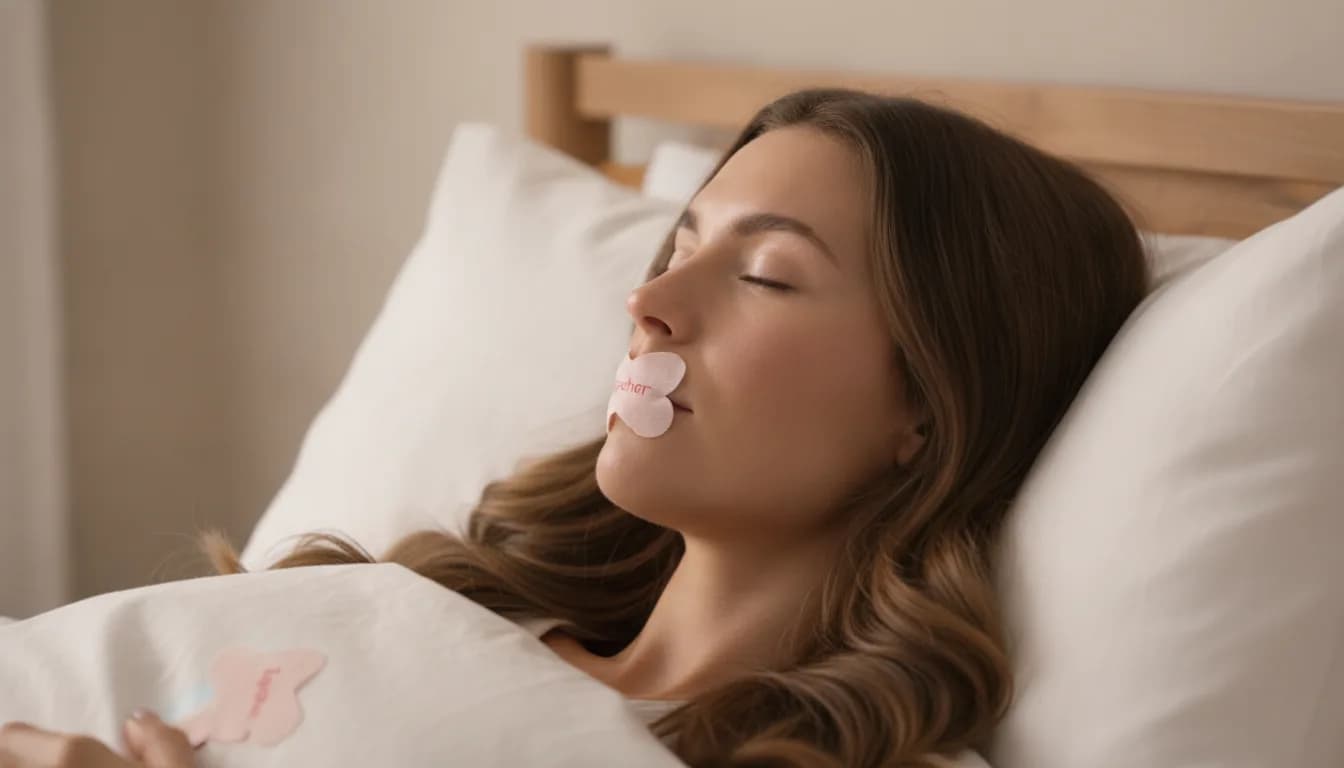
How Does Mouth Tape Help Your Jawline? What the Claim Actually Says
- How Does Mouth Tape Help Your Jawline? What the Claim Actually Says
- What Mouth Tape Actually Does
- Mouth Breathing and Facial Structure: What the Research Shows
- Why Before-and-After Photos Look So Convincing
- Realistic Benefits of Nasal Breathing at Night
- Who Mouth Taping May Help (and Who Should Skip It)
- Getting Started Safely If You Want to Try It
How does mouth tape help your jawline is one of the most-searched questions driving the current mouth-taping trend — and the answer is more nuanced than most TikTok videos admit. At Purisia, we dig into what the evidence actually shows, which benefits are plausible, and which claims you should be sceptical of.
Mouth tape supports nasal breathing at night — not jawline reshaping
Mouth tape may help habitual mouth-breathers get more consistent nasal breathing overnight. No peer-reviewed study has shown it reshapes or defines the jawline in adults. If you are researching mouth tape for sleep quality reasons, the evidence is more supportive — but start with realistic expectations.
Key Highlights
- Viral claims that mouth tape "defines" or "sculpts" the jawline are not backed by clinical evidence in adults.
- Chronic mouth breathing in children is associated with measurable facial changes — but adult bone structure has far less plasticity.
- Nasal breathing at night offers real, evidence-informed benefits: better oxygen uptake, oral health, and sleep quality.
- Social media jawline before-and-afters typically reflect fat loss, better posture, lighting, or camera angle — not bone remodelling.
- Mouth tape is not for everyone — those with sleep apnea, nasal congestion, or anxiety should consult a doctor first.
How Does Mouth Tape Help Your Jawline? What the Claim Actually Says
Scroll through #mouthtape on TikTok and you will encounter a consistent narrative: taping your mouth shut while you sleep forces nasal breathing, which positions the tongue against the roof of the mouth, which in turn — over weeks or months — reshapes the jaw and "chisels" the face. Before-and-after photos circulate alongside transformation testimonials, some from brands themselves.
According to analysis by Dream Recovery, TikTok views for mouth tape content grew 445% year-over-year, with jawline and aesthetic claims among the most-shared. That viral momentum has outpaced the research by a significant margin.
Some brands directly promote a "sculpted jawline" outcome.
Independent health reviewers and the Sleep Foundation have characterised this as anecdotal — meaning individual reports, not controlled evidence.
The question is not whether the claim sounds plausible — there is a biological mechanism that mouth tape advocates reference. The question is whether the evidence supports it in adult users. The short answer, examined in detail below, is: not yet.
What Mouth Tape Actually Does
Mouth tape is a small strip of hypoallergenic adhesive material placed over the lips before sleep. Its only function is mechanical: it applies gentle pressure to keep the mouth closed, encouraging breathing through the nose instead of the mouth. It does not inject anything, stimulate muscles electrically, or apply heat — it simply discourages mouth opening.
The theoretical chain that leads to jawline improvement goes like this:
- Mouth tape keeps the mouth closed.
- Closed mouth means nasal breathing.
- Nasal breathing encourages the tongue to rest against the palate (its natural resting position).
- Consistent tongue-to-palate contact theoretically supports forward jaw development.
- Over time, this might contribute to a stronger jawline profile.
Step 3 has some support: orofacial myofunctional therapy research does show that nasal breathing and tongue posture are connected, and that training exercises can influence muscle tone and palatal development. But myofunctional therapy is an active, structured intervention — not passive overnight taping.
The Sleep Foundation and McGill University's Office for Science and Society both note that no scientific evidence supports the specific claim that mouth tape causes jawline definition or facial reshaping in adults.
Mouth Breathing and Facial Structure: What the Research Shows
The strongest evidence in this space concerns children, not adults — and it examines the effects of chronic mouth breathing, not the effects of taping.
A systematic review and meta-analysis published in PMC found that chronic mouth breathing causes measurable facial skeletal changes in children. These include a longer, narrower face, a higher palatal vault, and altered dental alignment. This research is real and well-supported in orthodontic and otolaryngology literature.
Some dental literature notes that chronic mouth breathing may affect airway geometry. This is the biological basis for why orthodontists take breathing habits seriously in growing patients.
The logic that advocates use is essentially the reverse: if mouth breathing causes unfavourable facial changes, then nasal breathing should cause favourable ones. That is a reasonable hypothesis. But a hypothesis is not evidence — especially when the mechanism being reversed (childhood bone development) operates on a very different timescale and physiological basis than adult tissue remodelling.
Why the adult situation is different
Sleep and sinus specialists note that 80% of jaw growth occurs by around age 7. By adulthood, facial bone plasticity — the ability of bone to meaningfully remodel in response to soft-tissue pressure — is dramatically reduced compared to a growing child.
Genetic research adds another layer: approximately 40% of facial height and around 75% of overall facial shape variation is heritable. The jawline you have as an adult is primarily determined by your genetics, body composition, and age — factors that passive overnight tape does not override.
The scientific consensus, supported by the same genetics research, is that jawline appearance in adults is shaped by genetics, body fat distribution, and age — not short-term interventions. Weight loss and reduced facial puffiness (which can result from improved sleep quality) can make the jaw appear more defined, and this is likely what drives many before-and-after testimonials.
Why Before-and-After Photos Look So Convincing
Before-and-after jawline photos circulate widely and genuinely show visible differences. What explains those differences if bone remodelling is unlikely?
- Body fat reduction. Better sleep is associated with healthier metabolic function. Losing even a small amount of facial fat makes the jaw appear sharper and more defined — this is not bone structure changing, it is subcutaneous fat decreasing.
- Reduced facial puffiness. Nasal breathing filters and humidifies air, which may reduce the mild chronic inflammation or fluid retention that contributes to a "puffy" appearance. Addressing mouth breathing may reduce this.
- Posture improvement. Chronic mouth breathing is associated with forward head posture. Correcting it may improve chin and jaw projection visually — even without structural change.
- Lighting, angle, and time. Social media before-and-afters are not controlled experiments. A different camera angle, better lighting, or a lower-body-fat state on day 90 all produce dramatic jaw differences with no structural change involved.
- Natural maturation. Younger users who start mouth taping in their early twenties may still have modest residual facial development occurring — making it difficult to separate mouth tape effects from normal ageing.
A 2025 scoping review published in PMC concluded that there is no evidence for mouth taping producing cosmetic or structural outcomes. The reviewers noted that the social media narrative has significantly outpaced the available research.
Realistic Benefits of Nasal Breathing at Night
Dismissing the jawline claim does not mean dismissing mouth tape entirely. The evidence base for nasal breathing itself is meaningfully more solid — and mouth tape may genuinely help habitual mouth-breathers build that habit.
Oxygen and nitric oxide
Research published in the American Journal of Respiratory and Critical Care Medicine found that nasal breathing produces 5–20 times more nitric oxide than mouth breathing. Nitric oxide dilates blood vessels and has been shown to enhance oxygen uptake. This is a real physiological benefit tied to nasal breathing — not to the tape itself.
Oral health
Mouth breathing during sleep reduces saliva production and allows bacterial proliferation, which increases the risk of cavities, dry mouth, and gum disease. Encouraging nasal breathing through sleep may reduce this risk for habitual mouth-breathers.
Sleep quality in mild cases
A clinical study involving 20 participants with mild obstructive sleep apnea found that mouth taping reduced the apnea-hypopnea index by 47% and the snoring index by 47% over a one-week trial. This is a small, specific population — not a general finding — but it illustrates that the mechanism is real in appropriate candidates.
A 2024 scoping review covering 10 studies and 213 patients concluded that mouth taping lacks sufficient evidence for general sleep apnea treatment but shows measurable benefit in mild cases. This is the honest summary: the benefits exist, but they are narrower than the marketing suggests.
Morning freshness and reduced snoring
Many consistent users report waking with less dry mouth, reduced morning breath, and improved energy. These self-reported outcomes are plausible given the oral health and sleep-quality mechanisms described above. They are not fabricated — but they are also not the jawline transformation promised in trending videos.
For a broader look at what changes people realistically notice, see our guide on mouth tape before and after.
Who Mouth Taping May Help (and Who Should Skip It)
Mouth tape is not appropriate for everyone. Before trying it for any reason — including curiosity about the jawline effect — it is important to screen yourself honestly.
Likely suitable (with care)
- Healthy adults who breathe comfortably through the nose when awake
- People who notice dry mouth, mild snoring, or waking with a dry throat
- Those who want to build a consistent nasal breathing habit for sleep
- Curious first-timers with no underlying respiratory conditions
Should consult a doctor first
A PLOS ONE systematic review flagged nasal obstruction as the most critical safety contraindication. Mouth taping with a blocked nose can cause respiratory distress.
Standard contraindications include diagnosed obstructive sleep apnea, deviated septum, enlarged tonsils, chronic allergies, sinus infections, and heart conditions. If any of these apply, get a doctor's sign-off before trying mouth tape.
Mouth taping is also not recommended for people with severe anxiety, children, or those with significant respiratory conditions.
Not for jawline outcomes
If your primary motivation is facial reshaping or jawline definition, the evidence does not support mouth tape as a reliable tool for this in adults. You will be disappointed, and you may be paying for something that does not deliver what you expect. If you are interested in the real effects, see our mouth tape for sleep guide for a grounded overview.
Getting Started Safely If You Want to Try It
If you have assessed the above and want to try mouth taping for its evidence-supported benefits — better nasal breathing habit, reduced snoring, improved oral hydration — here are sensible first steps.
- Confirm nasal breathing is comfortable. Breathe through your nose for a full minute. If it feels laboured or impossible, resolve that first before taping.
- Start during the day. Try wearing a small strip for 15–20 minutes while awake. This helps your brain adapt and removes the anxiety of being taped during unconscious sleep.
- Choose a gentle, hypoallergenic tape. Medical-grade or purpose-built mouth tape is far less likely to irritate lip skin than general adhesive tape. Look for cotton-based materials and skin-safe adhesives.
- Patch-test the adhesive. Apply a small piece to the inside of your wrist for an hour before using it on your lips.
- Remove gently in the morning. Moisten the edges with warm water, then peel slowly in the direction of natural hair growth.
For a full step-by-step, see our mouth tape for beginners guide — it covers preparation, first-night expectations, and what to watch for.
If you want to explore a specific product, TapeHer is a women-focused option with an X-shaped design that is 50% smaller than most alternatives, made from 95% cotton and 5% spandex with a PFAS-free adhesive verified by SGS laboratory testing. It is a soft starting point for those interested in comfort-first mouth taping.
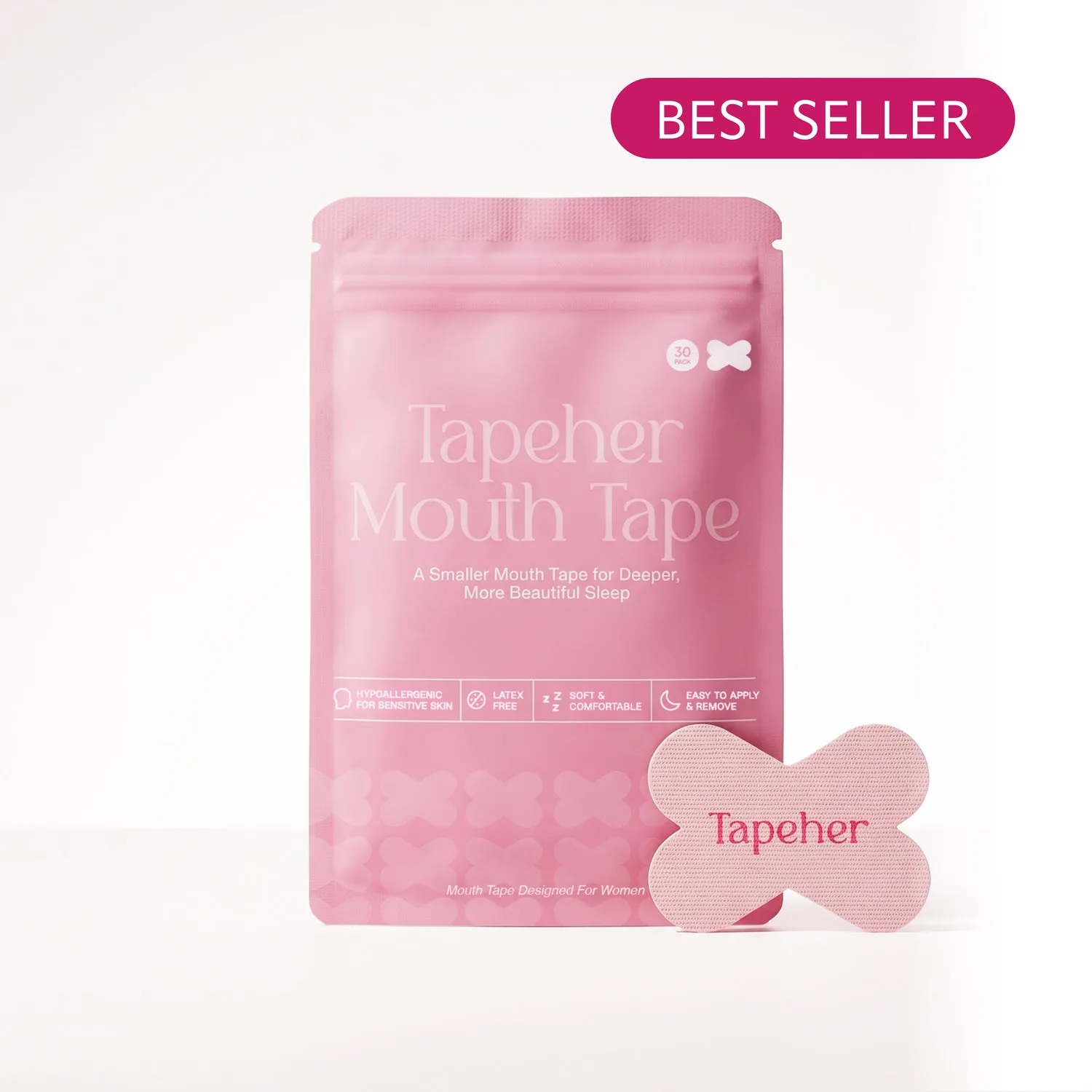
TapeHer Mouth Tape
X-shaped, PFAS-free, cotton-based — a comfort-first option for first-time mouth tape users.
Where to Go Next
Mouth tape encourages nasal breathing at night — and nasal breathing does carry real physiological benefits. But if your goal is a sharper jawline, the evidence does not support mouth tape as the tool. Facial structure in adults is governed by genetics, body composition, and age. The before-and-after transformations you see online are far more likely explained by fat loss, posture improvement, and photography conditions than bone remodelling.
If you are curious about the real changes consistent mouth-tapers actually report, read our mouth tape before and after breakdown — it separates plausible outcomes from viral myths with the same evidence-first approach.
References
- Sleep Foundation & McGill University — No scientific evidence supports mouth taping for jawline definition or facial reshaping
- PMC — Effects of mouth breathing on facial skeletal development in children: a systematic review and meta-analysis
- PMC — Human Facial Shape and Size Heritability and Genetic Correlations
- PMC — Breaking social media fads and uncovering the safety and efficacy of mouth taping: scoping review
- PMC — The Impact of Mouth-Taping in Mouth-Breathers with Mild OSA (AHI reduced 47%)
- American Journal of Respiratory and Critical Care Medicine — Nasal breathing produces 5–20x more nitric oxide than mouth breathing
- Sleep and Sinus Centers — 80% of jaw growth occurs by age 7; adult bone plasticity is limited
- PMC — Low Tongue Posture and Orofacial Myofunctional Therapy evidence
Recommended for you
 Mouth Tape Korea: Complete Guide to the 2026 Sleep Wellness Trend
 Logan Paul Mouth Tape Trend: Best 5 Safety Facts to Know in 2026
 Sleep Shield Mouth Tape Review 2026: 3 Best Alternatives to Know
 PAP MD Mouth Tape Review 2026: 3 Best Alternatives to Compare
 Dream Mouth Tape Review: 3 Features to Compare Before Buying (2026)
 VIO2 Unscented Mouth Tape Reviews: 3 Best Alternatives (2026)