Celebrity Mouth Tape Trend: Benefits, Safety, and What to Know
Celebrities like Logan Paul, Ashton Hall, and Joe Rogan have all sparked searches about mouth tape. Here is what the trend is actually about — and what to know before trying it yourself.
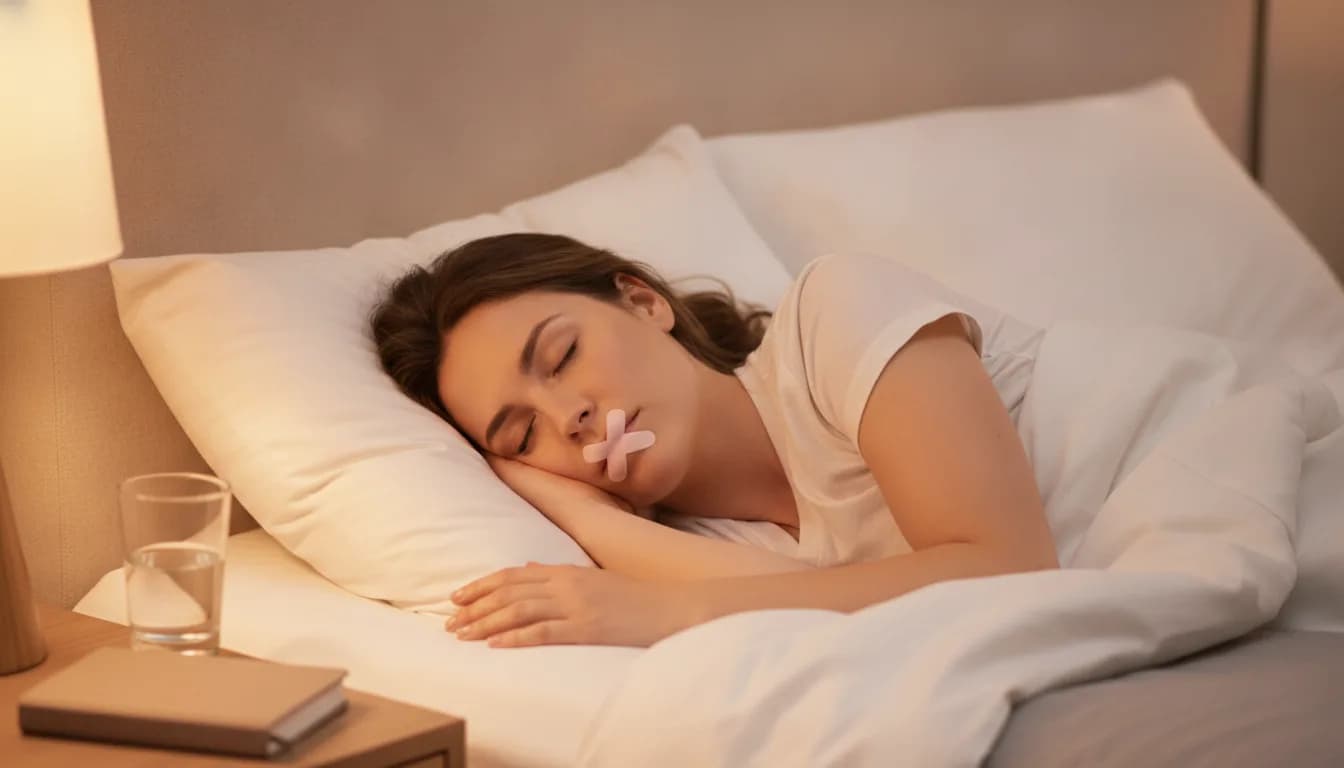
What is the Logan Paul Mouth Tape Trend?
Logan paul mouth tape searches have surged as celebrities and biohackers put the practice front and center — but what is actually behind the trend, and is it worth trying? At Purisia, we looked at the real science, the safety limits, and what to consider before you reach for the tape.
Mouth taping is worth understanding — but approach it on facts, not celebrity cues
If you breathe freely through your nose, have no diagnosed sleep disorders, and want to explore the practice, mouth taping is low-risk with some plausible benefits. If you snore heavily, have allergies, or any breathing concerns, talk to a doctor first — social media trends skip that step.
Key Highlights
- Celebrities referencing mouth tape have sparked a massive wave of searches — but no celebrity endorsement is a substitute for checking whether the practice suits your health profile.
- The most-cited clinical study found a 47% reduction in snoring and apnea events in people with mild obstructive sleep apnea — but this covered 20 patients over one week.
- Mouth taping is contraindicated for people with nasal obstruction, moderate-to-severe sleep apnea, or respiratory conditions.
- Choosing the right tape matters more than copying a brand name: look for hypoallergenic medical-grade adhesive, breathable materials, and the correct design for your face.
What is the Logan Paul Mouth Tape Trend?
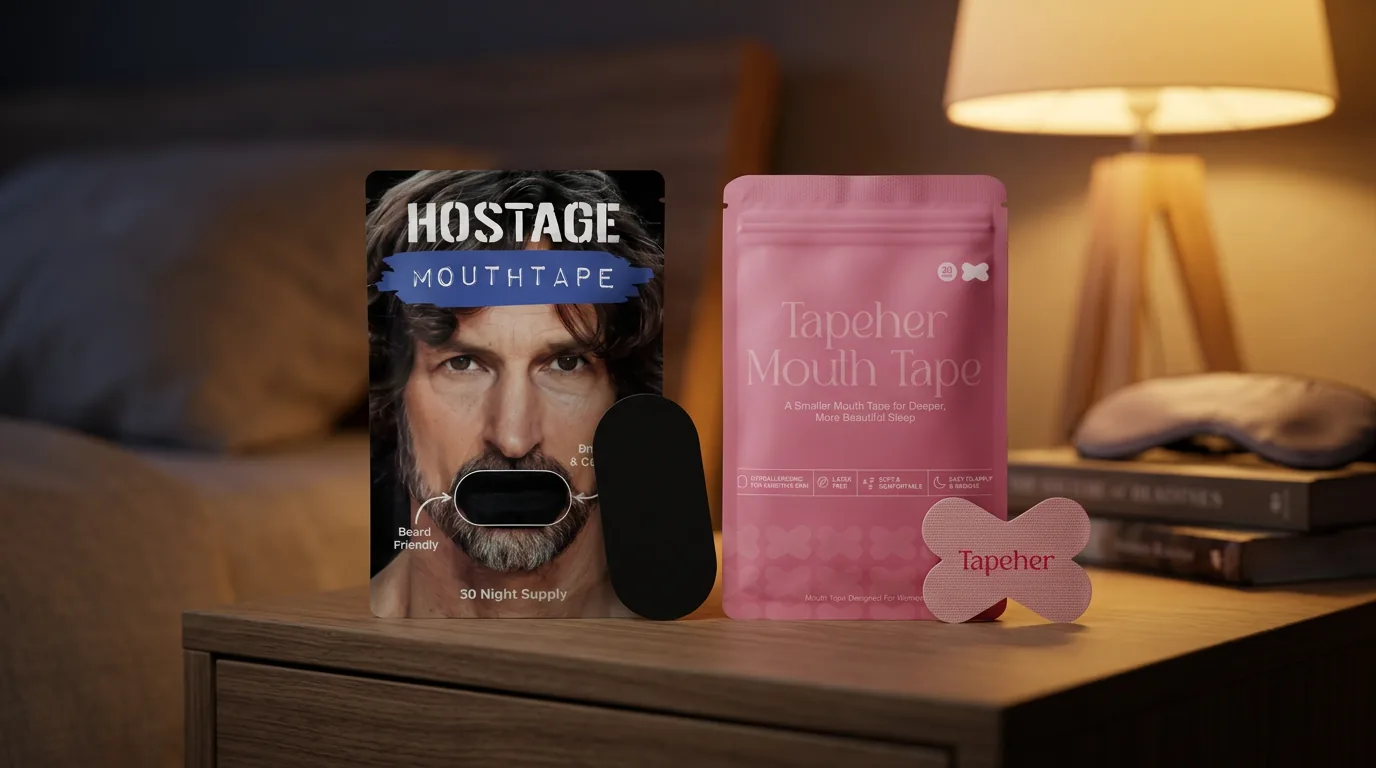
Over the past few years, mouth taping has moved from a niche biohacking practice to mainstream conversation. Podcasters, fitness influencers, and athletes have all referenced taping their lips shut at night as part of a sleep-optimization routine. Searches like "Logan Paul mouth tape," "Ashton Hall mouth tape brand," and "mouth tape Joe Rogan" reflect genuine curiosity: if someone at the top of their fitness game is doing it, should you?
The practice also got a significant cultural push from the 2020 book Breath by James Nestor, which argued that nasal breathing is dramatically superior to mouth breathing and popularized overnight taping as a way to enforce it. Nestor's book, while widely read, mixes strong physiology with some claims that researchers have since questioned — more on that below.
What matters for you is understanding what these celebrities are actually doing, what the evidence says, and — critically — whether it fits your health situation. Copying a product name without that context is where things can go wrong.
A note on celebrity endorsements: Purisia does not attribute specific brand choices to any celebrity unless those choices are officially and publicly confirmed by that person. Searches associating Logan Paul, Ashton Hall, or Joe Rogan with particular mouth tape brands reflect public speculation rather than verified endorsements. We focus on what to look for in a product rather than whose name appears on it.
What Mouth Tape Actually Is
Mouth tape is a small adhesive strip — or a lightweight fabric band — placed across the lips at bedtime. Its sole purpose is to keep the mouth closed during sleep, redirecting breathing through the nose.
The practice is built on the premise that nasal breathing is physiologically superior to mouth breathing. The nose filters, warms, and humidifies incoming air. Nasal breathing produces 5 to 20 times more nitric oxide than mouth breathing — a molecule that dilates blood vessels and plays a role in oxygen uptake. When you breathe through your mouth at night, you bypass all of that.
Mouth tape does not treat sleep disorders. It does not strengthen any muscle, reshape the jaw, or cure snoring on its own. It is a physical prompt — a gentle reminder to keep your lips together — that works best when your nasal airway is already open and unobstructed.
Products range from simple micropore tape cut into strips, to purpose-built sleep tape with skin-safe adhesive and breathable construction. The design matters more than the brand name attached to it. You can read more in our full guide to mouth tape.
Does It Work? What the Science Says
Mouth taping generates strong opinions online, so it is worth understanding what the clinical evidence actually shows — and where it is thin.
What the research supports
A retrospective clinical study of 20 patients with mild obstructive sleep apnea (AHI under 15) found that mouth taping over one week reduced the apnea-hypopnea index by 47% and the snoring index by 47%. Approximately 65% of participants saw at least a 50% reduction in snoring events. This is the most-cited clinical finding in favour of mouth taping — but it is a small, single-centre, one-week trial in a specific population, not a general-population result.
Research published in the American Journal of Respiratory and Critical Care Medicine confirms that nasal breathing produces significantly more nitric oxide than mouth breathing, with nitric oxide supporting vascular function and oxygen uptake. This physiology is solid and explains why nasal breathing during sleep is generally preferred.
Where the evidence is weak
A scoping review examining 10 studies covering 213 patients concluded that mouth taping lacks sufficient evidence for general sleep apnea treatment and that clinical benefits are limited to mild cases. The review found no consensus on benefits for broader populations.
A 2024 systematic review similarly found heterogeneous results across the literature, with little consensus on mouth taping's benefits outside of mild OSA. The review emphasized that evidence for mouth taping in general sleep-disordered breathing is minimal.
The bottom line: for healthy adults who habitually breathe through the mouth at night without any diagnosed condition, the practice is low-risk and the nasal breathing physiology is real. For anyone with a sleep or breathing diagnosis, the evidence is too thin — and the risk too real — to self-treat with tape.
Curious about why nasal breathing matters? We cover the seven most evidence-backed reasons in a dedicated guide.
Safety Concerns and Who Should Avoid It
The American Dental Association has cautioned that many people practice mouth taping based on social media without medical evaluation, creating significant health risks — particularly for those with undiagnosed nasal obstruction or airway issues.
The primary safety concern is asphyxiation risk in people with nasal obstruction. This includes allergic rhinitis, chronic rhinitis, deviated septum, enlarged tonsils, or sinus conditions. Mouth taping is explicitly contraindicated for anyone with moderate to severe obstructive sleep apnea — the studies that showed benefit specifically excluded people with nasal obstruction.
Cleveland Clinic sleep specialists note that for people with nasal congestion or breathing difficulties, mouth taping can cause severe respiratory distress. Mouth taping is not part of current clinical practice for treating any sleep disorder.
Common side effects even in suitable users include skin irritation and contact dermatitis around the lips, discomfort during removal (especially with facial hair), anxiety or claustrophobic feelings, and sleep disruption during the adjustment period. If nasal congestion develops overnight while wearing tape, breathing can become difficult.
Do not use mouth tape if you:
- Have been told you stop breathing during sleep, or snore heavily without a diagnosis
- Have chronic nasal congestion, allergies, or a deviated septum
- Have anxiety, claustrophobia, or panic disorder
- Are pregnant (especially in the first trimester)
- Have heart conditions or respiratory diseases
- Are applying it to a child
For a full breakdown of risks, see our guide to mouth tape side effects.
What to Look For Instead of Copying Celebrities
The most common mistake people make when they search for "Logan Paul mouth tape" or "Ashton Hall mouth tape brand" is assuming the celebrity's choice is automatically the right one for them. Different people have different skin types, face sizes, and health profiles. Here is what actually matters when choosing a product.
| Factor | What to look for | Red flag |
|---|---|---|
| Adhesive type | Medical-grade, hypoallergenic; silicone-based for sensitive skin | Household, masking, or duct tape |
| Base material | 95%+ cotton or silk — safest for skin contact | Undisclosed synthetic materials |
| Safety testing | Third-party PFAS testing (SGS) | No public certification data |
| Design | X-shape or H-shape for beginners; full-cover for maximum seal | Designs that create an airtight seal without any vent option |
| Beard compatibility | BeardFlex or similar technology for users with facial hair | Standard tape — will not hold on stubble |
For a deeper comparison of products scored on all these criteria, see our guide to the best mouth tape for sleeping. If material safety is your priority, the non-toxic mouth tape guide covers adhesive types, PFAS testing, and what hypoallergenic really means.
Getting Started Safely
If you have confirmed you can breathe comfortably through your nose and have no contraindications, here is a sensible approach:
- Patch test first. Apply a small piece of the tape to your wrist or inner arm for 24 hours before using it on your lips. This screens for contact sensitivity before it matters at 3 a.m.
- Try it during the day. Wear the tape for 20–30 minutes while awake and breathing normally through your nose. If you feel anxious or your nose feels blocked, stop — that is important information.
- Start with a partial-coverage design. X-shaped or H-shaped designs cover less surface area and feel less restrictive than full-lip strips. They are a gentler introduction.
- Remove slowly. In the morning, wet the edges with warm water for 30 seconds before peeling. Never rip tape off dry skin around the lips — the skin there is thin and reactive.
- Give it one to two weeks. The adjustment period for nasal breathing at night is real. Most users report the sensation normalizes within several nights.
For a complete first-timer walkthrough, see mouth tape for beginners.
Where to Go Next
The celebrity mouth tape trend is built on real physiology — nasal breathing does have documented advantages over mouth breathing. But the hype often skips the safety screening, the evidence gaps, and the question of whether the tape you choose is actually safe for your skin. Start with the science, not the celebrity. If you want to explore actual products, our best mouth tape for sleeping guide compares the top options on materials, safety testing, adhesive type, and fit — with no brand loyalty to any influencer.
References
- Huang T-W, Young T-H. Novel porous oral patches for patients with mild obstructive sleep apnea and mouth breathing. PubMed Central. pmc.ncbi.nlm.nih.gov
- Systematic review: mouth taping evidence. PLOS ONE. journals.plos.org
- Lundberg J.O. et al. Nitric oxide and the paranasal sinuses. American Journal of Respiratory and Critical Care Medicine. atsjournals.org
- Cleveland Clinic. Mouth taping. health.clevelandclinic.org
- Sleep Apnea Association. Mouth taping for sleep. sleepapnea.org
Medical disclaimer: This article is for educational purposes only and does not constitute medical advice. Mouth taping is not a treatment for sleep apnea or any medical condition. Do not use mouth tape if you have nasal obstruction, moderate-to-severe sleep apnea, respiratory conditions, anxiety disorders, or any condition affecting your ability to breathe through your nose. Consult a qualified healthcare provider before starting any sleep intervention, particularly if you snore, have been told you stop breathing during sleep, or have any related health concerns.
Recommended for you
 Mouth Tape Korea: Complete Guide to the 2026 Sleep Wellness Trend
 How Does Mouth Tape Help Your Jawline? 5 Claims Examined (2026)
 Sleep Shield Mouth Tape Review 2026: 3 Best Alternatives to Know
 PAP MD Mouth Tape Review 2026: 3 Best Alternatives to Compare
 Dream Mouth Tape Review: 3 Features to Compare Before Buying (2026)
 VIO2 Unscented Mouth Tape Reviews: 3 Best Alternatives (2026)