Can You Use Mouth Tape With CPAP: Questions to Ask First
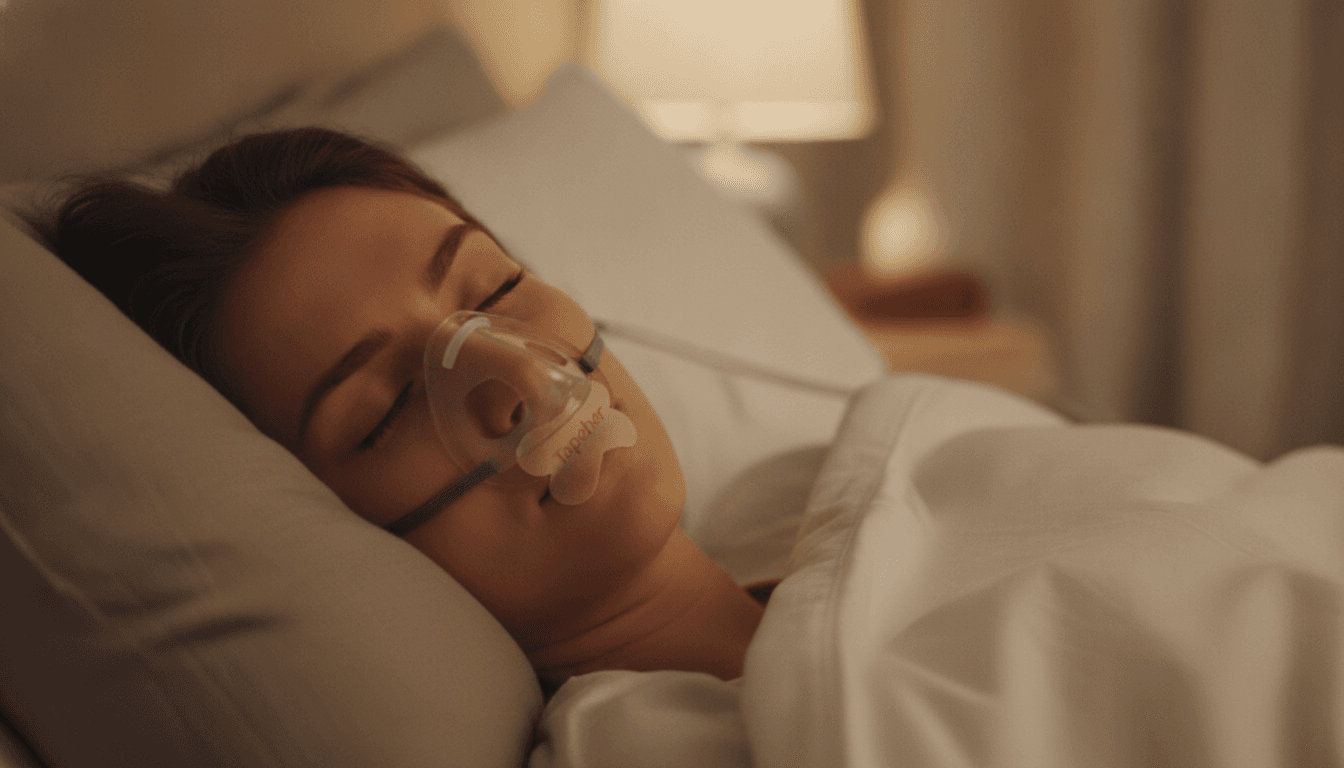
What Happens When You Open Your Mouth During CPAP
- What Happens When You Open Your Mouth During CPAP
- Can You Use Mouth Tape With CPAP? The Short Answer
- 5 Questions to Ask Before You Try Mouth Tape With CPAP
- What the Research Shows
- Alternatives to Mouth Tape for CPAP Mouth Breathers
- How to Start Safely (If Cleared by Your Doctor)
- Why Nasal Breathing Matters for CPAP Therapy
Can you use mouth tape with CPAP therapy? The short answer is: sometimes — but only under specific conditions that your sleep specialist needs to confirm first. At Purisia, we walk you through the mechanism behind mouth breathing during CPAP, what the latest research actually shows, and the five questions every CPAP user should ask before reaching for the tape.
Mouth tape can help some CPAP users — but only those with nasal masks, no nasal obstruction, and a specialist sign-off. It is not a universal fix.
Mouth tape is a low-cost add-on that may reduce mouth leak during nasal CPAP therapy — but it is contraindicated for anyone with chronic nasal obstruction, and research benefits outside mild sleep apnea remain limited. Always discuss with your sleep medicine provider before trialing it.
Key Highlights
- Around 57% of CPAP users with nasal masks experience mouth leak during sleep — a problem that directly undermines therapy pressure.
- Mouth leak during nasal CPAP can reduce delivered pressure by 10–15%, meaning your prescribed therapy may not be reaching your airway effectively.
- Approximately 30% of adults have chronic nasal obstruction — a condition that makes mouth tape dangerous rather than helpful.
- A 2025 randomized crossover study found mouth tape improved CPAP usage from 23 to 27 nights per month among nasal-mask users with no nasal obstruction.
- The Mayo Clinic recommends a stepwise approach: start with humidification, then consider a chin strap or full-face mask before adding mouth tape.
What Happens When You Open Your Mouth During CPAP
CPAP therapy works by delivering a continuous stream of pressurized air through your airway to prevent the tissue collapses that cause obstructive sleep apnea. For that pressure to do its job, the circuit needs to stay sealed. When you breathe through your mouth during sleep, the seal breaks — and pressure escapes.
That leak is not trivial. Research shows that mouth leak during nasal CPAP therapy can cause a 10–15% drop in the pressure actually reaching your upper airway. If your machine is set to deliver 10 cmH2O and you are losing pressure to mouth leak, the effective pressure at your airway falls short of what your sleep specialist prescribed — and the therapy stops working as intended.
Mouth leak is also far more common than most users realize. Studies show roughly 57% of people using nasal CPAP masks experience mouth leak during sleep. Yet many only notice it as a dry mouth, sore throat, or unexplained rise in their AHI score — not as an obvious air gush. That subtlety is part of why the problem persists: it is easy to miss without reviewing your device's nightly data.
Beyond pressure loss, mouth leak disrupts humidity delivery, irritates the throat, and can cause autotitrating CPAP machines to ramp up pressure unnecessarily over time. Identifying whether you have mouth leak — and why — is the essential first step before deciding whether mouth tape, a chin strap, or a mask change is the right solution for your situation.
Can You Use Mouth Tape With CPAP? The Short Answer

Yes — but only in a narrow set of circumstances. Mouth tape is a reasonable add-on for CPAP users who meet all of the following conditions:
- You are using a nasal mask or nasal pillow mask (not a full-face mask).
- Your CPAP therapy data or symptoms confirm that mouth leak is occurring.
- You have no chronic nasal congestion, structural obstruction, or anatomical narrowing.
- Your sleep specialist has reviewed your case and confirmed it is appropriate.
That last condition is not a formality. Around 30% of adults live with some form of chronic nasal obstruction — from structural causes such as a deviated septum or nasal polyps, or from persistent inflammation like allergic rhinitis. For this group, taping the mouth shut during sleep creates a real asphyxiation risk. If your primary breathing route is already compromised and you block your secondary one, the consequences can be serious. This is why the question is not simply "can you?" but "should you, given your specific nasal anatomy and medical history?"
There is also a mask-type consideration that many articles skip entirely. If you are currently using a full-face mask — one that covers both your nose and mouth — mouth tape adds no benefit. The mask already prevents oral breathing and maintains the pressure seal regardless of whether your mouth opens. Tape is relevant only for nasal masks and nasal pillow masks, where the mouth remains fully uncovered during sleep.
5 Questions to Ask Before You Try Mouth Tape With CPAP
Before adding anything to your CPAP routine, take these five questions to your next appointment with your sleep specialist or respiratory therapist. The answers will determine whether mouth tape is a good fit for you — or whether a different approach makes more sense.
1. Are you using a nasal or full-face CPAP mask?
This is the foundational question because the answer determines whether mouth tape can do anything useful at all. There are three main mask categories: nasal masks (a triangular cushion sealing over the nose), nasal pillow masks (small cushions that seal at the nostril openings), and full-face masks (a larger seal covering both nose and mouth). Mouth tape is only relevant for the first two categories, where the mouth is left uncovered.
If you are not certain which mask type you have, check your equipment label, prescription paperwork, or the manufacturer's model listing. Your CPAP supplier or home health equipment provider can also confirm it. This single answer determines whether the rest of this conversation with your specialist is worth having. If you have a full-face mask, you likely do not need mouth tape — and may benefit more from a pressure adjustment or humidification change instead.
2. Does your CPAP data actually show mouth leaks?
Modern CPAP machines log leak data every night and classify it into two types: intentional leak (from built-in exhaust ports that vent exhaled CO2) and unintentional leak (the kind that signals a problem with your mask seal or oral breathing). Before assuming dry mouth or a sore throat is caused by mouth leak, it is worth reviewing your actual therapy report.
Most major CPAP brands offer companion apps: ResMed's myAir and Philips' DreamMapper both display simplified nightly data. The free open-source tool OSCAR can pull full data from your SD card and display detailed leak graphs, AHI breakdown by event type, and pressure curves. A consistent spike in unintentional leak across multiple nights is a much clearer signal than a single symptom alone. Your sleep specialist can also pull a full therapy report at your next visit and walk through what the data shows for your specific setup.
3. Do you have nasal congestion, obstruction, or structural narrowing?
This question is non-negotiable for safety. Approximately 30% of adults have chronic nasal obstruction from structural causes (deviated septum, nasal polyps, turbinate hypertrophy) or persistent inflammatory causes (allergic rhinitis, chronic sinusitis). For this group, mouth tape is contraindicated. Sealing the mouth when nasal passages are compromised is dangerous — and even temporary congestion from a seasonal cold is enough reason to skip tape that night.
Signs of nasal obstruction worth discussing with your specialist include consistent mouth breathing during the day, a frequent feeling that one or both nasal passages are partially blocked, snoring that does not improve with positional changes, and difficulty breathing through the nose during light physical activity. If you are unsure whether your nasal airflow is adequate, an ENT evaluation is the appropriate step before trialing any mouth tape — not a self-assessment.
4. Has your AHI been stable on your current setup?
Your apnea-hypopnea index (AHI) measures how many breathing disruptions occur per hour of sleep. A well-controlled AHI — generally below 5 events per hour while on therapy — indicates your current setup is working. If your AHI has been trending upward despite regular device use, mouth tape alone will not fix a fundamentally suboptimal setup. The root cause is more likely a pressure titration issue, a mask seal problem, or a change in your anatomy or sleep position over time.
Layering a mouth tape trial over a struggling therapy setup makes the data harder to interpret and may delay identifying the actual problem. Your CPAP machine and your specialist's therapy report can both show your AHI trend over weeks or months. Bringing that data to your appointment gives the conversation a factual foundation rather than impressions.
5. Has your sleep specialist reviewed your therapy data recently?
Sleep medicine needs evolve as your health changes. Body weight, nasal health, sleep position habits, and age all affect how CPAP therapy performs over time. A brief telehealth check-in or an in-person visit to review 30–90 days of therapy data can identify whether your current setup is still optimized — and whether any add-on like mouth tape is appropriate for where your therapy currently stands.
Your specialist can also flag contraindications that self-assessment might miss, including emerging patterns of central sleep apnea events that require a completely different approach than adding accessories. Many patients go years between specialist visits because their therapy feels fine, but a brief data review can catch efficiency losses and early problems before they become significant. That review is the right starting point before any change to your CPAP routine.
What the Research Shows
The clinical literature on mouth tape for CPAP is growing but still limited. Here is an honest account of what the evidence actually shows — without inflating findings in either direction.
A 2025 randomized crossover study
The strongest recent evidence comes from a randomized crossover trial published in December 2025. The study enrolled 62 adults using nasal CPAP masks and had participants rotate between their usual therapy setup and a setup with mouth tape added. Results showed that CPAP usage increased from a median of 23 to 27 nights per month when mouth tape was in use — a meaningful improvement in a real-world adherence measure. All participants had confirmed mouth leak and no nasal obstruction. Results cannot be extrapolated to CPAP users generally, especially those with any nasal restriction.
The systematic review picture
A systematic review covering 10 studies and 233 patients examined oral interventions for CPAP mouth leak more broadly. The review found limited benefit outside mild obstructive sleep apnea cases, and specifically flagged safety risks for patients with nasal obstruction. Researchers called for larger, better-controlled trials before oral sealing interventions could be broadly recommended. The overall evidence grade remains low to moderate — which is exactly why specialist review before any individual trial matters.
Taken together, the research supports a cautious position: mouth tape may genuinely help a specific subset of CPAP users, but the benefit does not extend universally, the safety profile requires clear nasal passages, and the evidence base is not yet strong enough to recommend it as a routine adjunct without clinical oversight.
Alternatives to Mouth Tape for CPAP Mouth Breathers
Mouth tape is one of several options for managing mouth leak during CPAP therapy. The alternatives below address the same underlying problem — mouth opening during sleep — with varying levels of evidence and clinical invasiveness.
| Approach | How It Works | Best Suited For | Key Limitation |
|---|---|---|---|
| Heated humidification | Adds moisture to pressurized airflow; reduces dryness that drives mouth opening | Mouth breathing caused by dryness or throat irritation | Does not seal the mouth; pressure leak continues if mouth opens |
| Chin strap | Elastic band supports the jaw and discourages it from dropping during sleep | Mild jaw drop; users who prefer non-adhesive options | Mixed adherence evidence; may cause jaw discomfort over time |
| Full-face mask | Covers both nose and mouth; eliminates mouth leak entirely without taping | Chronic mouth breathers; confirmed nasal obstruction | Requires higher average pressure (9.3 vs 8.3 cmH2O); larger footprint |
| Oral shield device | Intraoral appliance seals the oral cavity from inside; used with nasal mask | Users who want nasal-level pressure with oral sealing | Requires professional fitting; less widely available |
| Mouth tape | Adhesive strip seals the lips closed; used with nasal masks only | Nasal mask users with confirmed leak and no nasal obstruction | Contraindicated with nasal congestion; evidence base still emerging |
For a head-to-head comparison of two of the most commonly discussed options, see our full guide to chin strap vs. mouth tape — it covers fit, comfort, and the evidence side-by-side for CPAP users.
How to Start Safely (If Cleared by Your Doctor)
If your sleep specialist has reviewed your therapy data, confirmed no nasal obstruction, and given you clearance to try mouth tape, the following steps can help you start responsibly.
- Choose a purpose-made sleep tape. Dedicated sleep mouth tapes are designed to peel off easily if you need to open your mouth in the night and are formulated for repeated skin contact. They are preferable to general medical or athletic tape for overnight use. Our guide to mouth tape for sleep covers the main formats and how their fits compare.
- Do a waking trial first. Before sleeping with tape applied, sit with it in place for 15 to 30 minutes during an evening activity. Confirm that you can breathe comfortably through your nose with your mouth sealed before committing to a full night. Any sense of nasal restriction is a reason to stop.
- Apply correctly for skin safety. Clean, dry skin, centered placement over both lips, and gentle removal in the morning reduce irritation risk. See our step-by-step instructions on how to use mouth tape for detail on correct placement and common mistakes to avoid.
- Never tape on nights with nasal congestion. If you feel any nasal restriction before bed, or wake with a blocked nose in the night, remove the tape immediately. This applies to seasonal allergies, head colds, or any other cause of temporary nasal obstruction.
- Check your CPAP data the next morning. Compare your unintentional leak graph and AHI the morning after using tape. A drop in leak alongside a stable or improved AHI is a positive signal. If AHI rises, pause the trial and report it to your specialist.
For a broader look at the science of nasal breathing and mouth tape use outside the CPAP context, see our pillar guide on mouth tape.
Why Nasal Breathing Matters for CPAP Therapy
The preference for nasal breathing during CPAP is not arbitrary. Nasal airflow provides physiological functions that oral breathing cannot replicate — and those advantages compound when layered onto the airway support CPAP provides.
The nasal passages filter, warm, and humidify incoming air before it reaches the lower airway — functions the oral route does not perform. Research shows that nasal breathing produces approximately 20% more oxygen uptake than oral breathing and also increases nitric oxide production. Nitric oxide is a vasodilator that supports healthy blood vessel function and plays a role in immune and cardiovascular regulation. For CPAP users, who often have comorbid cardiovascular risk factors, these downstream effects of nasal breathing matter beyond just maintaining pressure delivery.
From a mechanical standpoint, nasal masks also require lower average prescribed pressure — approximately 8.3 cmH2O — compared to full-face masks at around 9.3 cmH2O. That difference is meaningful in practice: lower pressure typically means less noise, fewer pressure-related arousals, and better long-term adherence. Mouth leak during nasal CPAP use undermines this lower-pressure advantage by causing the machine to compensate, which can gradually inflate autotitrated pressure settings over time.
Keeping nasal airflow central to your therapy design is a clinical priority, not just a comfort preference. Whether the fix is a chin strap, a full-face mask, or mouth tape under specialist guidance, addressing mouth breathing directly improves the effectiveness of what is already the most reliable treatment for obstructive sleep apnea.
Where to Go Next
If you are a nasal CPAP user with dry mouth, sore throat, or a rising AHI, mouth tape is worth raising with your sleep specialist — armed with the five questions in this guide. If your nasal passages are clear and your specialist confirms it is appropriate, a short waking trial followed by an overnight trial is a low-cost, low-risk starting point. If you have any nasal congestion or obstruction, explore a chin strap or full-face mask first. Either way, reviewing your CPAP therapy data with a professional is the single highest-value step you can take before changing anything in your routine.
References
- Randomized crossover trial: mouth tape and CPAP adherence in nasal mask users. Journal of Clinical Sleep Medicine (December 2025).
- Systematic review of oral interventions for CPAP mouth leak — 10 studies, 233 patients. PLOS ONE (May 2025).
- Mayo Clinic. CPAP: How to address uncomfortable side effects.
- CPAP mask type and average pressure: nasal vs full-face mask comparison. PubMed Central.
- Chin strap as CPAP adjunct for mouth breathing: review of adherence outcomes. Journal of Clinical Sleep Medicine (AASM).
Recommended for you
 Mouth Tape for Sleep Apnea: 6 Safety Questions to Ask First (2026)
 Mouth Tape Korea: Complete Guide to the 2026 Sleep Wellness Trend
 How Does Mouth Tape Help Your Jawline? 5 Claims Examined (2026)
 Logan Paul Mouth Tape Trend: Best 5 Safety Facts to Know in 2026
 Sleep Shield Mouth Tape Review 2026: 3 Best Alternatives to Know
 PAP MD Mouth Tape Review 2026: 3 Best Alternatives to Compare