Mouth Tape and Sleep Apnea: Safety Questions Before Trying It
Mouth tape is not a treatment for sleep apnea — but many people with OSA symptoms are trying it anyway. This guide covers what the current research says, who should never try mouth tape, and the 6 safety questions to ask your doctor before you open that packet.
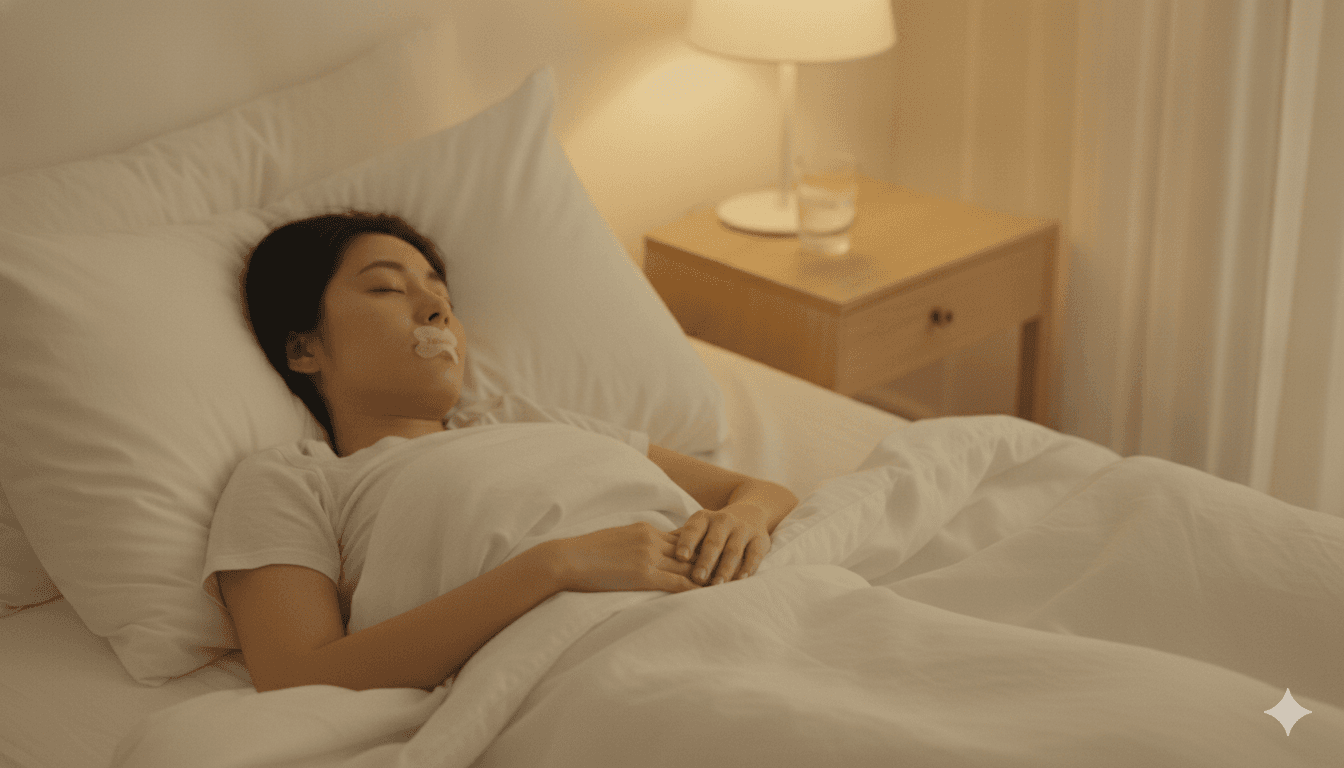
What Is Sleep Apnea — and Why Does It Matter?
- What Is Sleep Apnea — and Why Does It Matter?
- Why People With OSA Symptoms Consider Mouth Tape
- What Research Says About Mouth Tape for Sleep Apnea
- 6 Safety Questions to Ask Before Trying Mouth Tape
- When Mouth Tape May Be Appropriate — the Narrow Case
- How to Get Properly Diagnosed for Sleep Apnea
- Where to Go Next
Mouth tape for sleep apnea is one of the most searched — and most misunderstood — topics in sleep health right now. If you have been diagnosed with obstructive sleep apnea (OSA), or suspect you might have it, the safety stakes are higher than for the average person. At Purisia, we have put together this safety briefing so you know exactly what questions to ask before you try it.
Mouth tape is not a treatment for sleep apnea — and for many people with OSA it carries real risk. Always get a formal diagnosis and speak with a doctor before trying it.
If you have confirmed OSA, mouth tape does not treat it. If you have a clear nasal airway, no OSA diagnosis, and your doctor approves, it may be a reasonable adjunct for mouth breathing or mild snoring. This article helps you ask the right questions before you decide.
Key Highlights
- Sleep apnea affects an estimated 936 million adults worldwide — a large proportion remain undiagnosed.
- Mouth tape does not treat sleep apnea; used without a prior diagnosis, it can delay life-saving intervention.
- A 2025 systematic review in PLOS ONE examined mouth tape across 10 studies and 213 patients — benefits were most consistent in mild cases with a clear nasal airway.
- Nasal obstruction is a hard contraindication — taping with a blocked nose creates an asphyxiation risk.
- CPAP users with mouth leaks represent the most evidence-supported use case for mouth tape as an adjunct to therapy.
- The AASM recommends a polysomnography (PSG) or validated home sleep apnea test (HSAT) as the diagnostic standard — not a snoring app.
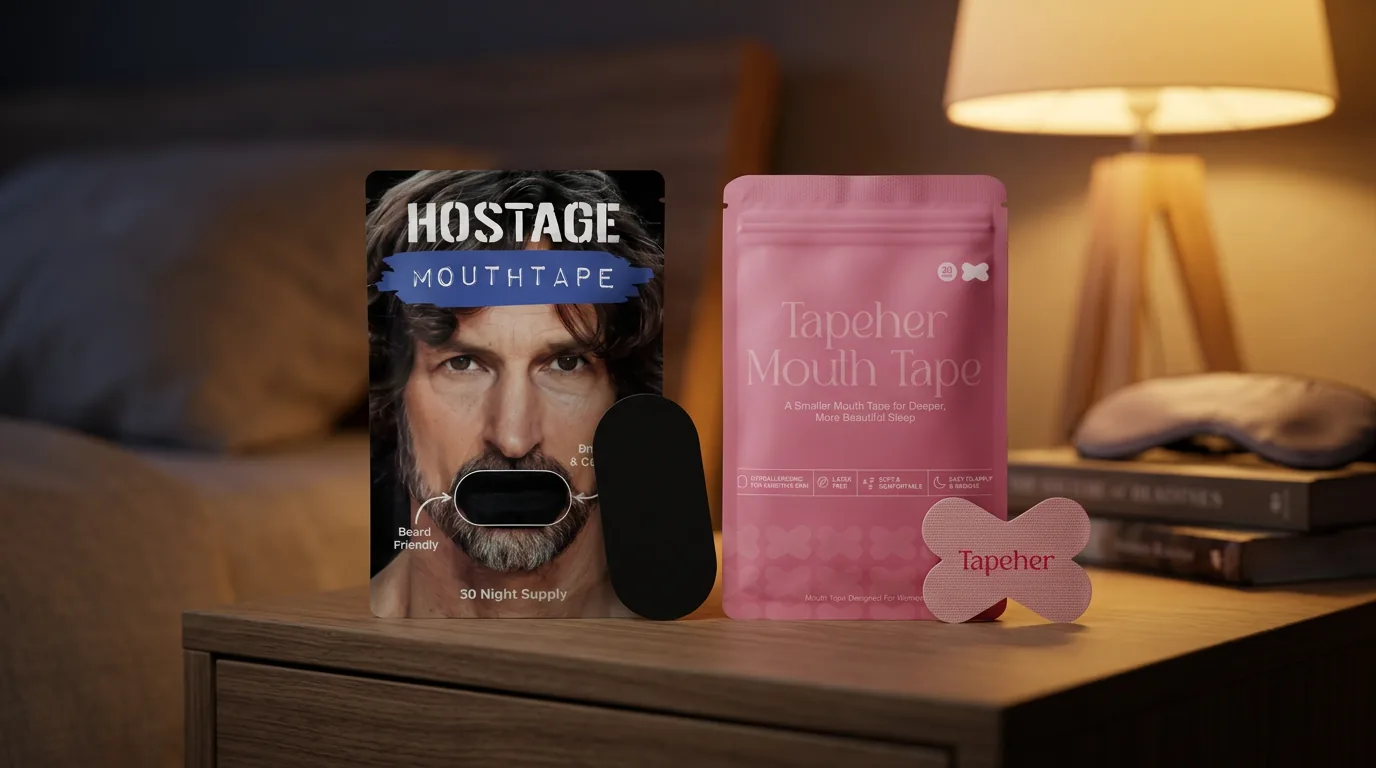
What Is Sleep Apnea — and Why Does It Matter?
Obstructive sleep apnea (OSA) is a condition in which the upper airway repeatedly collapses during sleep, causing breathing pauses that last at least 10 seconds each. Every pause triggers a brief micro-arousal that the sleeper rarely remembers, but which fragments deep sleep and places ongoing stress on the cardiovascular system throughout the night.
OSA affects an estimated 34% of men and 17% of women globally, with total prevalence reaching approximately 936 million adults worldwide — and a large proportion remain undiagnosed because their symptoms are attributed to ordinary tiredness or loud snoring rather than a treatable medical condition.
Severity is classified using the Apnea–Hypopnea Index (AHI), which counts the average number of breathing disruptions per hour of sleep. The American Academy of Sleep Medicine (AASM) defines mild OSA as an AHI of 5–15 events per hour, moderate as 15–30, and severe as more than 30 events per hour.
The health stakes of leaving it untreated are significant. Untreated OSA is associated with approximately double the cardiovascular risk, including elevated rates of hypertension, atrial fibrillation, and stroke. For anyone in a high-risk group, diagnosing and managing OSA is a clinical priority — not an optional wellness consideration.
Why People With OSA Symptoms Consider Mouth Tape
There is an understandable logic to the interest. Mouth breathing during sleep bypasses the nasal passages, which filter and humidify incoming air, and is associated with airway dryness, snoring, and positional airway collapse. The idea behind mouth tape is simple: keep the mouth closed overnight, encourage nasal breathing, and reduce the cascade of problems that mouth breathing contributes to.
Add to this the widely documented frustration with CPAP compliance. CPAP — continuous positive airway pressure — is the gold-standard treatment for moderate-to-severe OSA, yet research shows roughly 50% of patients discontinue use within the first year, citing discomfort, dryness, claustrophobia, or chronic mask leaks as the reasons they stop.
Some of those patients then search for alternatives. Mouth tape enters that conversation as an accessible, low-cost option that appears — on the surface — easy to try. But accessibility is not the same as safety, and the two groups most likely to search for alternatives (people with OSA symptoms and CPAP non-compliers) are precisely the people who need medical guidance before trying any sleep intervention.
What Research Says About Mouth Tape for Sleep Apnea
The evidence base is still emerging, but two data points anchor the current picture and are relevant to anyone making this decision.
A 2025 systematic review published in PLOS ONE analyzed 10 studies involving 213 patients and found that mouth tape and mouth-closing devices improved snoring parameters and mild OSA metrics in some participants. Critically, benefits were most consistent among people with mild OSA and a clear, unobstructed nasal airway — not across all severity levels or patient profiles.
Clinicians at the Cleveland Clinic caution that mouth tape is not appropriate for people with moderate or severe OSA, nasal obstruction, or several common comorbidities, and that it should never replace established OSA treatment. The concern is not minor: if structural airway obstruction is occurring during sleep, taping the mouth removes a potential last-resort route for breathing.
The Sleep Foundation notes that while mouth breathing during sleep is associated with worse sleep quality outcomes, using tape to address it without first ruling out OSA risks treating a symptom while leaving the cause unmanaged.
The practical summary: mouth tape may genuinely help certain people breathe better overnight. But for people with undiagnosed or undertreated OSA, it could reduce snoring while apnea events continue — and while blood oxygen saturation (SpO2) continues to drop below 90% during those events, a state called hypoxia that carries its own serious downstream risks. A quieter night is not the same as a safer one.
6 Safety Questions to Ask Before Trying Mouth Tape
1. Have you been formally tested for sleep apnea?
This is the foundational question — and it should be answered before any mouth-taping experiment. Snoring, waking unrefreshed, morning headaches, and excessive daytime sleepiness are common OSA symptoms. They are also the exact reasons many people begin searching for mouth tape. If any of these apply to you, a sleep apnea evaluation should come before a roll of tape.
The reason is direct: if you have OSA and mouth tape reduces your snoring without resolving the underlying apnea, you may feel marginally better while the condition continues to place nightly strain on your cardiovascular system. The AASM recommends a polysomnography (PSG) conducted in a sleep lab, or a validated home sleep apnea test (HSAT), as the diagnostic standard — not a consumer sleep tracker or a snoring detection app.
2. Do you have nasal obstruction?
Nasal obstruction — from a deviated septum, chronic congestion, nasal polyps, or seasonal allergic rhinitis — is a hard contraindication for mouth taping because sealing the mouth while the nasal airway is compromised creates an asphyxiation risk. If your nose is meaningfully blocked and your mouth is taped shut, you have no safe airway route.
Even temporary nasal congestion — a head cold, seasonal allergies on a bad day — is enough to make mouth tape dangerous on that particular night. The practical test: can you breathe comfortably through your nose alone for a full minute? If the answer is no, stop there. Address the nasal issue with a doctor before revisiting mouth tape.
3. Are you on CPAP, and is mouth leakage the specific problem?
This is the one scenario where the evidence is most supportive of mouth tape. CPAP delivers pressurized air to keep the airway open — but when the mouth falls open during sleep, air escapes and the therapeutic pressure drops below the effective threshold. Mouth tape in this context is used to seal the mouth and maintain consistent pressure throughout the night. This is an adjunct to established treatment, not a replacement for it.
If you are on CPAP and experiencing persistent mouth leaks despite a well-fitted mask, discussing mouth tape — or upgrading to a full-face mask — with your sleep physician is a reasonable conversation. If you are considering mouth tape as a way to avoid starting CPAP, that is an entirely different and far more cautious discussion that requires medical supervision. We cover this specific scenario in detail in our guide on using mouth tape with CPAP.
4. Have you spoken with a doctor or sleep specialist?
Mouth tape is sold over the counter with no prescription, which can give the impression it is unreservedly safe for everyone. It is not. A sleep specialist can evaluate your symptoms against your full medical history, determine whether a sleep study is warranted, and tell you definitively whether any form of mouth-taping intervention is appropriate for you.
This conversation is especially important if you are over 40, have a neck circumference above average, are overweight or obese, or have a family history of sleep apnea — all established risk factors that raise the prior probability of OSA significantly.
5. Do any of the clinical contraindications apply to you?
Contraindications identified by clinical experts include: nasal obstruction of any degree, active respiratory illness, moderate or severe OSA, claustrophobia, conditions affecting swallowing reflexes, and the use of certain medications that cause nasal congestion as a side effect. Children are generally outside the scope of adult guidance on mouth tape as well.
Going through this list with your doctor takes minutes and could prevent a genuinely serious adverse event. It is not an optional step for anyone with a complex health history.
6. Could your snoring actually be OSA in disguise?
Snoring and sleep apnea are not the same condition — but they frequently overlap. Many people with OSA snore loudly; many habitual snorers do not have OSA. The clinically significant problem is that there is no reliable way to distinguish the two without a sleep study.
Some people with OSA may notice a reduction in snoring after using mouth tape — not because the apnea is resolved, but because airflow dynamics shift slightly. A quieter night does not mean safe, unobstructed breathing. Apnea events can continue silently while SpO2 dips below 90%, accumulating what researchers refer to as hypoxic burden — sustained low-oxygen exposure that increases long-term cardiovascular and metabolic risk.
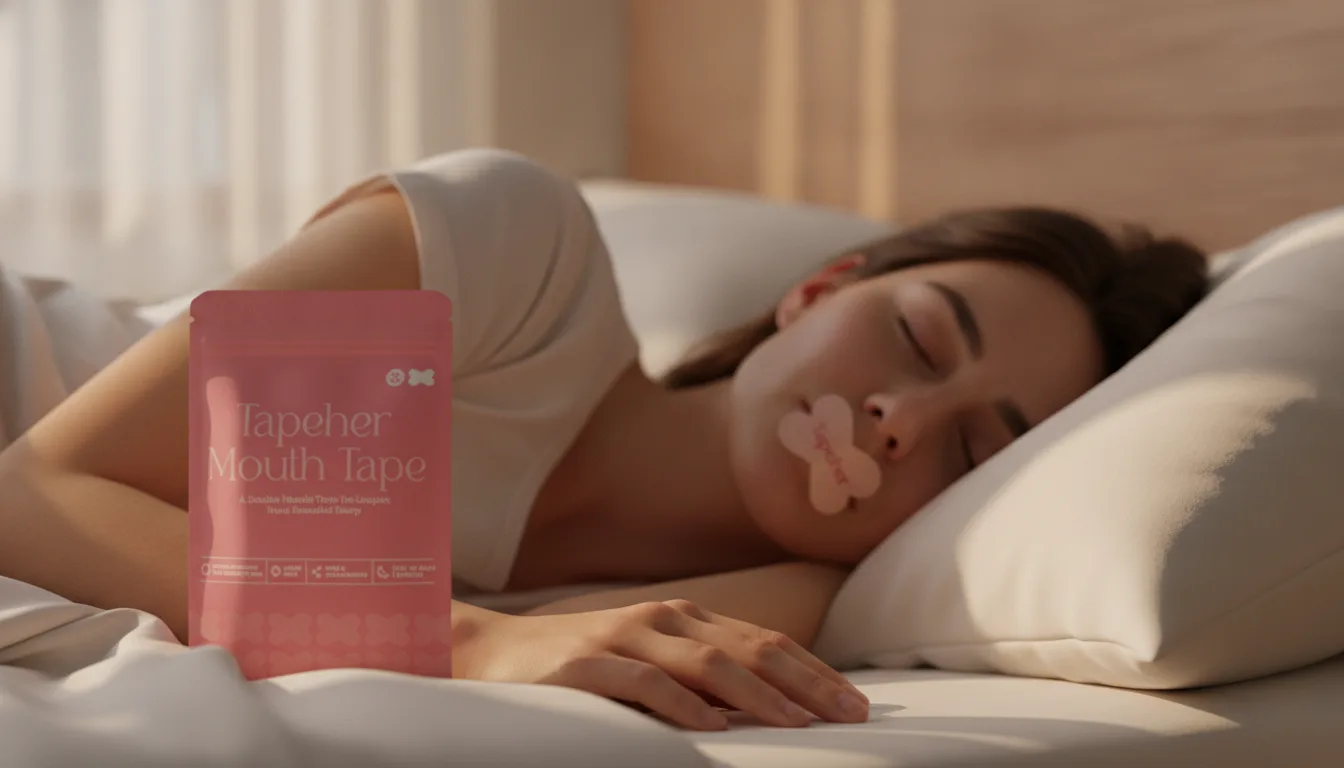
When Mouth Tape May Be Appropriate — the Narrow Case
There is a subset of people for whom mouth tape is a reasonable, evidence-informed option. They share several characteristics that matter:
- They have been formally evaluated and do not have OSA — or have only very mild OSA that a sleep physician considers managed and stable.
- They have a clear nasal airway — no chronic congestion, no structural nasal blockage, and no active illness at the time of use.
- Their concern is mouth breathing or mild snoring — not the daytime sleepiness, gasping episodes, or unrefreshing sleep that indicate something more serious.
- They have received explicit clearance from a doctor after a review of their personal medical history and risk factors.
- CPAP users with confirmed mouth leaks — where tape is used as a clinician-approved adjunct to maintain consistent therapeutic pressure.
If you fall clearly into this group, the next step is understanding how to approach mouth tape safely and gradually. Our guide to mouth taping walks through the practical steps, including how to start with a partial strip rather than full coverage and what sensations to expect. Understanding the benefits of nasal breathing can also help you frame realistic expectations about what tape can realistically contribute to your sleep quality.
And if you want to understand the documented downsides before committing, the side effects of mouth tape article covers every reported adverse effect in the same evidence-first format — from minor skin reactions to the psychological discomfort of a sealed mouth during sleep.
How to Get Properly Diagnosed for Sleep Apnea
If any of the six questions above raised a concern, the appropriate next step is a sleep apnea evaluation — not further research about tape products.
The AASM diagnostic pathway begins with a clinical assessment of symptoms and established risk factors, followed by a formal sleep study. The in-lab polysomnography (PSG) is the comprehensive gold standard, measuring brain-wave activity, blood oxygen levels, heart rate, respiration, and body movement simultaneously across a full night. For patients at lower clinical risk, a validated home sleep apnea test (HSAT) is a more accessible option — a portable device worn overnight at home that measures airflow, respiratory effort, and oxygen saturation.
Once you have an AHI result, your doctor can stage OSA severity and recommend treatment accordingly. The AASM treatment ladder progresses from lifestyle changes and positional therapy for very mild cases to CPAP, BiPAP, or a mandibular advancement device for moderate-to-severe OSA. Mouth tape does not appear on this treatment ladder — and it should not be used to defer the diagnosis process.
If your sleep study returns a normal result and OSA is ruled out, you and your doctor can then have a much more relaxed and evidence-based conversation about whether chronic mouth breathing is affecting your sleep quality — and whether tools like mouth tape might be a useful, low-risk addition to your routine.
Where to Go Next
The Bottom Line on Mouth Tape and Sleep Apnea
Mouth tape is not a treatment for sleep apnea and should never be used as a substitute for diagnosis or clinical care. If you have symptoms that could indicate OSA — snoring, unrefreshing sleep, morning headaches, daytime fatigue — see a sleep specialist before any mouth-taping intervention. For people who have been properly evaluated, have a clear nasal airway, and receive medical clearance, mouth tape can be a reasonable low-risk adjunct. The six safety questions in this guide are your starting checklist.
References
- Systematic review: mouth-closing devices for snoring and OSA. PLOS ONE (2025).
- Cleveland Clinic Health Essentials. Mouth Taping for Sleep: Does It Work and Is It Safe?
- Sleep Foundation. Mouth Taping for Sleep.
- OSA Epidemiology Review. NIH/PMC (2021).
- American Academy of Sleep Medicine. Diagnostic Testing for Adult Obstructive Sleep Apnea.
- Cardiovascular complications of obstructive sleep apnea. NIH/PMC.
Recommended for you
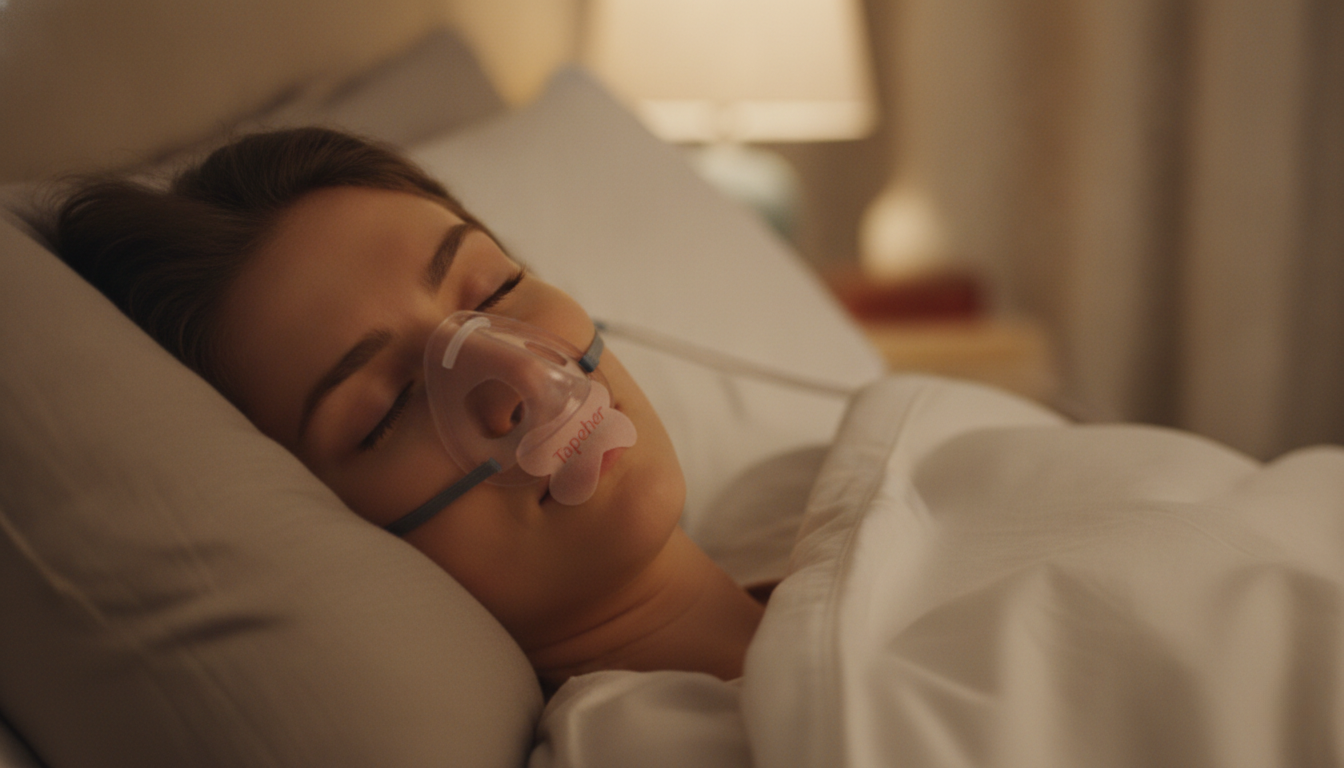 Can You Use Mouth Tape With CPAP: Questions to Ask First | Purisia
 Mouth Tape Korea: Complete Guide to the 2026 Sleep Wellness Trend
 How Does Mouth Tape Help Your Jawline? 5 Claims Examined (2026)
 Logan Paul Mouth Tape Trend: Best 5 Safety Facts to Know in 2026
 Sleep Shield Mouth Tape Review 2026: 3 Best Alternatives to Know
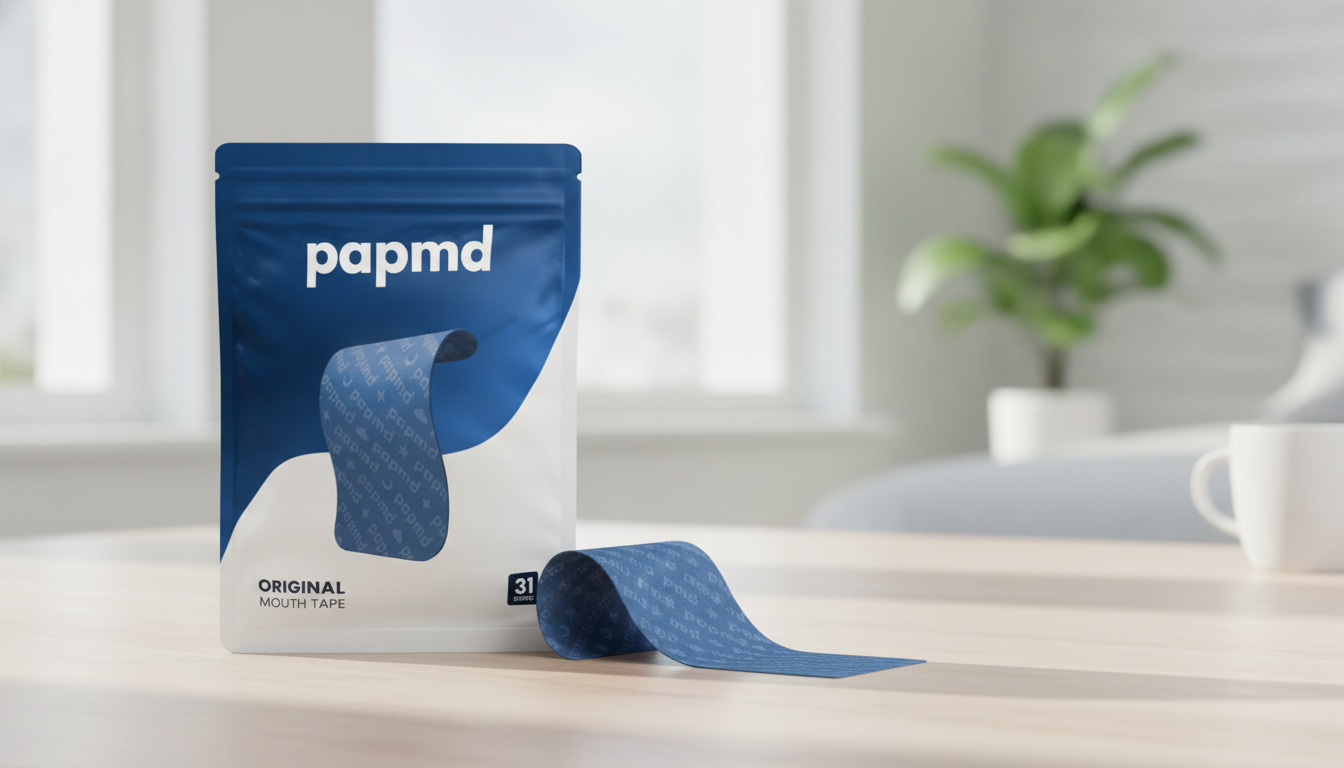 PAP MD Mouth Tape Review 2026: 3 Best Alternatives to Compare