Does Mouth Tape Help With Snoring: What to Know Before Trying It
Does mouth tape help with snoring? A systematic review of 233 patients found limited benefit and documented safety risks, and major sleep bodies don't recommend it. Here's the honest evidence, who should avoid it, and safer first steps.
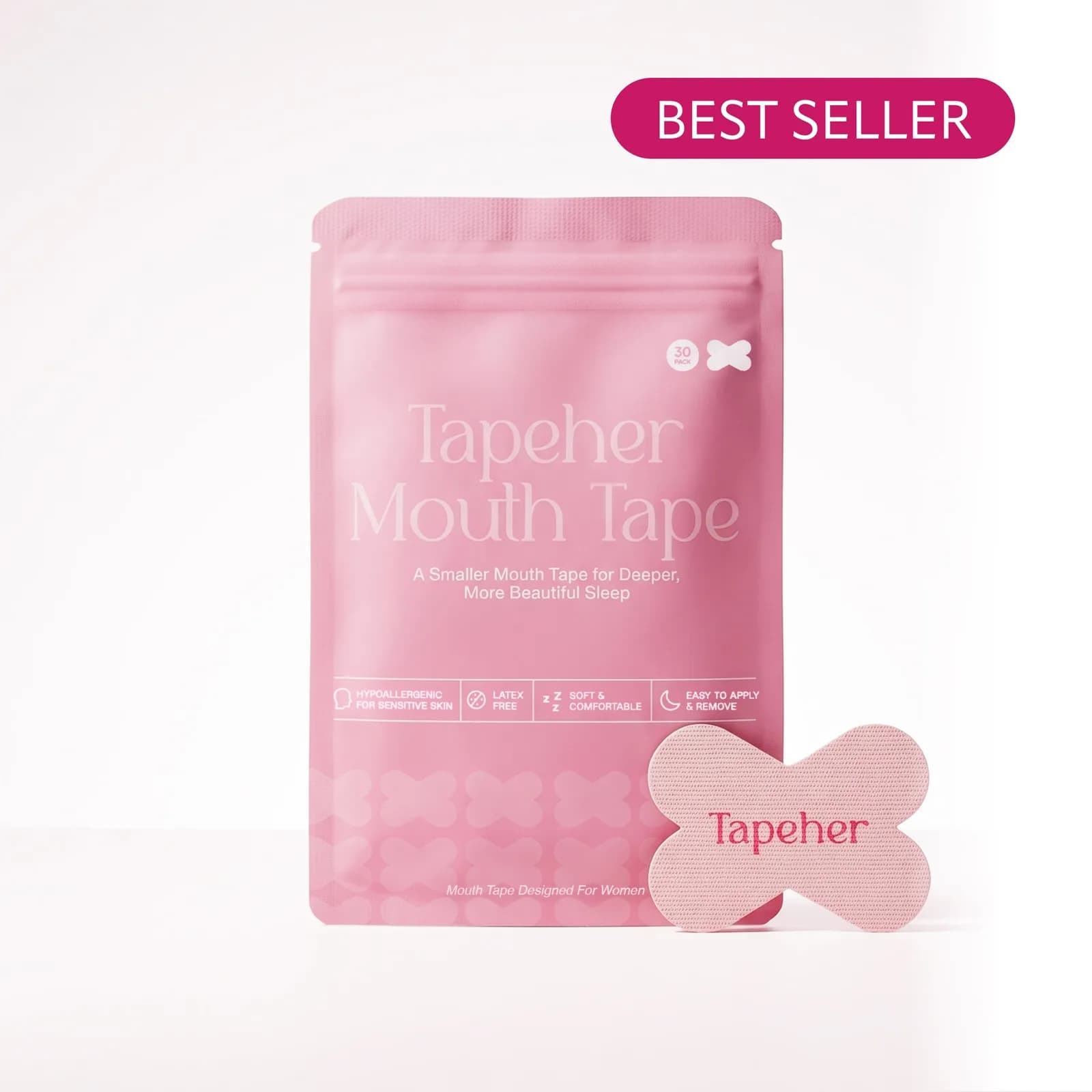
Does mouth tape help with snoring? What the evidence says
Does mouth tape help with snoring? The honest answer, based on the current evidence, is: not reliably, and not without risk for some people. A 2025 systematic review of 233 patients across 10 studies found only limited clinical benefit — and documented real safety concerns, especially for anyone with undiagnosed sleep apnea or nasal blockage. Before you tape your mouth shut tonight, here's what the research, Cleveland Clinic, and the American Academy of Sleep Medicine actually say.
Evidence for mouth tape and snoring is limited and mixed — it is not a substitute for a sleep apnea diagnosis or treatment.
If your snoring is loud, habitual, or paired with daytime fatigue, see a clinician before trying mouth tape — it is not designed to diagnose or treat sleep apnea. If you're cleared to experiment with light nasal-breathing support, the section below covers what to look for in a tape.
Key takeaways
- A 2025 systematic review of 233 patients found mouth tape gave only limited benefit for snoring and mouth breathing, with documented safety risks.
- Cleveland Clinic does not recommend mouth taping as part of standard sleep care.
- The American Academy of Sleep Medicine has not endorsed it and warns it can worsen breathing problems in people with obstructive sleep apnea.
- More than 60% of surveyed sleep physicians believe mouth taping could delay diagnosis of a real sleep disorder.
- Safer first steps exist — nasal strips, side sleeping, treating congestion, and CPAP or oral appliances for diagnosed apnea.
Does mouth tape help with snoring? What the evidence says
Mouth tape is meant to keep the lips gently closed overnight so a person breathes through the nose instead of the mouth, on the theory that mouth breathing contributes to snoring and dry mouth. The idea is intuitive, but the clinical evidence behind it is thin.
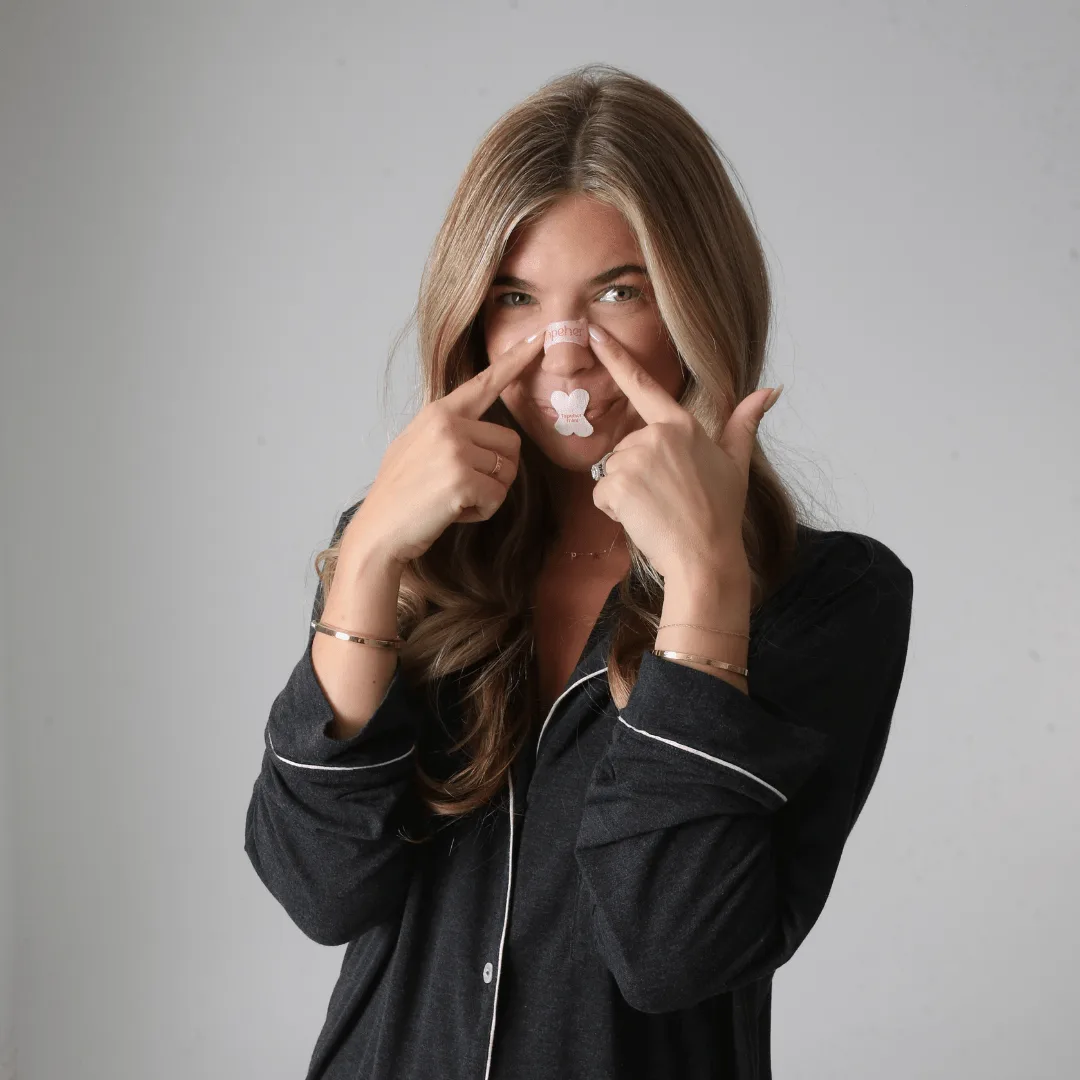
A 2025 systematic review published in PLOS One analyzed 10 studies — a mix of randomized controlled trials, prospective studies, and observational studies — spanning 1999 to 2024, covering 233 total participants who used mouth tape for obstructive sleep apnea or mouth breathing. The reviewers concluded that mouth taping provided only limited clinical benefit and may pose safety risks, particularly for people with nasal obstruction, and stated that more rigorous studies are needed before it can be widely recommended.
Cleveland Clinic reviewed the same body of research and does not recommend mouth taping as part of its sleep care guidance. As Dr. Chen put it: "There's not strong enough evidence to support that mouth tape is beneficial, and it's not part of our current practice to treat any sleep disorder." Cleveland Clinic notes that most support for mouth taping comes from anecdotal user reports rather than rigorous trials — one small 30-person study showed reduced snoring, a 36-person study in people with asthma showed no improvement, and a 10-person study from 2022 documented "mouth puffing," where participants kept trying to breathe through the mouth despite the tape.
The American Academy of Sleep Medicine has not officially endorsed mouth taping either, and its journal warns that it can worsen breathing problems in people with obstructive sleep apnea by suppressing the compensatory mouth-breathing that may be keeping their airway open. The only supervised clinical use documented in AASM literature is as an adjunct to CPAP therapy for people who mouth-breathe during treatment — not as a stand-alone fix for snoring.
Who should not try mouth tape
Because mouth tape restricts the mouth as a backup airway, it introduces real risk for certain people. Cleveland Clinic and sleep medicine guidance list mouth tape as unsafe for anyone with:
- Untreated or suspected obstructive sleep apnea
- Nasal obstruction, chronic nasal congestion, or a deviated septum
- Enlarged tonsils, sinus infections, or chronic allergies
- Acid reflux or regurgitation during sleep
- Heart issues
- Adhesive or skin allergies
- Children, unless under direct medical supervision
Alcohol before bed is also a caution — Cleveland Clinic notes that alcohol and sedatives relax the muscles in your upper airway during sleep, which limits airflow and can lead to snoring. If nasal passages are already blocked by congestion, polyps, a deviated septum, or allergies, taping the mouth closed can create a genuinely dangerous breathing restriction. More than 60% of surveyed physicians believe mouth taping could delay diagnosis of a sleep disorder, because mouth breathing at night is often the body's own compensation for a blocked airway.
The delayed-diagnosis risk nobody talks about
This is the concern that should carry the most weight for anyone snoring loudly and habitually: taping over a symptom doesn't treat what's causing it. Sleep physicians surveyed on the topic overwhelmingly share this worry — more than 60% believe mouth taping could delay diagnosis of a real sleep disorder, since suppressing the mouth-breathing signal can mask an underlying problem instead of addressing it.
Dr. Kimberly Hutchison, a neurologist and sleep medicine expert at Oregon Health & Science University, summarized it plainly: "The studies behind mouth tape are small, the benefits are modest and the potential risks are there."
If your snoring is loud, occurs every night, or comes with gasping, choking, morning headaches, or daytime sleepiness, that's a signal to see a doctor or get a sleep study — not a signal to reach for tape. Obstructive sleep apnea left undiagnosed carries far more risk than snoring on its own.
Safer alternatives to try first
Cleveland Clinic points to several evidence-based alternatives that address snoring with a better safety profile than mouth taping: nasal strips that mechanically open the nasal passages, side sleeping instead of sleeping on your back, decongestants for temporary congestion relief, and CPAP machines or oral appliances for diagnosed obstructive sleep apnea. Jaw massage and heat therapy are also evidence-based approaches for related sleep-related jaw tension.
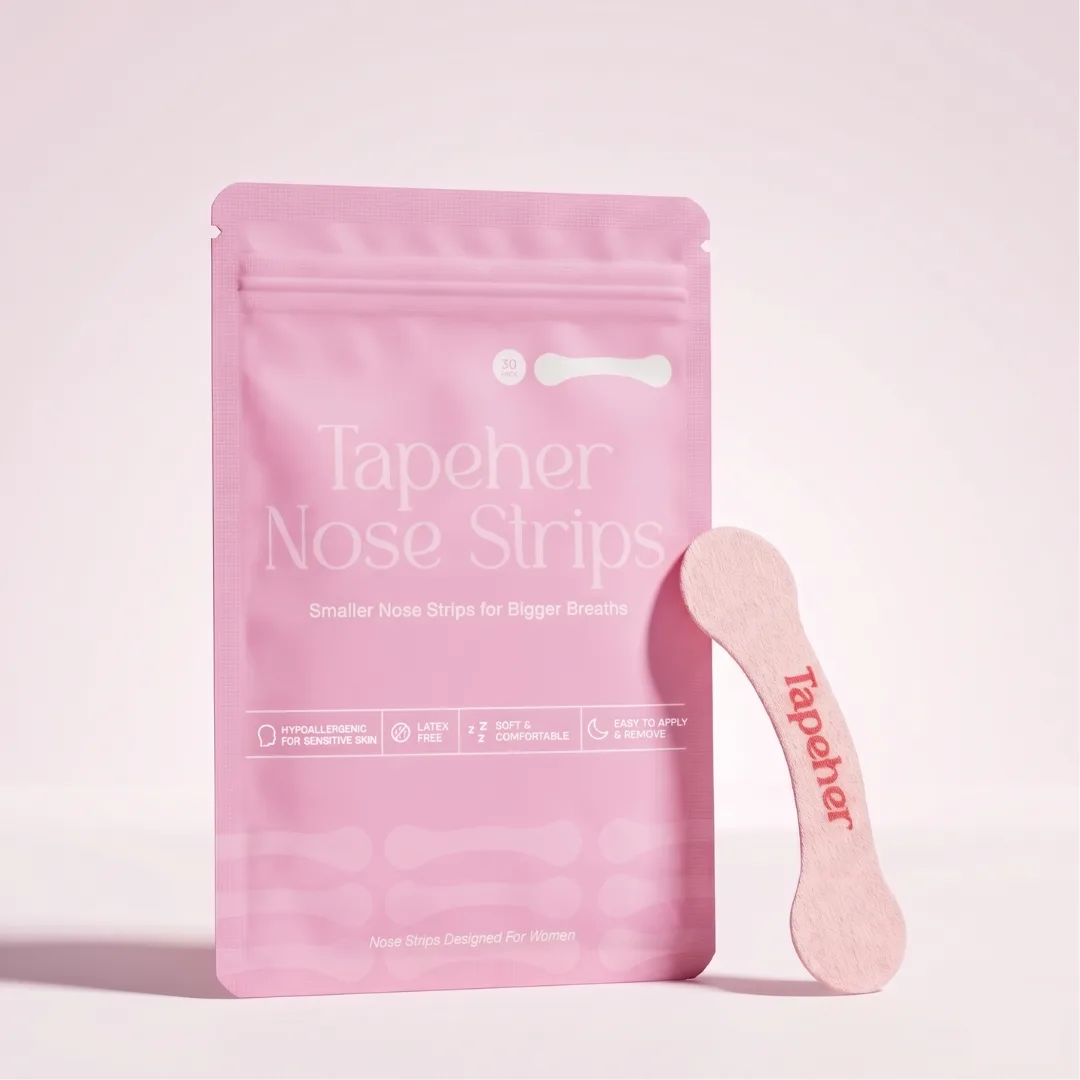
| Approach | What it addresses | Evidence strength |
|---|---|---|
| Nasal strips | Mechanically opens nasal passages to improve airflow | Recommended by Cleveland Clinic as a safer option |
| Side sleeping | Reduces airway collapse from sleeping supine | Recommended by Cleveland Clinic |
| Treating congestion | Removes the nasal blockage that forces mouth breathing | Recommended by Cleveland Clinic |
| CPAP or oral appliance | Treats diagnosed obstructive sleep apnea directly | Standard of care for diagnosed OSA |
| Mouth tape | Encourages nasal breathing by restricting the mouth | Limited benefit, documented safety risks in a 233-patient review |
If you have diagnosed or suspected sleep apnea, mouth tape is not a substitute for CPAP or an oral appliance fitted by a clinician. If your main issue is occasional congestion-related snoring, treating the congestion or trying a nasal strip addresses the actual cause instead of masking the symptom.
If you and your clinician decide to try it: what to look for
For otherwise healthy nasal breathers who've been cleared by a clinician and want to experiment cautiously, not all mouth tape is built the same. Third-party testing matters: a 2024 independent investigation by Mamavation and Environmental Health News found that 36% of mouth tapes tested contained PFAS indicators, so verifying test reports is worth the extra step. Look for a medical-grade, hypoallergenic adhesive, an X-shaped design that leaves room on both sides of the mouth for emergency access, a cotton-blend fabric base for breathability, and a clean removal that doesn't strip skin.
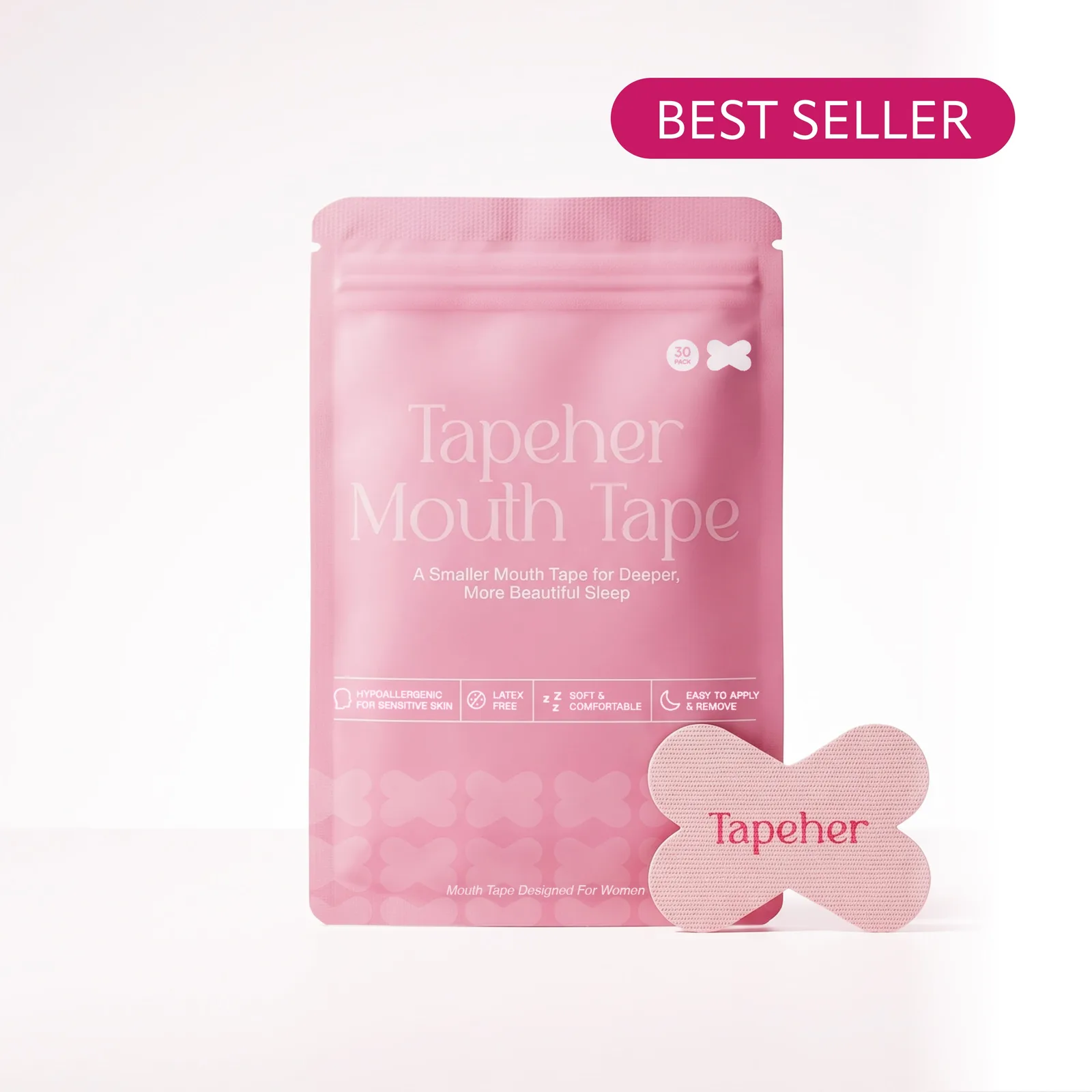
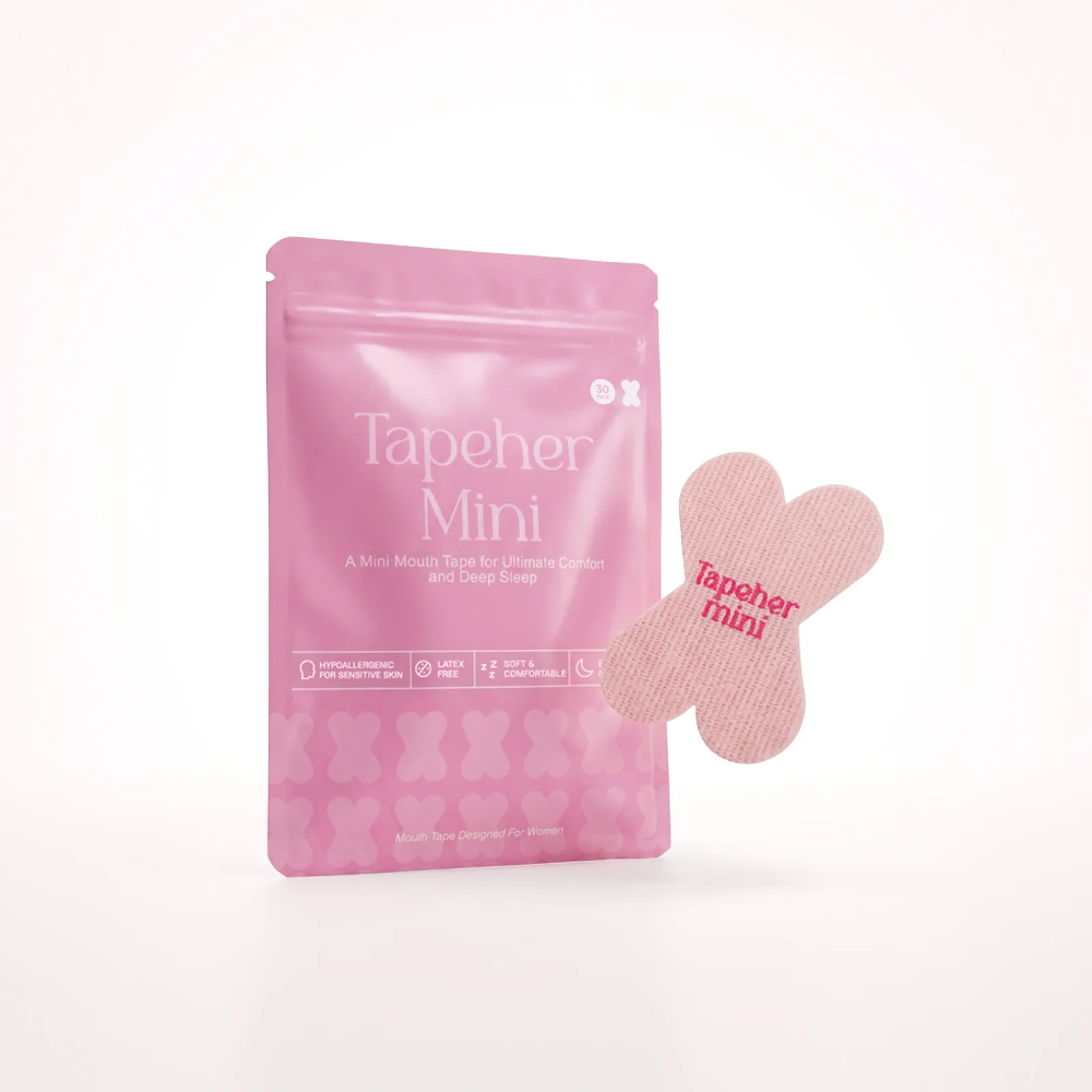
Tapeher Mouth Tape
Tapeher's X-shape design is 50% smaller than standard mouth tape and leaves both sides of the mouth open. It's made from a 95% cotton and 5% spandex blend and was tested for PFAS by SGS North America in January 2026, with no PFAS detected across 40+ compounds screened.
Dry mouth from mouth-breathing or mouth-tape use can be managed with proper oral care routines including fluoride toothpaste. Even a well-made tape isn't free of trade-offs. Some Tapeher customers have reported the adhesive can be strong enough to leave residue: "The adhesive is very strong and often leaves adhesive on my skin after removing," one reviewer noted. That's a fair representation of mouth tape as a category — comfort and adhesion vary by skin type, and no manufacturer's satisfaction numbers change the underlying clinical picture: this is a comfort product, not a treatment for a diagnosed sleep condition.
For a deeper side-by-side of tape brands and fit options, see our full comparison of mouth tape for snoring and the dedicated Tapeher mouth tape review.
Common mistakes and how to reduce risk
- Skipping the clinician check. If snoring is loud, frequent, or paired with daytime fatigue, get evaluated before taping over it — see our guide on mouth tape and sleep apnea safety.
- Using it with untreated congestion. Clear nasal breathing first; taping a blocked nose is the highest-risk mistake on this list.
- Drinking alcohol before taping. Cleveland Clinic advises avoiding alcohol and sedatives before bed, because they relax the upper airway and limit airflow.
- Full-coverage tape for beginners. Non-X-shaped, full-coverage designs make it harder to open the mouth if you wake up needing to. Review general mouth tape side effects before your first night.
- Ignoring skin reactions. Redness, residue, or irritation after removal is a sign to stop and reassess the adhesive, not push through.
Our take
Does mouth tape help with snoring? The honest answer is: maybe a little, for some healthy nasal breathers — but the clinical evidence is limited, no major sleep body recommends it as treatment, and it carries real risk for anyone with undiagnosed sleep apnea or nasal blockage. If loud or habitual snoring is your concern, see a clinician first. If you're cleared to experiment, prioritize a hypoallergenic, third-party-tested, X-shaped design.
See Tapeher's product detailsSources
This article is for informational purposes only and is not medical advice. Mouth tape is not a treatment for sleep apnea or any diagnosed sleep disorder. If you snore loudly or habitually, or have symptoms of sleep apnea, talk to a doctor before trying mouth tape or any snoring product.
Recommended for you
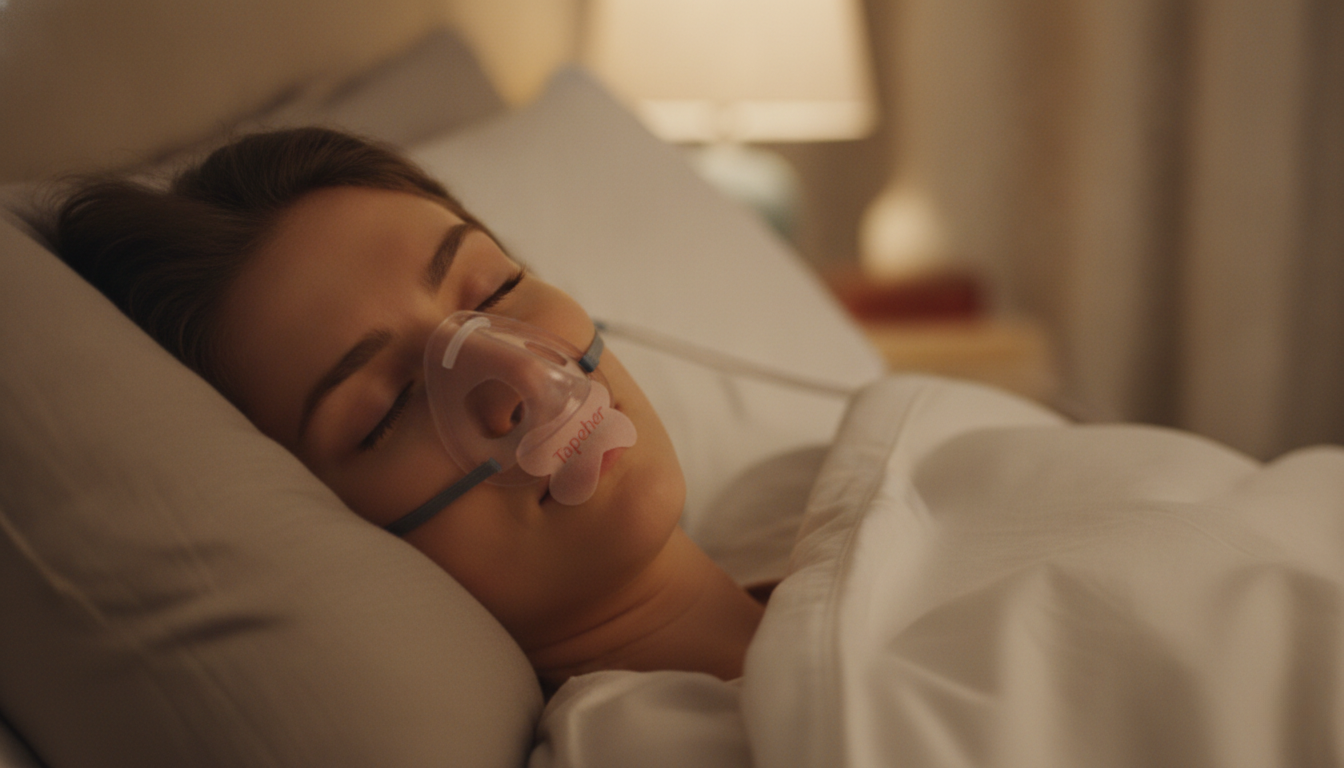 Can You Use Mouth Tape With CPAP: Questions to Ask First | Purisia
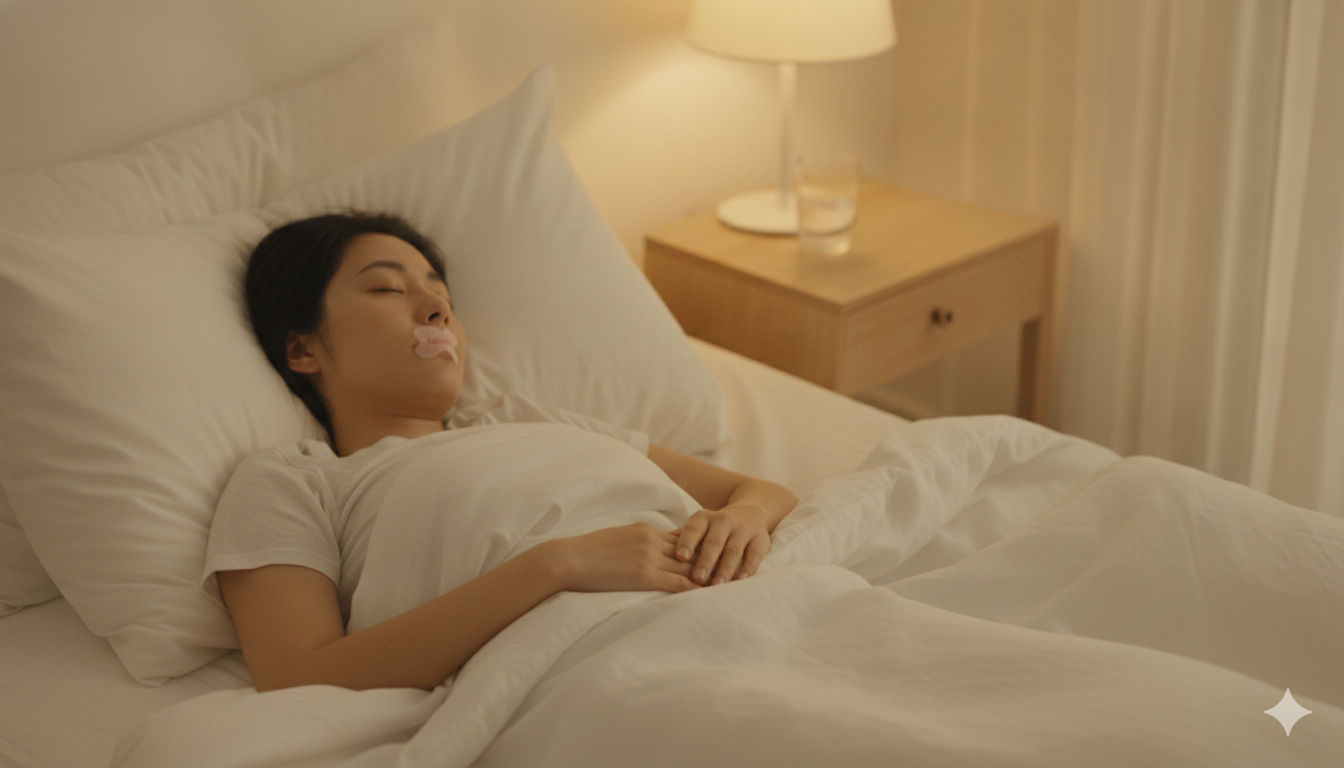 Mouth Tape for Sleep Apnea: 6 Safety Questions to Ask First (2026)
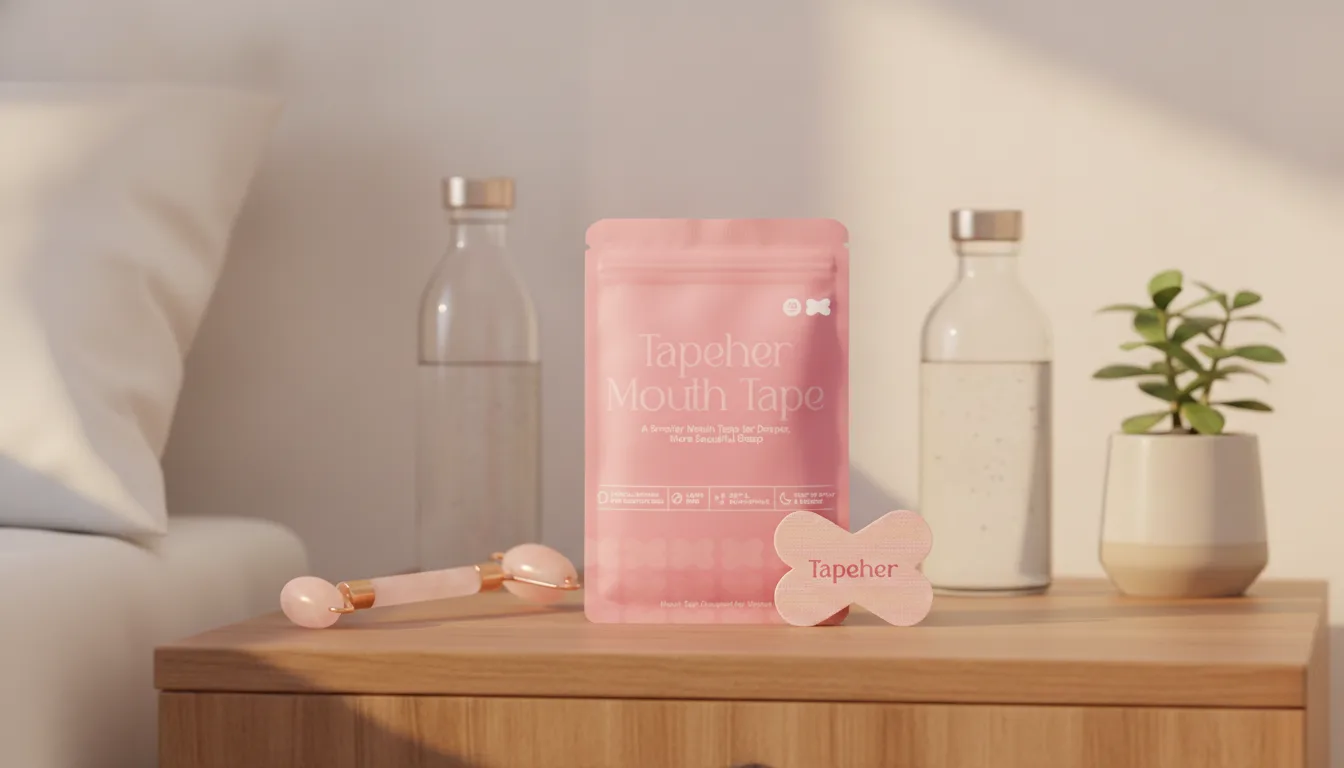 Mouth Tape Korea: Complete Guide to the 2026 Sleep Wellness Trend
 How Does Mouth Tape Help Your Jawline? 5 Claims Examined (2026)
 Logan Paul Mouth Tape Trend: Best 5 Safety Facts to Know in 2026
 Sleep Shield Mouth Tape Review 2026: 3 Best Alternatives to Know